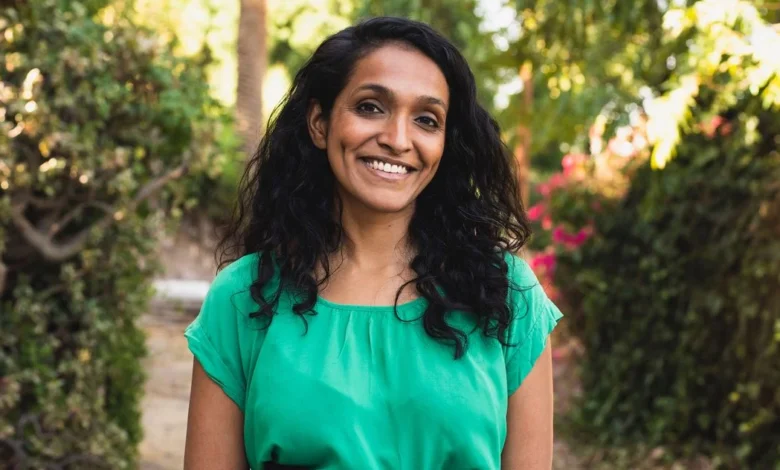
The political landscape of Los Angeles underwent a seismic shift on November 5, 2026, when Nithya Raman, a democratic socialist and former urban planner, secured a decisive victory in the mayoral race against incumbent Karen Bass. This transition marks the culmination of a political trajectory that began in 2020, when Raman first entered public service as a City Council member for the Fourth District. Her rise from a grassroots organizer and policy wonk to the leader of the nation’s second-largest city represents a fundamental change in the governing philosophy of Los Angeles, prioritizing systemic urban reform over traditional political alliances.
The Rise of a Policy-Driven Outsider
Nithya Raman’s journey into the halls of power was unconventional. Armed with degrees from Harvard and MIT, she spent years working as a consultant and nonprofit executive, focusing on the granular details of urban infrastructure. When she first campaigned for the Fourth District seat in 2020, her platform was built on the premise that City Hall had become disconnected from the daily realities of its residents.
Her initial campaign was characterized by an unprecedented level of engagement. While traditional L.A. politics often relied on backroom negotiations and deep-pocketed developer support, Raman mobilized a massive grassroots movement. The 2020 election saw her district experience a staggering surge in voter turnout, with 130,000 residents participating—a marked increase from the 24,000 who voted in previous cycles. This engagement was driven by her use of detailed policy platforms and social media threads that served as a public education tool, breaking down the complex, often opaque mechanisms of municipal governance.
Chronology of a Political Evolution
The timeline of Raman’s political influence reveals a calculated approach to institutional reform:
- 2014: Raman begins documenting systemic inefficiencies in the city’s administrative office, specifically regarding the $100 million in homelessness funding, which she identifies as being disproportionately allocated to incarceration rather than services.
- 2017: She co-founds a nonprofit in Silver Lake to provide immediate, tangible relief for the unhoused population, including mobile showers and meal services, bridging the gap between policy advocacy and direct aid.
- 2020: Raman defeats incumbent David Ryu for the Fourth District Council seat, becoming the first challenger to unseat a sitting council member in decades.
- 2021–2025: During her tenure on the City Council, she pushes for significant changes to zoning laws, transit-oriented development, and the redistribution of power within the city’s committee structures.
- November 2026: Raman defeats incumbent Mayor Karen Bass, capitalizing on a mandate for radical change in housing policy, public safety, and climate resilience.
Addressing the Housing and Infrastructure Crisis
The central pillar of Raman’s governance is her background in urban planning. Los Angeles has long been plagued by a "NIMBY" (Not In My Backyard) culture that has effectively stalled the construction of high-density housing, bike lanes, and essential transit infrastructure. Raman’s approach has been to confront these obstructionist elements head-on by re-framing urban density as a matter of civic equity.
Her proposed "rent forgiveness" programs and efforts to streamline the permitting process for affordable housing projects are designed to bypass the traditional gatekeepers of L.A. real estate. By prioritizing a "housing first" model, she has sought to integrate the needs of the unhoused with the broader economic necessity of increasing housing stock. Analysts note that her ability to navigate the "machinery of government"—a skill honed through her consultancy work—allows her to implement changes that might have otherwise been buried in bureaucratic red tape.

The Shift in Public Safety and Civic Participation
Raman’s victory is inextricably linked to the broader national conversation on racial justice and public safety that intensified in 2020. Her platform included a comprehensive proposal to "reimagine public safety," which aligned with the demands of local Black Lives Matter leaders. By advocating for the diversion of funds from traditional policing to community-based social services, she has positioned herself as a leader of a new progressive bloc within the city.
Furthermore, her focus on structural reform extends to the very composition of the city’s governing bodies. During her time on the Council, she frequently highlighted the lack of representation for women and caregivers, noting that evening-only meetings and the absence of childcare options acted as structural barriers to entry for many potential public servants. Her advocacy for charter reform to increase the number of districts is aimed at breaking the power of the current, limited council structure, which she argues is inherently skewed toward established interests.
Economic and Fiscal Implications
The fiscal environment that Raman inherits is complex. As she steps into the Mayor’s office, the city continues to deal with the long-term economic fallout of the 2020 pandemic, alongside persistent issues of wealth inequality. Supporters argue that her background in poverty advocacy provides her with a unique perspective on resource allocation.
Her reliance on small-dollar donations—having raised over $200,000 in micro-contributions during her initial council run—suggests a political model that remains tethered to a broad base of constituents rather than a small circle of corporate donors. This autonomy is expected to be a key asset in her upcoming budget negotiations, where she has promised to focus on "thoughtful and precise" resource allocation that favors the most vulnerable sectors of the population.
Institutional Reactions and Future Outlook
The political establishment in Los Angeles, which had long favored traditional, incremental change, is now forced to contend with an administration that explicitly identifies as democratic socialist. The resignation of several neighborhood association leaders who had historically opposed development projects following her 2020 victory served as an early indicator of the friction her leadership would cause.
However, supporters, including labor unions and progressive advocacy groups like the Sunrise Movement, see her election as a long-overdue correction. The challenge for Raman will be balancing the high expectations of her grassroots base with the practical realities of managing a city of nearly 4 million people. Her emphasis on "we" over "me" in her public rhetoric is a deliberate attempt to foster a sense of collective ownership over the city’s future, a strategy she utilized to build a coalition that spanned across socioeconomic and racial lines.
Conclusion: A New Era for Los Angeles
The election of Nithya Raman signifies more than just a change in leadership; it represents a fundamental transition in how Los Angeles defines its urban future. By blending the technical expertise of an urban planner with the grassroots energy of a community organizer, she has created a new template for local governance. Whether this approach can successfully untangle the decades-old web of bureaucratic, infrastructural, and social challenges remains to be seen. However, her victory has undeniably signaled that the traditional political gatekeepers of Los Angeles no longer hold a monopoly on the city’s direction. As she prepares to lead, the eyes of the nation will be on Los Angeles to see if this model of progressive, planning-focused governance can provide the solutions to the city’s most persistent crises.