The Ultimate Guide to the Sunniest Cities in the U.S. and How Sunshine Drives Real Estate Trends

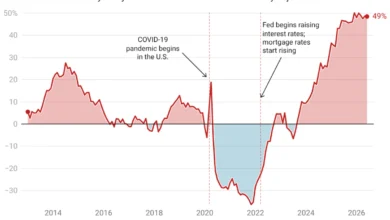
The pursuit of sunshine, warmth, and a change of scenery has fundamentally reshaped the American housing market over the past several years. In the wake of the COVID-19 pandemic, a massive migration wave of remote workers and home buyers transformed demographics across the country, turning eyes toward the southern third of the nation. Popularly known as the Sun Belt, this sprawling region has long attracted residents seeking an escape from dreary winters, but recent years have accelerated these moves to historic highs. Even as climate risks and extreme weather events grow increasingly prominent, the gravitational pull of clear skies remains strong, prompting real estate analysts to examine precisely where the sun shines brightest and what it costs to live there.
To help navigate this enduring migration trend, real estate brokerage Redfin has compiled comprehensive data analyzing the sunniest metropolitan areas in the United States. While the allure of Vitamin D is clear, experts urge prospective movers to look beyond the weather report and weigh the broader economic, environmental, and structural implications of relocating to the nation’s brightest corners.
The Sunniest Metropolises: Rankings and Meteorological Breakdown
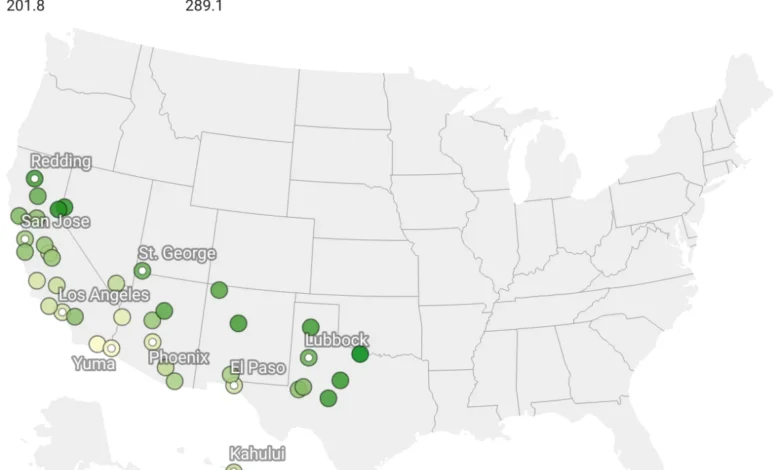
When evaluating U.S. metropolitan areas with populations exceeding 100,000, desert cities in the American Southwest emerge as the indisputable leaders in solar abundance. According to data spanning from 2001 to 2025 sourced from NASA Power—which measures global atmospheric conditions using satellite-derived data—the top-tier positions are dominated by regions experiencing nearly cloudless skies for more than 270 days per year.
El Centro, California, and Yuma, Arizona, consistently trade places at the very top of national metrics. El Centro edges out competitors with an average of 289 sunny days per year, alongside 88% of possible sunshine (roughly 3,884 hours annually) and a solar irradiance rating of 5.93 kWh/m²/day. Hot on its heels is Yuma, Arizona, recording 288 sunny days annually. However, Yuma claims the crown for the highest percentage of possible sunshine at 89% (approximately 3,947 hours per year) and a slightly higher solar irradiance of 5.97 kWh/m²/day.
Rounding out the top tier are Lake Havasu City, Arizona, with 272 sunny days, and Phoenix, Arizona, with 269. California coastal and interior valleys also make a strong showing, featuring prominently in the rankings. Metros such as Los Angeles (264 sunny days), San Luis Obispo (260), Oxnard (255), and Bakersfield (252) demonstrate that California offers substantial solar exposure alongside its Mediterranean climates. Meanwhile, El Paso, Texas, represents the Chihuahuan Desert on the list, matching Oxnard with 255 sunny days but boasting a much higher solar irradiance of 5.90 kWh/m²/day.
Seasonally, the data reveals distinct geographical shifts. Desert cities experience their peak sunshine from April through June, right before the North American monsoon season commences in late summer. Conversely, the sunniest locations later in the summer months tend to shift northward within California, led by communities like Truckee and Chico.
Geographical and Environmental Context: Why the Southwest Dominates
The geographic concentration of these sun-drenched cities is no accident. Nearly all top-ranking municipalities lie within the hot and dry expanses of the Sonoran, Mojave, and Chihuahuan Deserts. Two primary meteorological factors drive this phenomenon: high-pressure atmospheric systems that suppress cloud formation and the regional topography that shields these basins from maritime moisture.
Yuma’s climate is so uniquely intense that it is frequently cited by international meteorological organizations as one of the sunniest places on Earth, outperforming desert counterparts in Egypt and Namibia. This relentless sunshine has dictated the region’s economy, anchoring Yuma as an agricultural powerhouse capable of producing massive yields of sun-hungry crops like lettuce for nationwide distribution.
Similarly, El Centro shares an almost identical climate within California’s fertile Imperial Valley, though characterized by slightly drier atmospheric conditions. On the coastal front, cities like Oxnard, Los Angeles, and San Luis Obispo present a different ecological profile. Benefiting from cool Mediterranean climates, they experience clear skies for roughly a third of the year without the extreme, punishing heat of the interior deserts. However, these coastal havens come with a distinct economic caveat: they rank among the most expensive residential real estate markets in the United States.
The Evolution of Sun Belt Migration: A Decades-Long Trend
The recent influx of residents into the Sun Belt is merely the latest chapter in a demographic shift that has been underway for over sixty years. Since the mid-20th century, affordable land, expanding job markets, and favorable climates have fueled rapid urbanization across the American South and Southwest.
However, the post-pandemic migration wave introduced unprecedented volatility. The sudden decoupling of office work from physical locations allowed millions of Americans to relocate in search of better quality of life and outdoor accessibility. This demand shock sent home prices soaring across Sun Belt destinations, pricing out many local buyers and turning once-affordable metros into competitive sellers’ markets.
As the real estate market normalizes and demand cools, housing prices in some of these high-growth areas have begun to soften, offering a measure of relief and negotiating power to incoming buyers. Yet, housing economists caution that a lower purchase price does not automatically equate to lower costs of living.
Economic and Climate Realities: Weighing the True Cost of Sunshine
Relocating for the sake of sunshine requires a sophisticated risk assessment. While an active outdoor lifestyle and the psychological benefits of natural light are compelling, prospective movers increasingly face complex financial and environmental headwinds.
Chief among these concerns are skyrocketing homeownership expenses. Surging insurance premiums—particularly driven by climate-related vulnerabilities in high-risk states such as Florida, Texas, and parts of the Southwest—are adding thousands of dollars annually to household budgets. Furthermore, rising homeowners association (HOA) fees and local property taxes can rapidly erode the savings gained from moving to a more affordable real estate market.
At the same time, the growing frequency and severity of extreme weather events are beginning to influence housing valuations and consumer behavior. Risks such as extreme urban heat islands, prolonged droughts, water scarcity concerns, and localized flooding are prompting some residents to reconsider their long-term relocation strategies.
Recognizing these shifting priorities, real estate technology platforms are evolving to provide deeper transparency. Industry leaders like Redfin have integrated advanced metric tools—such as "SunScores," 3D shade models, and granular climate risk assessments—allowing buyers to analyze a property’s precise daily sun exposure, historical weather patterns, and environmental risk profile before making a commitment.
Ultimately, while the desire for endless blue skies and warm weather remains a powerful driver for American households, the modern housing market demands a balanced approach. Evaluating a potential move requires weighing the undeniable appeal of solar abundance against the evolving economic realities of insurance costs, regional climate vulnerabilities, and total cost of ownership.