As artificial intelligence continues to permeate every facet of the modern professional landscape, a definitive shift is occurring in what employers and society demand from the next generation. While AI excels at data processing, automation, and predictive modeling, it remains fundamentally incapable of replicating the nuances of human connection, ethical reasoning, and complex interpersonal communication. The World Economic Forum’s Future of Jobs Report 2025 highlights this dichotomy, identifying empathy, leadership, and strategic communication as the most critical competencies for the workforce of the coming decade. To bridge the gap between traditional academic curricula and these real-world requirements, programs like TED-Ed Student Talks have emerged as essential laboratories for developing these durable human skills.
The Evolution of the Skills Gap
The current global labor market is undergoing a period of structural transformation often referred to as the "Fourth Industrial Revolution." According to data from the LinkedIn 2024 Future of Skills report, the skill sets required for most jobs have changed by approximately 25% since 2015, with that figure projected to double by 2027. Traditional education systems have long prioritized cognitive literacy—reading, writing, and arithmetic—but the modern economy increasingly demands socio-emotional literacy.
The TED-Ed Student Talks program was established to address this pedagogical void. Designed for students aged 6 to 18, the initiative operates as a structured, extracurricular framework that guides participants through the process of ideation, refinement, and public dissemination of their thoughts. By providing a platform where students are not merely passive recipients of information but active producers of knowledge, the program mirrors the collaborative environments of contemporary professional settings.

Chronology of a Communication Framework
The development of a student speaker follows a distinct, multi-phase trajectory. Initially, participants engage in guided self-reflection to identify topics that possess both personal resonance and broader societal relevance. This phase often lasts several weeks, mirroring the research and development cycles found in corporate project management.
Once an idea is solidified, the process moves into a peer-review and mentorship stage. This is a critical departure from traditional standardized testing, which typically discourages collaboration. In the TED-Ed model, students present early iterations of their talks to peers and educators, receiving iterative feedback. This stage is designed to cultivate intellectual humility—the ability to accept critique and refine one’s position without compromising the core message.
The final phase, the public delivery, serves as the culmination of this intellectual journey. By placing students on a stage—whether physical or digital—the program forces a transition from internal thought to public accountability. This timeline of development is intended to move students beyond rote memorization, fostering instead a deep, intrinsic understanding of how to influence and inform an audience.
The Anatomy of Empathy in Practice
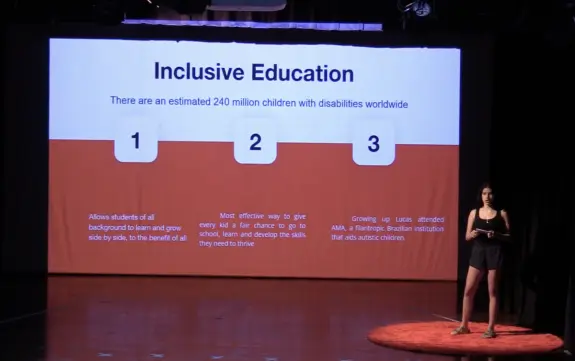
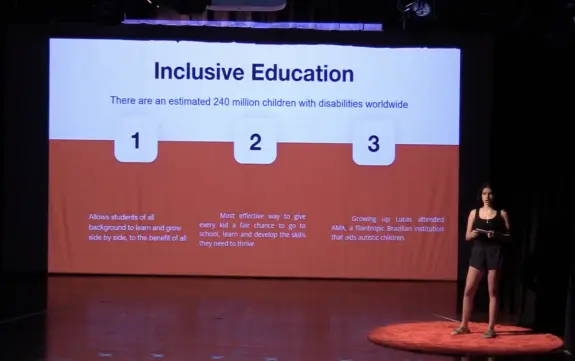
Empathy is frequently mischaracterized as a static personality trait, yet neuroscientific research suggests it is a cognitive muscle that requires consistent exercise. By engaging in the storytelling process, students like Lia Costa have demonstrated how personal narratives can act as conduits for social change. Costa’s presentation on her cousin’s experience with Autism Spectrum Disorder utilized visual aids and personal anecdote to humanize a complex neurological condition, effectively shifting the audience’s perspective from abstract clinical understanding to compassionate engagement.
Shrutarjo Ray, another participant, noted that the act of sharing an idea publicly acts as a "life-giving" force for the thought itself. This suggests that the value of communication is not merely in the information transmitted, but in the social cohesion it creates. When students articulate their experiences, they normalize vulnerability, a trait increasingly recognized by organizational psychologists as essential for high-performing teams and resilient leadership.
Translating Complexity: The Technical Challenge
One of the most rigorous components of the program is the mandate to translate complex technical concepts into accessible language. Owen Hawthorne’s work regarding CRISPR and genetic editing exemplifies this challenge. By attempting to communicate the viability of gene editing as an alternative to chemotherapy, Hawthorne was forced to reconcile the dense, jargon-heavy realities of biotechnology with the necessity of an emotional hook.
This process aligns with modern professional requirements for "technical communicators"—individuals capable of acting as intermediaries between highly specialized research departments and the general public or stakeholders. Data from the 2025 World Economic Forum report underscores this, noting that as automation handles technical execution, the premium on "human-in-the-loop" roles—those who can explain, justify, and ethically frame technical outputs—is rising significantly.
Youth Agency and Civic Engagement
The broader impact of these programs extends into the realm of civic engagement. Historically, youth have been excluded from serious discourse due to perceived age-related limitations in expertise or maturity. However, longitudinal studies on youth civic participation indicate that when young people are granted a formal platform and treated as credible contributors, their long-term engagement in social and political spheres increases.
Kira Aryslanova’s exploration of the "language monopoly" and its impact on cultural identity serves as a case study in how students can utilize these platforms to advocate for systemic change. By encouraging her audience to experience "discomfort" regarding the dominance of English in global discourse, she moved beyond mere information sharing into the realm of active advocacy. Similarly, Arush P’s shift from a passive student to an environmental advocate illustrates the transformative power of a structured voice. For Arush, the realization that an idea, once voiced, becomes a "catalyst for collective resilience" marks the transition from academic curiosity to active citizenship.
Analytical Perspectives on Future Competitiveness
From an economic standpoint, the skills fostered by these programs—active listening, persuasive synthesis, and ethical storytelling—are effectively "future-proof." While algorithms may one day write better copy or organize data more efficiently than humans, the ability to judge the impact of that communication on a human audience remains a distinctly human domain.
Educational analysts suggest that the integration of such programs into the standard K-12 experience could lead to a more resilient workforce. By teaching students to manage "tangled emotions," as described by Lareen Abdelwahed, educators are essentially providing students with the tools for emotional regulation and professional grit. When a student learns to structure a personal, potentially painful experience into a coherent, shareable narrative, they are performing a high-level cognitive task that is highly transferable to project management, conflict resolution, and leadership roles.
Conclusion and Institutional Outlook
As the boundary between human effort and machine assistance continues to blur, the value of the "human element" is likely to appreciate. Programs that provide a scaffolding for students to discover, refine, and project their voices are no longer just enrichment activities; they are essential training grounds for a modern democracy and a global economy.
The success of these students suggests that the future workforce will be defined not by who can process the most data, but by who can most effectively synthesize that data into a vision that others can believe in. By prioritizing the development of empathy, clarity, and advocacy, initiatives like TED-Ed Student Talks are ensuring that the next generation remains relevant, capable, and, most importantly, human in an era of unprecedented technological disruption. For educators looking to integrate these methodologies, the path forward involves moving away from the "sage on the stage" model and toward a structure where the student is the primary architect of their own intellectual output, prepared to navigate the complexities of a rapidly changing world with confidence and purpose.
Related posts: