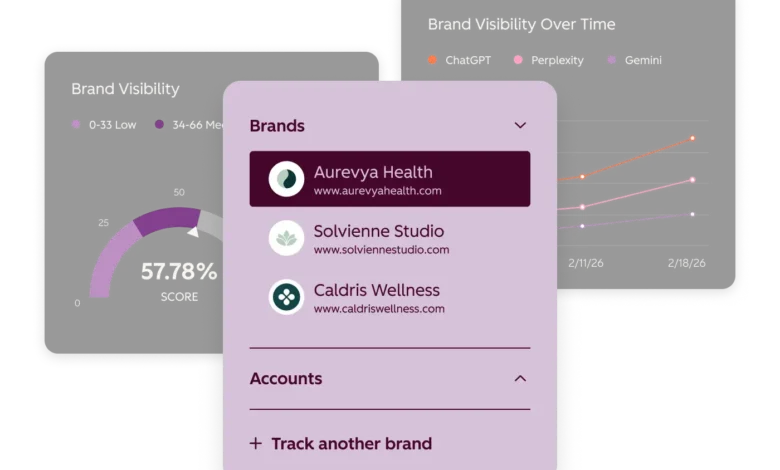
Buyers now ask ChatGPT, Gemini, and Perplexity for recommendations before they ever open a search results page, and marketers need a way to see whether their brand shows up in those answers. This shift represents one of the most significant pivots in digital marketing history. As generative AI transforms the consumer journey from a list of blue links into a synthesized conversational response, the discipline of Search Engine Optimization (SEO) is evolving into Answer Engine Optimization (AEO). For marketing departments, the challenge is no longer just ranking on a page—it is securing a citation within an LLM-generated narrative. Consequently, the competition for specialized analytics software has intensified, with Profound and Semrush emerging as the primary contenders for teams seeking to measure their AI visibility.
The fundamental shift in user behavior is backed by empirical data. According to recent findings from the Pew Research Center, users click on a traditional search result link in only 8% of visits when a Google AI summary is present, compared to 15% when no AI-generated summary appears. Furthermore, industry analysts at Gartner have projected that traditional search engine volume could decline by as much as 25% by 2026 as virtual agents and AI chatbots become the primary interface for information discovery. This decline forces a hard choice for marketing leaders: continue to optimize for legacy search metrics or pivot to track brand presence within the "black box" of LLMs.
The Evolution of Search: From Keywords to Citations
The timeline of this transition began in earnest with the public release of ChatGPT in late 2022, which triggered an arms race among major tech platforms to integrate generative responses into search. By 2024, the industry moved from speculative interest to operational necessity as Google rolled out AI Overviews and Perplexity cemented its position as a research-centric AI engine.
AEO differs from traditional SEO in its focus on accuracy, favorable mentions, and direct citations rather than just page-level rankings. While SEO tactics often involve keyword density and backlink profiles, AEO requires an understanding of how models ingest, summarize, and prioritize information. Because LLMs synthesize data from thousands of sources, they do not offer a single "position one." Instead, they offer varying levels of prominence, sentiment, and trust. This has led to the development of dedicated platforms like Profound, which specializes in the technical nuances of AI crawlers, and established suites like Semrush, which are rapidly adapting their massive databases to accommodate AI visibility.
Comparative Analysis: Profound vs. Semrush
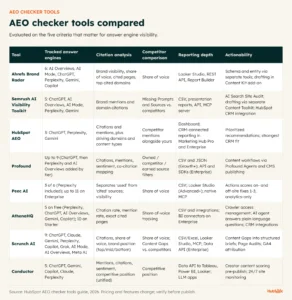
The decision between these tools rests on a firm’s specific operational needs. Profound serves as a dedicated AEO platform. Its architecture is built around the unique requirements of generative engine visibility, offering features like server-log crawler analytics, SKU-level shopping data for ecommerce brands, and no-code content automation. For enterprise teams, the ability to see exactly how often an AI bot visits a site—and which content it scrapes—provides a layer of technical intelligence that traditional SEO tools lack.

Semrush, conversely, approaches the challenge from the perspective of an all-in-one marketing suite. Its AEO features are integrated into a broader ecosystem that includes keyword research, technical site audits, and competitor backlink analysis. For many teams, the advantage of Semrush lies in consolidation. By using a single subscription, marketers can view their traditional search performance alongside their AI share of voice. This allows for a more holistic view of the marketing funnel, bridging the gap between legacy search and the new era of generative responses.
Technical Analytics and the Role of AI Crawlers
One of the most critical differentiators between these two approaches is the depth of crawler analysis. Profound’s "Agent Analytics" provides visibility into server logs from providers like Cloudflare and AWS. This allows a brand to distinguish between human traffic, standard web crawlers, and AI-specific bots like GPTBot or PerplexityBot. For organizations in regulated industries or large-scale ecommerce, knowing that an AI crawler has successfully indexed a new product page or a critical piece of policy documentation is vital for ensuring that the information is available for future AI responses.
Semrush focuses on "AI-Ready Site Audits," which ensure that a website’s structure is optimized to be crawled and understood by AI models. While it does not offer the same granularity of server-log data as Profound, it provides a comprehensive checklist to ensure that technical barriers—such as incorrect robots.txt directives or poor structured data—do not impede AI visibility.
Data Sources and Prompt Intelligence
The accuracy of an AEO strategy is entirely dependent on the quality of the prompts used to measure visibility. Profound utilizes consumer panel data, providing demographic breakdowns that help marketers understand how different segments—divided by income, region, or age—phrase their queries. This demographic targeting allows for more precise content creation, ensuring that the brand is visible to the right audience, not just in the highest volume of queries.
Semrush leverages its massive database of 26.8 billion keywords to bridge the gap between traditional search and AI queries. By mapping known high-performing keywords to potential LLM prompts, Semrush enables teams to scale their AEO efforts using the data they already possess. Both tools allow for custom prompt tracking, which is essential for brands that want to monitor their presence in niche-specific or brand-heavy queries.
The Role of HubSpot AEO
For teams already embedded within the HubSpot ecosystem, HubSpot AEO represents a third, highly integrated alternative. Currently in beta, it provides a streamlined interface for tracking visibility across ChatGPT, Gemini, and Perplexity. Its primary strength is not in the sheer volume of engines covered, but in its proximity to the CRM. By connecting AI visibility data directly to content and contact records, HubSpot enables marketing teams to prioritize their work based on the actual business outcomes—such as deals and leads—generated from AI-assisted traffic.

Strategic Implications for Marketing Teams
The integration of these tools into a weekly workflow is where the true value lies. Simply monitoring a dashboard is insufficient. Industry best practices now include "AI-Readiness" checklists, which involve updating content to include clear, citable statistics and direct answers to common user questions. Research from the 2024 KDD conference suggests that content containing clear citations and authoritative data can see up to a 40% increase in visibility within AI responses.
For marketing agencies, the decision is often driven by scalability and cost. Semrush offers a clear advantage in managing multiple domains under one roof, whereas Profound provides a more robust toolkit for clients requiring high-level technical evidence of AI performance. Regardless of the tool chosen, the consensus among experts is that ignoring AEO is no longer a viable strategy. As AI becomes the primary gateway for information, the "visibility gap" between brands that optimize for AI and those that do not will only widen.
Conclusion: Making the Selection
When evaluating these platforms, teams should follow a three-step process. First, determine the necessary engine coverage based on where the target audience conducts their research. If a brand’s customers primarily use Perplexity for research, a tool that lacks Perplexity tracking is fundamentally compromised. Second, assess the current level of technical maturity. If a brand lacks visibility into its own server-log data, a specialist tool like Profound may be necessary to identify technical bottlenecks. Finally, consider the value of consolidation. For teams where efficiency and unified reporting are paramount, an integrated suite like Semrush or the HubSpot ecosystem will provide the most seamless transition into this new era of search.
Ultimately, the goal of AEO is not to "hack" the AI, but to ensure that a brand remains a reliable, citable source of truth in an increasingly automated information landscape. Whether through the technical depth of Profound, the breadth of Semrush, or the CRM integration of HubSpot, the investment in AEO is an investment in the future of brand discovery. As the search landscape continues to shift, the brands that succeed will be those that treat their AI presence with the same rigor and strategic intent once reserved for traditional search engines.