Beyond Automation: Cultivating Essential Human Competencies Through Youth Advocacy and Storytelling

In an era defined by the rapid proliferation of artificial intelligence and automated systems, the labor market is undergoing a structural transformation. As algorithms increasingly handle data processing and routine analytical tasks, the professional landscape is shifting its premium toward quintessentially human attributes. According to the World Economic Forum’s Future of Jobs Report 2025, the most critical competencies for the evolving workforce are no longer confined to technical proficiency; rather, they center on empathy, communication, complex problem-solving, and leadership. These "soft skills" represent the primary defense against the obsolescence of human labor in a machine-driven economy.
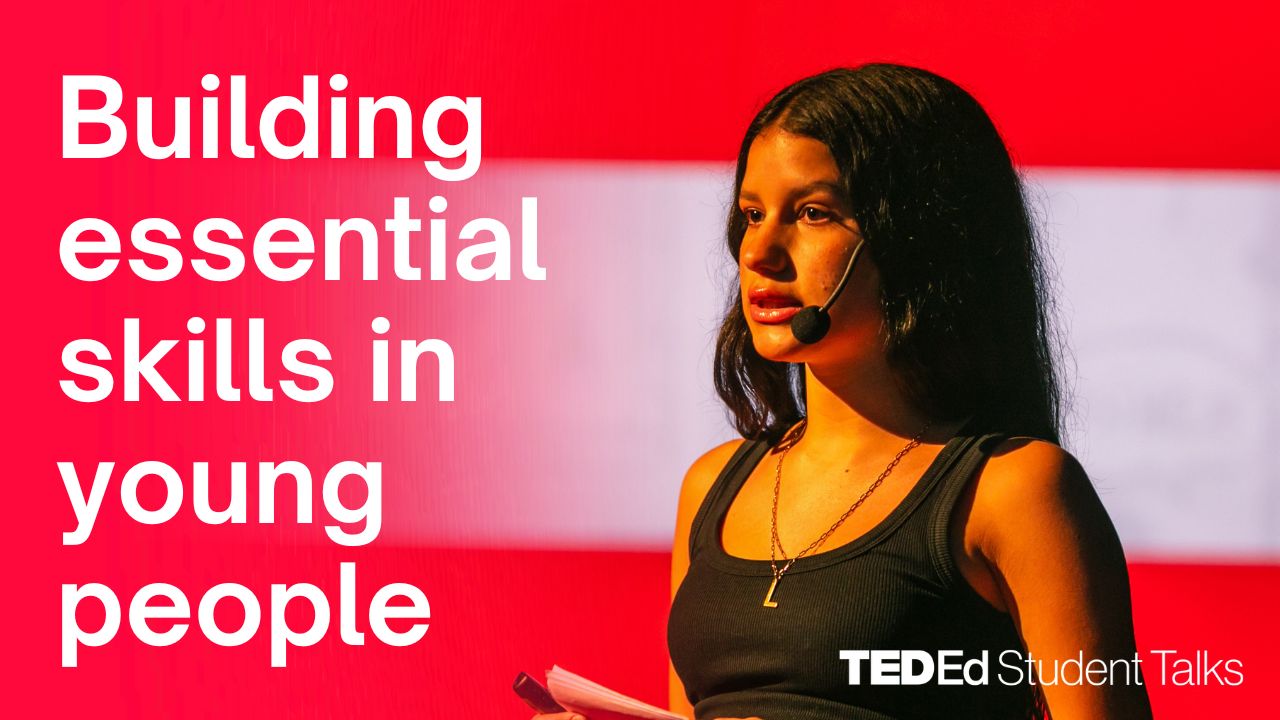
While the necessity of these skills is widely acknowledged by economists and educators, integrating them into traditional curricula remains a persistent challenge. Conventional classroom models often prioritize standardized testing and rote memorization over the nuanced development of interpersonal dynamics. TED-Ed Student Talks has emerged as a pedagogical intervention designed to bridge this gap. By providing a structured, supportive environment for students aged 6 to 18, the program facilitates the transition from passive learning to active, purposeful communication.
The Evolution of the TED-Ed Student Talks Initiative
The inception of the TED-Ed Student Talks program was rooted in the realization that youth possess significant insights that often remain suppressed due to a lack of formal training in public discourse. Historically, educational institutions have provided students with information but rarely provided them with the tools to synthesize that information into a cohesive, influential narrative.
The program, which has expanded globally over the last decade, operates on a multi-stage developmental timeline. Initially, students engage in guided brainstorming sessions to identify ideas that hold personal and communal significance. This is followed by a period of rigorous iteration, where students participate in peer-to-peer feedback loops, refining their arguments and clarifying their delivery. The final stage involves the public presentation of these ideas, providing students with a tangible milestone that validates their intellectual labor.
The Quantitative Case for Soft Skills
The urgency for such programs is supported by substantial labor market data. A 2024 LinkedIn Workplace Learning report highlighted that 91% of hiring managers consider soft skills as important as, or more important than, technical skills. Despite this, there remains a persistent "empathy deficit" in graduates entering the workforce, as noted by various human resource analytics firms.
Data from educational researchers suggests that students who engage in structured public speaking and advocacy work show a 30% increase in self-reported confidence levels and a statistically significant improvement in critical thinking scores. The pedagogical value lies not merely in the act of speaking, but in the cognitive labor required to translate complex, often messy, emotional or scientific concepts into a narrative structure that is accessible to a diverse audience.
Empathy as a Measurable Outcome
One of the core pillars of the TED-Ed framework is the intentional cultivation of empathy. Contrary to the belief that empathy is a static personality trait, longitudinal studies in neuro-education indicate that it is a cognitive muscle that strengthens with exposure to diverse narratives.
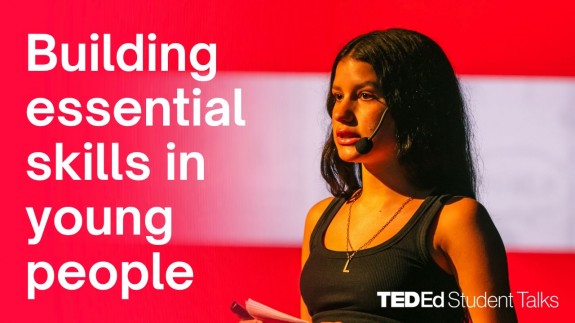
Shrutarjo Ray, a participant in the program, noted that the process of publicizing his ideas transformed his understanding of social connectivity. "I’ve realized that even a simple, meaningful story can spark connection, build courage, and change the perspective of the audience," Ray stated. This sentiment is echoed by educators who observe that the "listener’s side" of the program is equally vital. By creating a space where students must listen to their peers’ stories—ranging from personal struggles with neurodiversity to global environmental concerns—the program fosters a classroom culture of inclusivity and psychological safety.
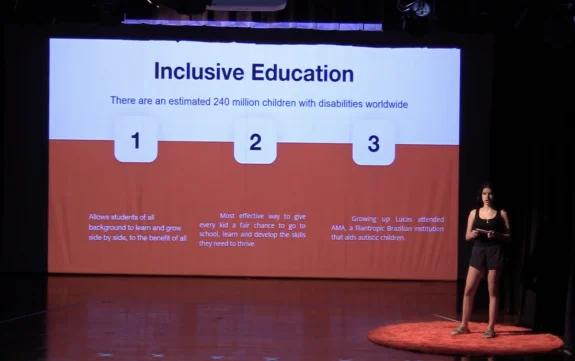
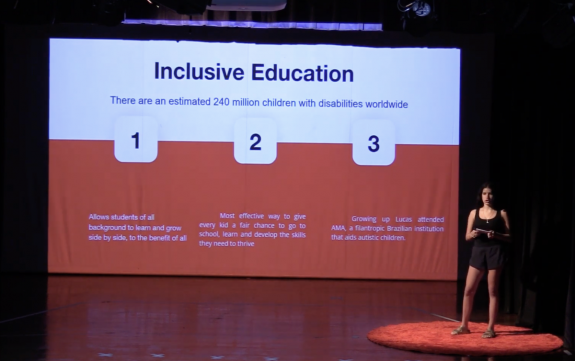
Lia Costa, another student speaker, utilized her platform to discuss her cousin’s experience with Autism Spectrum Disorder. By weaving personal anecdotes with broader social observations, she demonstrated the ability to advocate for others, a skill that is increasingly vital in a globalized, multicultural society. Her work highlights how students can serve as bridges between different lived experiences, effectively challenging social stigmas through clear and compassionate articulation.
Translating Complexity: The Science of Communication
The ability to distill complex data into a compelling narrative is a skill that eludes many seasoned professionals, yet it is a primary focus for students in the program. Owen Hawthorne, for instance, approached the technical and often intimidating subject of CRISPR and genetic editing. His objective was not merely to present data, but to reframe a medical discussion through the lens of hope.
This transformation of private, often tangled thoughts into a coherent presentation requires high-level executive function. Lareen Abdelwahed described the process as "putting my thoughts together and turning something I’ve always felt but never really said into a talk." The cognitive effort involved in this translation process is significant; it forces the student to move beyond the internal monologue and into the realm of external, objective communication.
Kira Aryslanova’s experience further underscores the evolution of communication strategies. She noted that the program shifted her focus from a data-centric approach to one that integrates storytelling, data, and inquiry. This evolution represents a sophisticated understanding of rhetoric: recognizing that data without narrative often fails to influence human behavior, while narrative without data fails to provide necessary credibility.
Advocacy and the Architecture of Change
The final, and perhaps most impactful, stage of the program is the transition from speaker to advocate. When students are given a platform to address issues they care about, they undergo a psychological shift—from feeling like passive observers of the world to feeling like active agents of change.
Arush P, a long-time advocate for environmental sustainability, observed that his participation changed his identity from that of a student to a "speaker for our planet’s survival." This shift in self-perception is a critical milestone in youth development. When a student recognizes that their voice can be a catalyst for collective resilience, their commitment to civic engagement increases.
This observation is corroborated by researchers studying youth civic engagement, who find that when students feel their voices are taken seriously by adults and peers alike, they exhibit higher rates of community involvement in their adult lives. Malak Youssef’s focus on the power of "honest" communication serves as a reminder that the goal of the program is not to create polished, performative speakers, but to empower authentic voices. Her reflection—that a voice does not need to be loud to be powerful—captures the essence of modern leadership, which relies on authenticity and transparency rather than traditional authority.
Broader Implications for the Future of Education
The implications of these developments extend far beyond the classroom. As the global economy faces the "Great Displacement" caused by AI, the comparative advantage of the human worker will reside in their ability to synthesize information, connect with others emotionally, and lead with purpose.
The traditional "factory model" of education, which emphasizes standardization and uniformity, is increasingly ill-equipped to prepare students for this future. Programs like TED-Ed Student Talks provide a blueprint for a more resilient pedagogical model—one that treats students as contributors of knowledge rather than mere vessels for its storage.
Furthermore, the data suggests that these interventions have a cascading effect. When one student learns to communicate effectively, they raise the standard of discourse for their peers. When they practice empathy, they contribute to a more cohesive school environment. The cumulative result is a generation of individuals who are better prepared to navigate the ambiguity of the 21st-century landscape.
For educators and administrators, the call to action is clear: providing students with the tools to build their own narratives is no longer an extracurricular luxury; it is a fundamental requirement of a functional, future-ready education system. As the program continues to expand, it serves as a testament to the fact that when young people are given the structure, the support, and the permission to share their perspectives, they do not just adapt to the future—they actively shape it. Educators interested in implementing these strategies are encouraged to utilize the open-source materials available to begin the process of institutionalizing these vital, human-centric skills.