The Strategic Evolution of AI Visibility: Navigating Alternatives to Ahrefs Brand Radar in the Age of Answer Engines

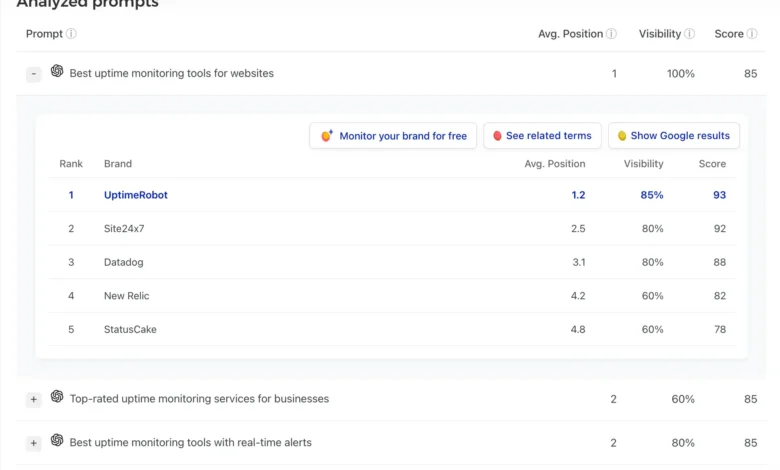
The digital landscape is undergoing a profound transformation as generative AI reshapes the fundamental mechanics of how B2B software buyers conduct research. According to G2’s 2026 Answer Economy research, 51% of B2B software buyers now initiate their search processes with AI-powered chatbots rather than traditional search engines like Google. This shift marks a pivotal moment for marketing departments worldwide, signaling that traditional SEO metrics are no longer sufficient to gauge brand presence. As AI assistants and answer engines increasingly curate, cite, and recommend brands, marketing teams are finding that they must track not only organic search rankings but also "AI visibility"—the degree to which a brand is surfaced within the conversational outputs of large language models (LLMs).
This transition has placed tools like Ahrefs Brand Radar at the center of a new marketing tech stack. While Ahrefs has integrated robust features for monitoring brand mentions across major AI platforms, the diverse needs of modern organizations—ranging from granular data requirements to budget constraints and integration demands—have spurred a search for alternative solutions.
The Shift Toward Conversational Intelligence
For decades, SEO success was defined by the "ten blue links" model. However, the rise of Retrieval-Augmented Generation (RAG) and conversational search has prioritized direct, summarized answers. In this new ecosystem, a brand’s digital authority is tested by its ability to appear in citations during natural language queries.

Historically, companies like Truck1 and Ketch utilized early iterations of AI monitoring tools to establish baselines. Alexandra Novikava, a marketing professional at Truck1, noted that while initial observational tools provided a starting point, the requirement for custom API tracking and greater data-collection flexibility eventually necessitated a move toward specialized intelligence platforms. Similarly, Colleen Barry, head of marketing at Ketch, emphasized that in the B2B sector, the quality of a mention far outweighs the quantity. A single, high-intent citation within a complex privacy or compliance prompt carries more weight than a dozen generic brand references.
Evaluating the Market: Key Drivers for Change
As the market for AI visibility tools matures, four primary factors are driving organizations to re-evaluate their current tech stacks:
- Granularity and Context: Marketing teams in large marketplaces require more than a broad "visibility score." They need prompt-level context to understand the "why" behind an AI’s recommendation.
- High-Intent Prompt Engineering: B2B firms are shifting focus from general awareness to specific, bottom-of-the-funnel prompts where purchase decisions are influenced.
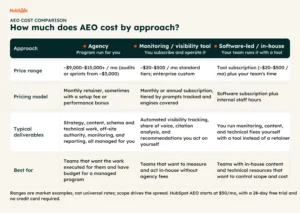
- Cost-Efficiency and Packaging: As AI monitoring evolves from a novelty to a necessity, the cost of scaling these tools becomes a board-level conversation. Founders like Ashot Nanayan of B2BSEO have highlighted that when monitoring costs exceed $800 monthly for add-ons, teams often look toward dedicated platforms that offer broader coverage at a lower entry point.
- Closed-Loop Analytics: The most significant pain point remains the "data silo." Visibility is often decoupled from revenue metrics. Companies like Bully Max have moved toward integrated platforms where AI mentions can be directly correlated with traffic, engagement, and actual conversion paths within a CRM.
A Comparative Look at AI Visibility Alternatives
The current market offers a variety of tools, each catering to different operational scales and strategic goals.
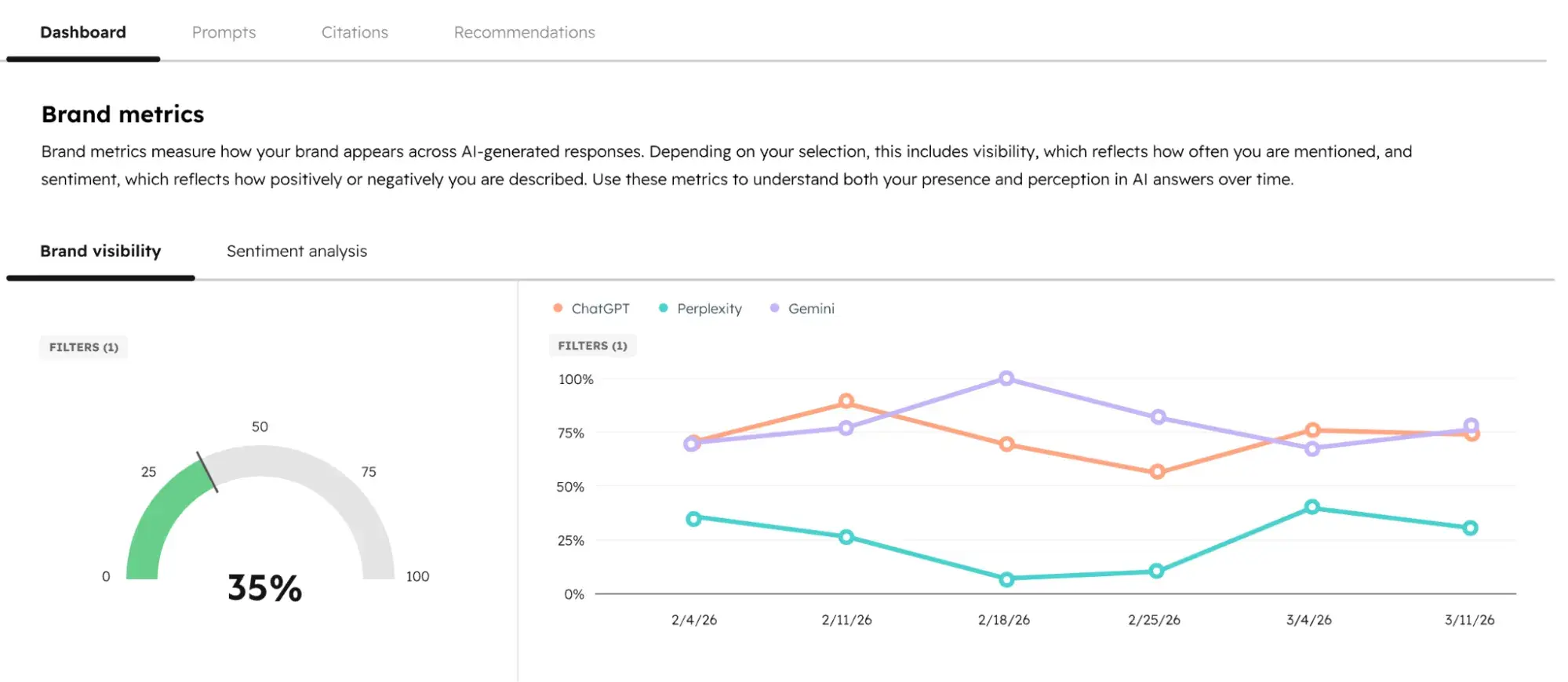
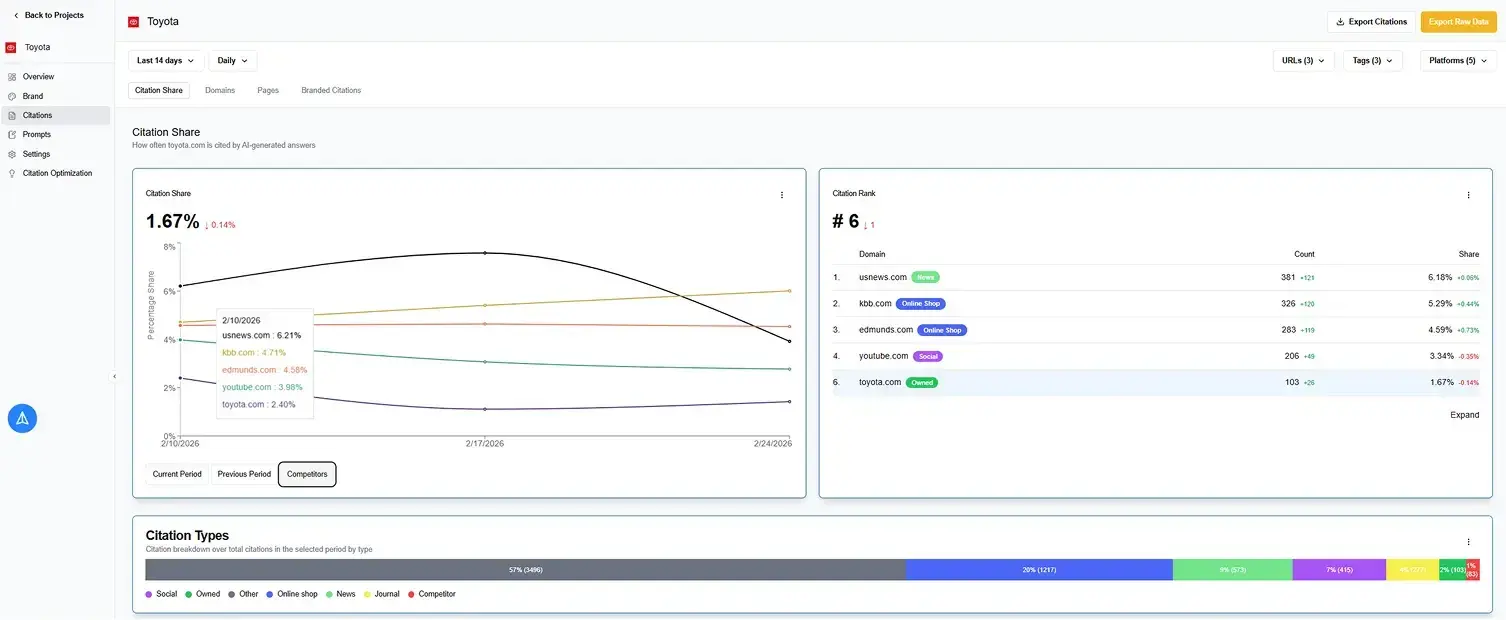
HubSpot AEO stands out as an integrated solution that bridges the gap between visibility and revenue. By tracking presence across ChatGPT, Perplexity, and Gemini, it offers not just monitoring, but an "action layer" that turns visibility gaps into content recommendations. For organizations already invested in the HubSpot ecosystem, this allows for the seamless connection of AI search data with broader pipeline analytics.
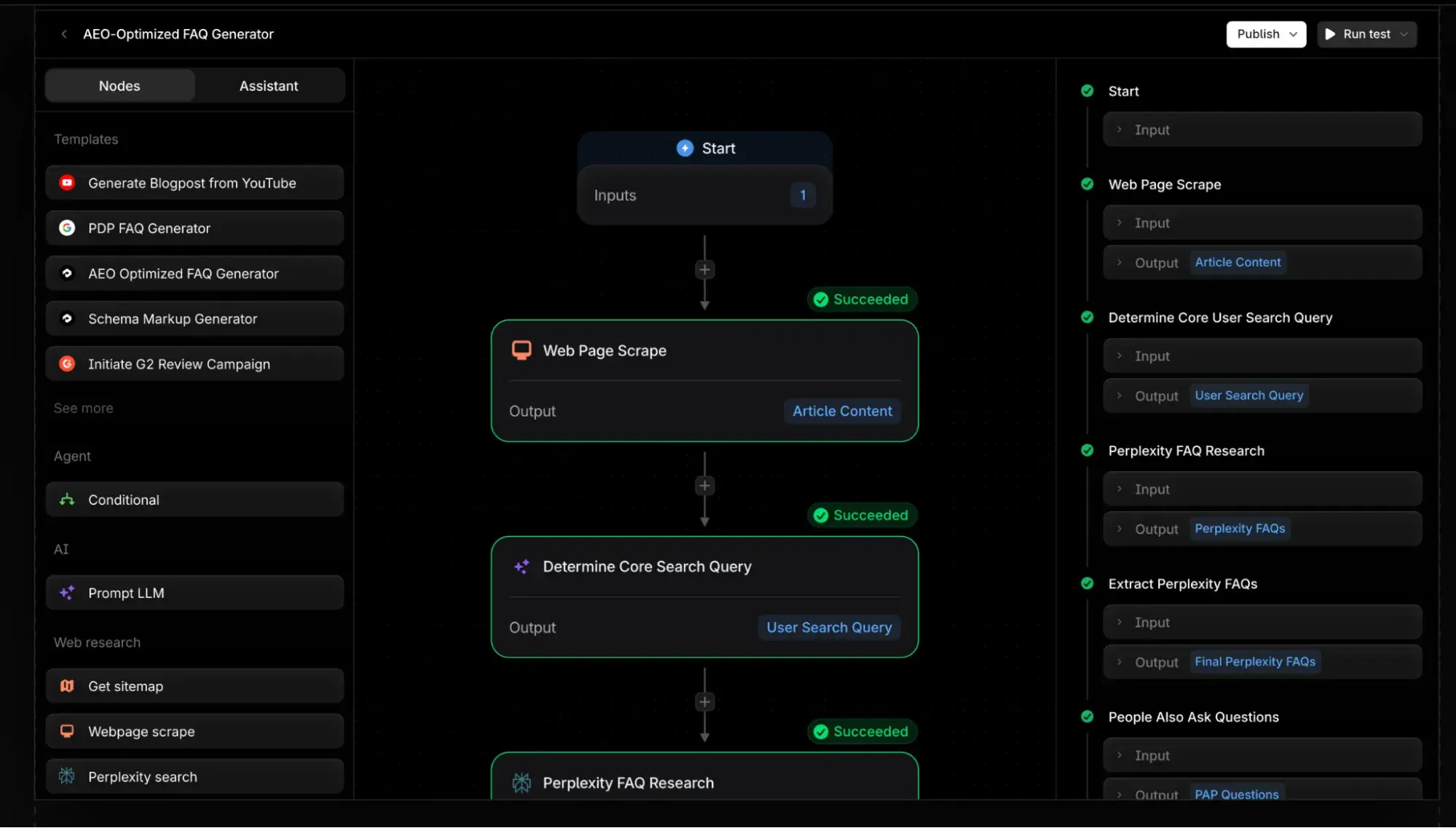
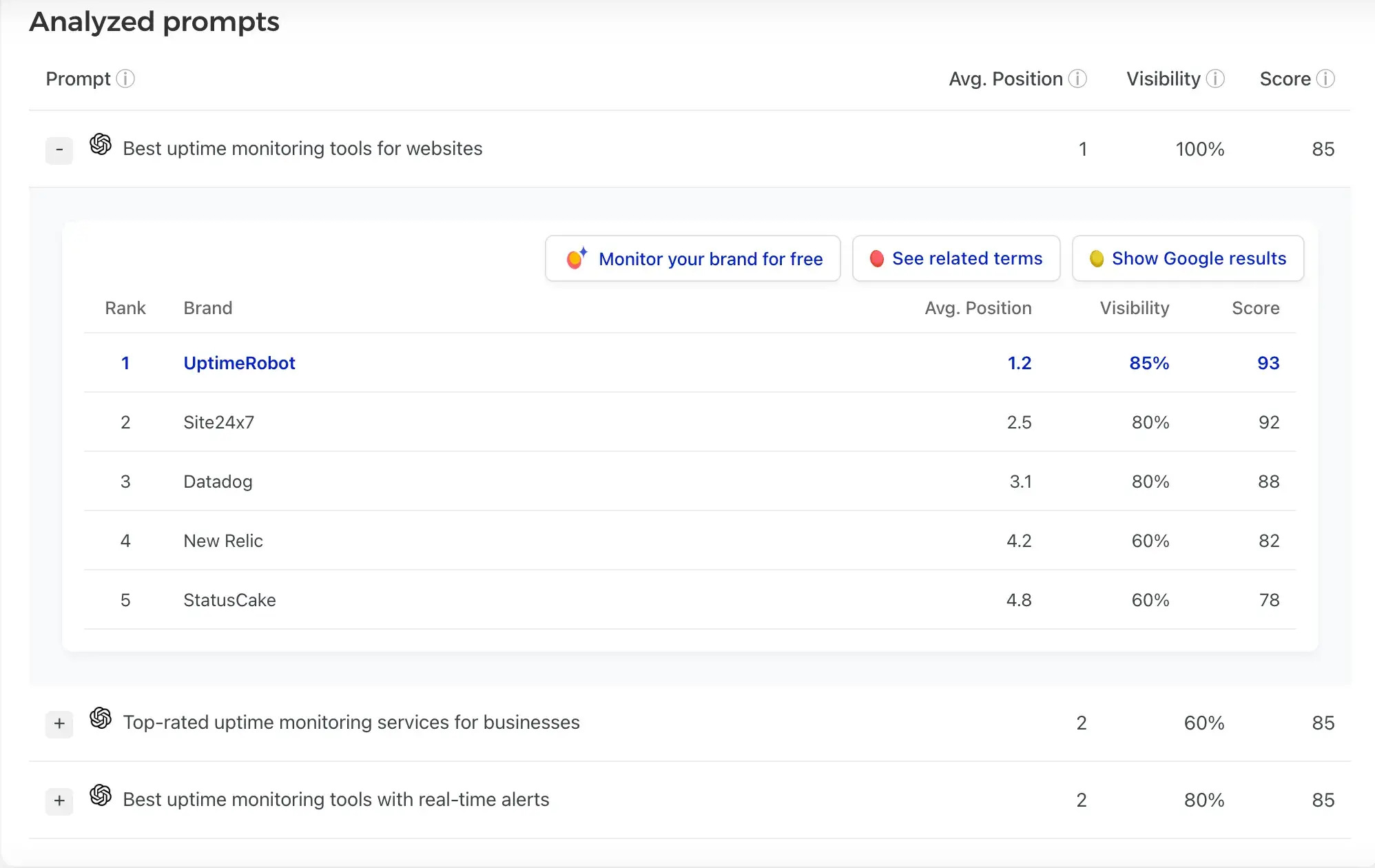
Profound provides an alternative for larger enterprises that require a dedicated AEO program. With advanced features such as agent analytics and prompt volumes, it is built for companies that treat AI visibility as a continuous, multi-departmental project rather than an ad-hoc reporting task.
Peec AI has gained traction among content-heavy teams by prioritizing collaboration. Its pricing structure, which favors seat-agnostic access, makes it an attractive option for agencies where multiple stakeholders—from SEO specialists to PR leads—need to access the same underlying data.
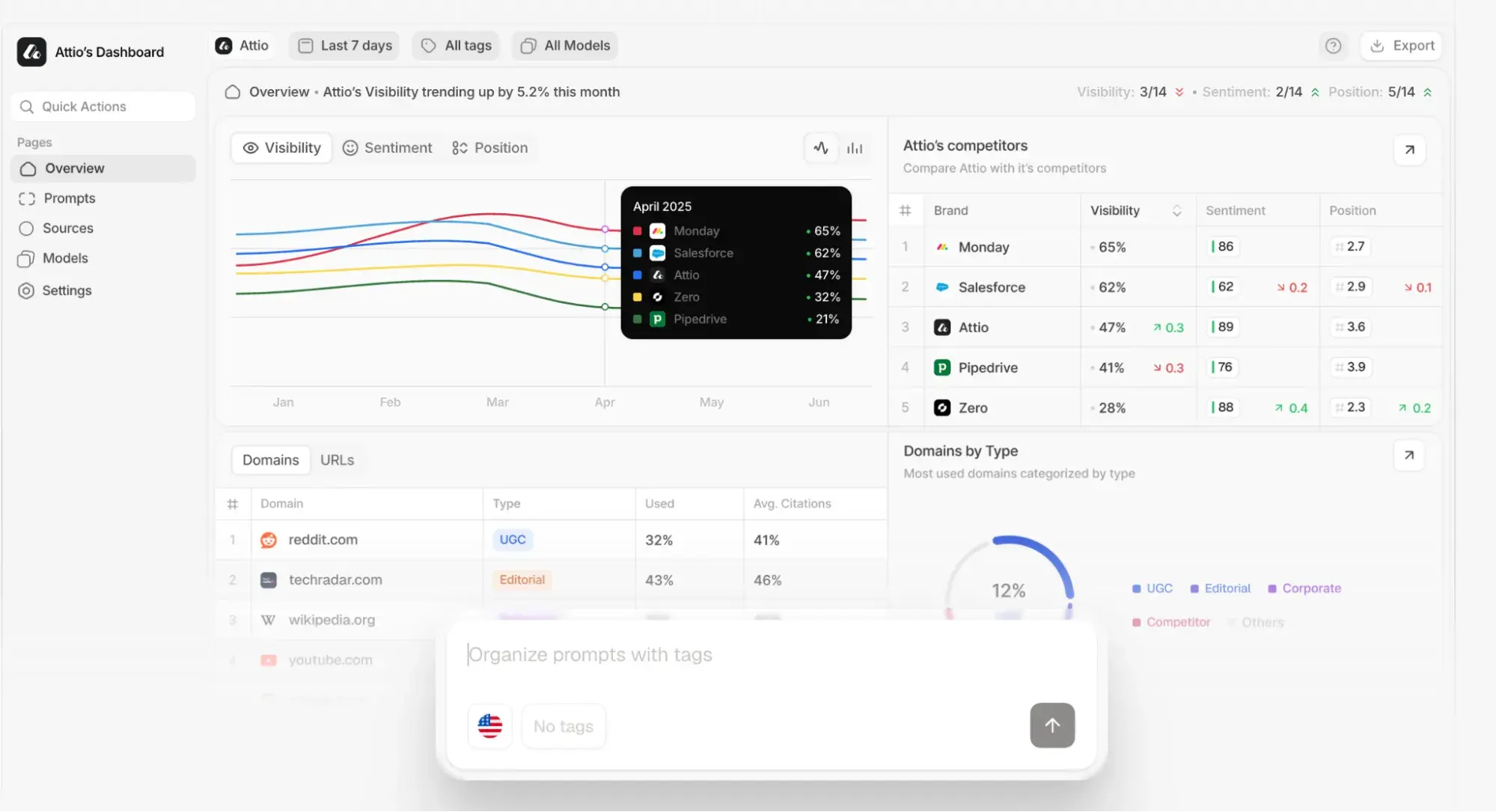
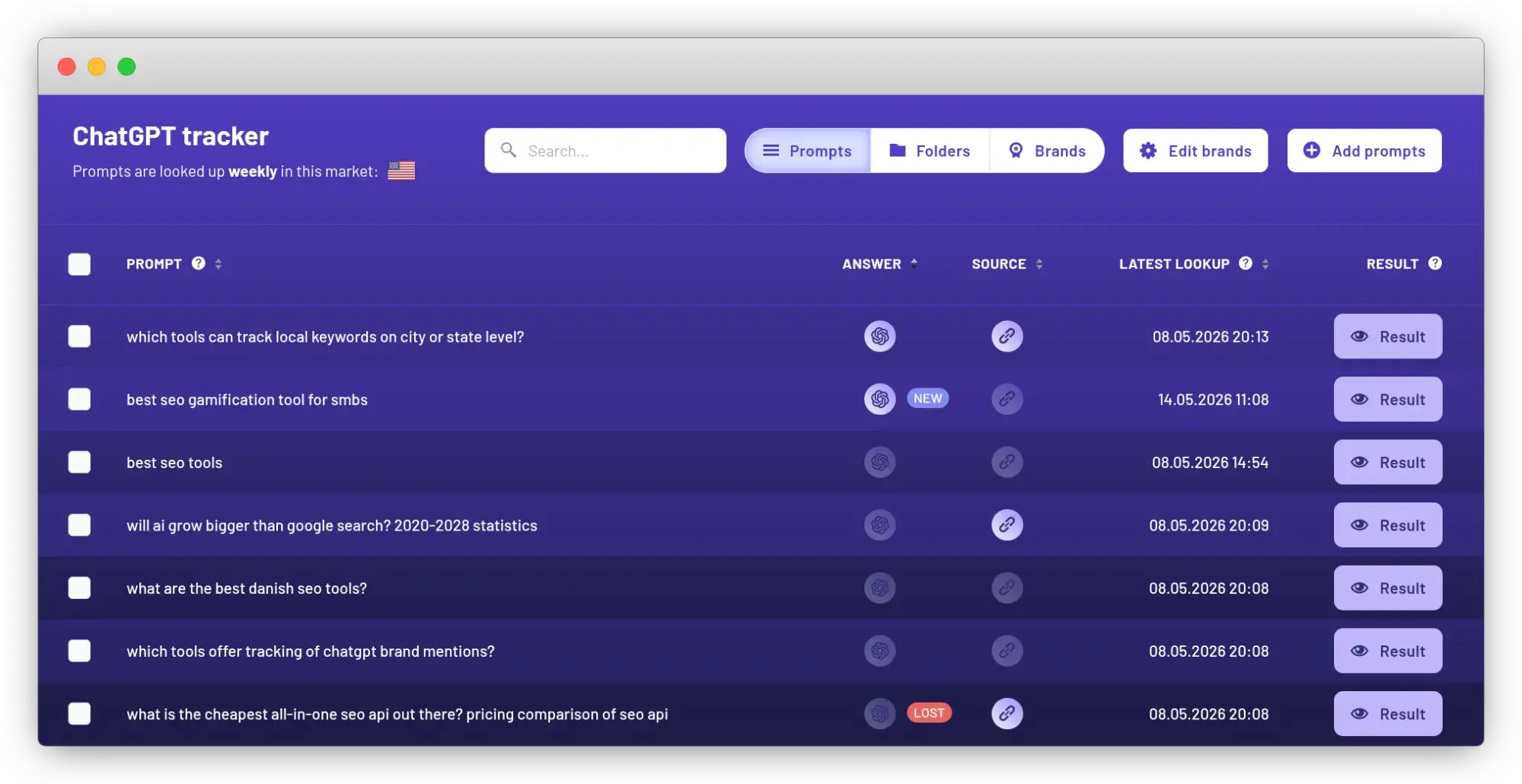
Xofu takes a specialized approach by focusing exclusively on bottom-of-the-funnel, purchase-intent prompts. By ignoring the noise of generic mentions, it provides a cleaner view of how a brand fares when potential customers are actively comparing vendors.
Finally, tools like Mangools AI Search Grader and Morningscore offer specific entry points. Mangools provides a vital free diagnostic for teams that need a baseline before committing to a paid, ongoing subscription. Morningscore, meanwhile, appeals to users who want to keep their ChatGPT monitoring within a familiar, traditional SEO dashboard.
The Imperative of Data Integration
The central challenge for 2026 and beyond is the integration of AI metrics into the broader business intelligence framework. According to HubSpot’s 2026 State of Marketing report, 12.4% of marketers struggle with cross-departmental data sharing. Introducing a standalone AI visibility tool that does not integrate with a company’s CRM only exacerbates this fragmentation.
To truly extract value, teams must treat AI visibility as a component of the customer journey. When a brand appears in a Gemini response for a high-intent query, that event must be traceable. By connecting these visibility trends with CRM data, attribution models, and revenue reporting, marketers can finally answer the critical question: "Does this AI visibility drive business growth?"
Implementing a Successful Rollout
For teams looking to transition or adopt an AI visibility program, a structured approach is recommended to avoid common pitfalls:
- Phase 1: Integration. Ensure the chosen tool communicates with existing analytics suites.
- Phase 2: Prompt Governance. Standardize the prompts used to measure visibility to ensure year-over-year or month-over-month comparisons remain statistically valid.
- Phase 3: Quality Assurance. Because AI models are stochastic, perform multi-run testing to account for variance in responses.
- Phase 4: Evidence Preservation. Maintain an archive of the raw AI responses and cited sources. This not only aids in auditing but provides the "proof of concept" required to justify further investment in the channel.
- Phase 5: Pilot and Scale. Begin with a high-intent subset of keywords before expanding the program to a broader, site-wide strategy.
The Future of Search Visibility
The role of AI visibility tools is not to replace traditional SEO, but to provide a necessary evolution of it. While traditional SEO tools remain essential for tracking site health and technical rankings, AI visibility platforms fill the crucial gap of the "Answer Economy."
As the industry moves forward, the "winner" in the market will likely be the tool that provides the most actionable intelligence. A visibility score is merely a diagnostic; the true value lies in the platform’s ability to guide the marketer toward the next logical step—whether that is a content refresh, a new PR initiative, or a strategic adjustment in competitive positioning. As we look toward the latter half of the decade, the ability to interpret and influence these AI-generated responses will define the next generation of market leaders. Organizations that act now to establish these measurement foundations will be best positioned to thrive as AI continues to rewrite the rules of digital discovery.