From Viral Videos to Feature Films: Caleb Hearon and Zooey Deschanel Share Industry Insights at the Toronto International Film Festival

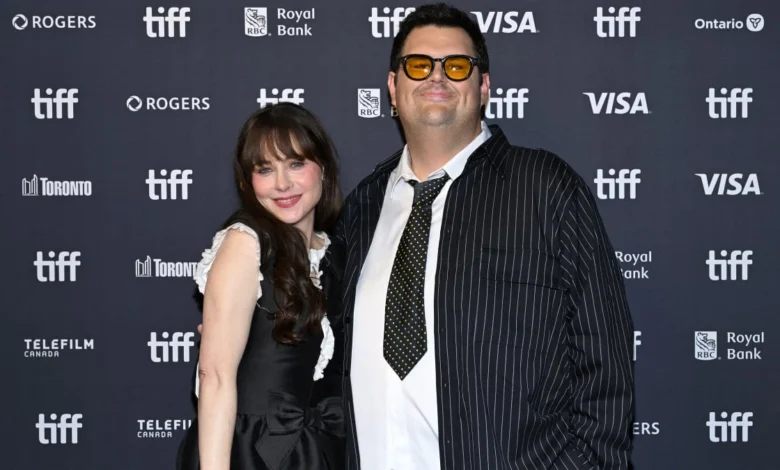
The intersection of digital content creation and traditional cinematic storytelling took center stage this week at the Toronto International Film Festival (TIFF). During a high-profile panel titled "For You Feed to Feature Film," prominent entertainer and writer Caleb Hearon and veteran actor and musician Zooey Deschanel addressed the evolving landscape of media production. Moderated by Jenny Kim, TikTok’s Global Entertainment Partnerships Lead, the discussion focused on the mechanisms, challenges, and mindset required to successfully transition from short-form digital platforms to full-scale feature films.
The event, captured in part by industry journalists on the ground, provided aspiring filmmakers and digital creators with a candid look behind the scenes of modern Hollywood development. Hearon and Deschanel, who star together in the newly premiered feature film Trash Mountain—which Hearon co-wrote alongside Ruby Caster—offered sharp critiques of industry gatekeeping, financial realities in the modern entertainment economy, and the imperative for artists to take agency over their creative output.
Background and Context of the Panel
The migration of talent from online platforms such as TikTok, YouTube, and Instagram to traditional Hollywood studios has accelerated dramatically over the past decade. As digital creators build massive, highly engaged audiences independently, traditional film studios and television networks increasingly look to these platforms as incubators for fresh talent and proven intellectual property. However, this transition is rarely frictionless. Creators often face institutional skepticism, rigid casting pigeonholes, and complex financial structures that differ vastly from the direct monetization models of the digital sphere.
The "For You Feed to Feature Film" panel was designed to dissect these exact friction points. By pairing Deschanel—an artist who navigated the transition from indie cinema and network television to mainstream stardom and music before the era of algorithmic content creation—with Hearon, a rising voice who leveraged a robust digital following to break into screenwriting and feature film acting, the discussion bridged generational approaches to breaking into the entertainment industry.
Breaking Institutional Barriers and Rejecting Permission Culture
A central theme of the panel discussion was the necessity of bypassing traditional gatekeepers. For decades, aspiring actors, writers, and musicians operated under a "permission-based" model, waiting for casting directors, studio executives, or record labels to validate their talent before launching their careers. Both panelists strongly advised against this approach.
Deschanel drew upon her own multi-decade career in film, television, and music to illustrate the point. She recalled encountering resistance early in her musical pursuits from industry professionals who argued that an established acting career precluded her from being taken seriously as a musician. Rather than accepting these arbitrary boundaries, Deschanel chose to forge ahead independently. "How about you just be the person that does it first," she told the TIFF audience, expressing her conviction that creators operating on these non-traditional paths inherently possess unique perspectives worth sharing with a global audience.
Hearon expanded on this sentiment by addressing the modern corporate instinct to box digital creators into narrow, easily marketable identities. In an era where algorithms favor consistency and recognizable tropes, media companies frequently attempt to leverage a creator’s established persona for commercial gain while limiting their broader artistic ambitions.
Hearon’s primary advice to creators entering the traditional pipeline was remarkably blunt: learn how to say no early. He cautioned against allowing institutions, production companies, or corporate partners to push creators into unfavorable projects under the guise that compliance is the sole pathway to professional advancement. By establishing firm boundaries early in their careers, artists can preserve their creative integrity and avoid being typecast into commercial vehicles that do not serve their long-term artistic goals.
The Financial Realities of Modern Entertainment and Content Creation
Beyond creative autonomy, the panel tackled the economic realities facing contemporary artists. The financial ecosystem of the entertainment industry has shifted significantly, with traditional studios increasingly offloading financial risk onto independent creators and DIY platforms. While this decentralization allows creators to retain greater control over their initial output, it also introduces substantial economic precarity.
Hearon provided a refreshingly transparent assessment of modern artistic compensation. Despite starring in four feature films over the preceding year, he noted that the vast majority of his financial stability continues to stem from independent ventures, specifically referencing the revenue generated by reading advertisements on his podcast.
This juxtaposition highlights a broader structural issue within the entertainment landscape: while digital creators possess unprecedented leverage due to built-in audiences and direct lines of communication with consumers, the traditional film and television sectors frequently undercompensate talent during the transition to feature-length projects. Hearon argued that creators must recognize their intrinsic value in an entertainment ecosystem that increasingly relies on pre-existing digital traction to mitigate the financial risks of theatrical distribution.
The "DIY nature" of content creation, while empowering, requires artists to remain vigilant about fair compensation and contractual terms. Hearon’s overarching message underscored that financial pragmatism must accompany artistic ambition, urging creators to master the art of refusal to secure better terms and maintain control over their work.
Chronology and Associated Events at TIFF
The panel served as a major promotional and critical touchpoint for Trash Mountain, a project that highlights the practical application of Hearon’s advice. Co-written by Hearon and Ruby Caster, the film represents the culmination of years of digital content creation translating into traditional cinematic storytelling.
Kristy Puchko, Entertainment Editor for Mashable, provided continuous on-the-ground coverage of the festival, highlighting the panel as one of the most practical and unfiltered discussions regarding career mobility in modern entertainment. In addition to covering the panel discussions, Puchko’s festival reporting included a comprehensive critical review of Trash Mountain, evaluating how Hearon’s distinct comedic voice and digital background successfully adapted to the demands of feature-length narrative cinema.
The reception of Trash Mountain at TIFF reflects a growing appetite among festival programmers and audiences for films originating from distinct, non-traditional narrative voices. As studios continue to monitor the cultural resonance of online creators, panels of this nature offer critical insight into the future of talent acquisition and project development.
Broader Industry Implications and Analysis
The discussions at the TIFF "For You Feed to Feature Film" panel underscore a permanent shift in how entertainment talent is discovered, cultivated, and monetized. Several key implications emerge from the insights shared by Hearon, Deschanel, and moderator Jenny Kim:
-
Democratization vs. Corporate Co-Optation: While digital platforms have democratized the initial stages of content creation, traditional media companies still hold the keys to large-scale cinematic distribution and institutional prestige. Creators are increasingly required to navigate a delicate balance between leveraging their digital independence and submitting to the corporate apparatus of major studios.
-
The Evolution of Artist Leverage: Historically, new entrants to the film industry possessed zero leverage against established studios. Today, creators who command loyal audiences across digital networks enter the traditional pipeline with built-in marketing metrics. As Hearon pointed out, recognizing and utilizing this leverage—even when major studios attempt to minimize financial exposure—is critical for modern career longevity.
-
The Death of the Single-Hyphenate Career: The traditional expectation that an artist must focus exclusively on a single discipline (acting, writing, music, or digital content creation) is rapidly eroding. Panelists demonstrated that multi-hyphenate career paths are not only viable but necessary for navigating the fluctuations of the contemporary entertainment economy.
As the lines between digital media and traditional cinema continue to blur, events at festivals like TIFF provide a vital forum for decoding these industry shifts. The experiences shared by creators who have successfully navigated the transition serve as a practical blueprint for a new generation of artists determined to tell their stories on their own terms.
Related posts: