Decoding the 2026 US Housing Market Crisis: Why Record High Prices and Inventory Shortages Persist


The American housing market in June 2026 presents a paradoxical landscape of record-breaking figures, sluggish transaction volumes, and profound affordability challenges. National home prices have scaled a historic peak of $409,000, representing a staggering 20 percent surge over the past five years. This rapid appreciation has unfolded against a backdrop of elevated mortgage rates, inflationary pressures, and persistent economic uncertainty. While borrowing costs and property taxes continue to stretch household budgets, the broader market remains caught in a severe inventory bottleneck. Prospective buyers find themselves sidelined by high monthly expenditures, while the dream of homeownership slips further out of reach for a significant portion of the population, leading many to pivot toward renting. To understand how the market reached this juncture, industry analysts point to a confluence of structural underbuilding, legacy zoning laws, and shifting investor footprints that continue to reshape the real estate paradigm.
Historical Context and the Roots of the Inventory Shortage
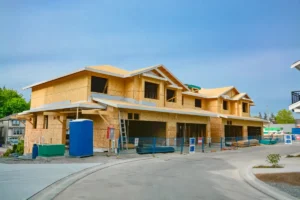
The genesis of the current housing deficit can be traced back nearly two decades to the Great Recession of 2007–2009. During that period, home prices experienced a precipitous freefall, accompanied by a wave of foreclosures that crippled the residential construction industry. Housing starts plummeted to historic lows, and the sector never fully recovered its pre-crisis momentum. Consequently, the United States has grappled with a persistent underbuilding trend for more than fifteen years.
This foundational deficit was severely compounded by the pandemic-era homebuying frenzy of 2020 and 2021. Fueled by historic low interest rates and a mass migration toward suburban and secondary markets, buyers rapidly drained an already depleted inventory down to record-low levels. As homeowners locked in ultra-low mortgage rates chose to stay put—stretching average homeowner tenure to historic highs—the pool of available resale homes dried up. Current estimates place the national housing shortage anywhere from 1.5 million to 7 million units. Starter homes have suffered the most acute deficits, as real estate developers have increasingly favored constructing larger, higher-margin properties to offset rising labor and material expenses.
The Legislative and Regulatory Landscape: Zoning Laws and Federal Interventions
Regulatory barriers, particularly at the local level, have further restricted the capacity of developers to build at scale. In many metropolitan areas, single-family zoning laws established in the mid-20th century continue to dominate municipal planning. For instance, in California—a state grappling with one of the nation’s most severe housing deficits—roughly 96 percent of available residential land is zoned exclusively for single-family homes. These rigid constraints severely limit the development of higher-density housing, such as townhomes, duplexes, and apartment complexes, which are critical for absorbing population growth and moderating price spikes.
Federal and state authorities have increasingly turned their attention toward regulatory reform. At the federal level, administrations have introduced executive actions aimed at removing regulatory hurdles to affordable home construction and exploring development opportunities on federal land. Simultaneously, the passage of the ROAD to Housing Act represents a legislative effort to boost supply and streamline federal housing policies. However, experts note that broader policy shifts remain contentious. While some measures target excessive regulations, certain trade policies and immigration restrictions risk driving up construction labor costs and building material prices through tariffs. Consequently, states have increasingly taken the lead on zoning reform, experimenting with laws that permit accessory dwelling units (ADUs) and multifamily developments near transit hubs.
The Evolving Role of Institutional and Corporate Investors
The influence of housing investors—ranging from institutional Wall Street firms to smaller business entities—has become a central point of debate in discussions surrounding housing affordability. During the pandemic-era surge, investors aggressively expanded their footprint, purchasing billions of dollars in residential real estate and capturing a peak market share of roughly 21 percent by 2022. While this acquisition rate has since cooled amid higher borrowing costs and elevated prices, institutional participation remains notably higher than historical pre-pandemic averages.
The debate over investor involvement centers on a complex economic trade-off. Critics argue that corporate buyers compete directly with everyday families, removing critical starter-home inventory from the for-sale market and driving up purchase prices. In response, federal lawmakers have proposed legislative measures, such as provisions within the Senate housing bills, aimed at restricting large institutional buyers from purchasing single-family homes in certain segments of the market.
Conversely, housing economists point out that the vast majority of investor-owned properties are ultimately funneled back into the rental market, including build-to-rent communities that provide alternative housing options. Research indicates that large Wall Street institutional investors account for a small fraction of total investor purchases—roughly one percent of all home sales. Analysts caution that blanket restrictions on investors could inadvertently contract rental supply, placing renewed upward pressure on rental rates and shifting displaced renters back into an already constrained for-sale market.
Economic Implications and Consumer Sentiment in 2026
As the market navigates 2026, home price growth has moderated significantly compared to the explosive double-digit gains seen during the pandemic. Prices have settled into a slower year-over-year growth rate of approximately two percent per month. While this pace is generally more aligned with wage growth, high interest rates and elevated insurance premiums continue to weigh heavily on consumer purchasing power.
Broader macroeconomic headwinds further complicate the outlook. Global supply chain disruptions, tariff implementations on construction materials, and geopolitical tensions impacting oil prices and bond markets have created sustained volatility. Consumer sentiment indices reflect these anxieties, with both prospective buyers and homebuilders exhibiting caution. Builder sentiment has occasionally dipped in response to financing costs and economic uncertainty, leading developers to pace their project pipelines carefully.
Navigating Regional Divergences: Buyers Versus Sellers
National generalizations often obscure significant regional disparities within the 2026 housing market. While the overarching national trend points toward a slow and expensive environment that theoretically favors buyers through increased negotiating power, local market dynamics vary drastically by geography.
In many metropolitan areas across the Midwest, the Northeast, and the San Francisco Bay Area, strong demand coupled with an acute lack of inventory continues to drive competitive bidding and rapid sales. Conversely, numerous housing markets in the South and Southwest are experiencing a cooler dynamic. In these regions, sellers frequently outnumber buyers, leading to softening prices, increased price reductions, and greater concessions offered by sellers to finalize transactions. Real estate experts strongly advise market participants to consult local professionals to interpret micro-market conditions rather than relying solely on national headlines.
Expert Analysis and Future Outlook
Industry leaders emphasize that solving the structural affordability crisis requires a sustained, multi-faceted commitment from both the public and private sectors. Daryl Fairweather, Redfin Chief Economist, notes that while normal market cycles involve gradual price appreciation, the compounding effects of a decades-long inventory deficit, pandemic-era market whiplash, and economic uncertainty have produced a uniquely sluggish and costly environment. Fairweather stresses that closing the supply gap will require concerted political will and industry innovation to bring homeownership back within reach for average Americans.
Similarly, Chen Zhao, Head of Economics Research at Redfin, highlights the circular nature of the current market constraints. Limited supply pushes costs higher, which sidelines both buyers and sellers, ultimately suppressing new inventory generation. Until homebuilding accelerates significantly or broader macroeconomic corrections take hold, the structural imbalance is expected to persist.
Ultimately, high housing costs remain a direct reflection of a fundamental supply deficit, compounded by restrictive zoning policies and shifting investor dynamics. While legislative frameworks like the ROAD to Housing Act and localized zoning reforms offer pathways toward long-term recovery, the immediate landscape suggests that buyers and sellers must navigate a cautious market defined by careful negotiation, regional differentiation, and a slow return to historical affordability norms.
Related posts: