Macklemore Challenges Robert Kraft to Match Million-Dollar Donation Following His Removal from Ed Sheeran Loop Tour

The ongoing controversy surrounding the intersection of musical performance, corporate venue management, and geopolitical advocacy reached a new crescendo this week as rapper Macklemore publicly challenged billionaire Robert Kraft to match his $1 million donation to humanitarian aid organizations. The Seattle-based artist, who was recently removed from the lineup of Ed Sheeran’s "Loop Tour," has leveraged the situation to draw global attention to the humanitarian crisis in Gaza, shifting the narrative from his personal exclusion to the ongoing suffering of Palestinian civilians.
The Catalyst: Performances and Protests
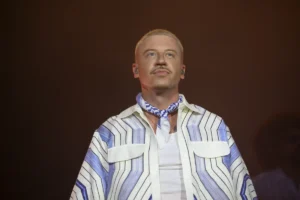
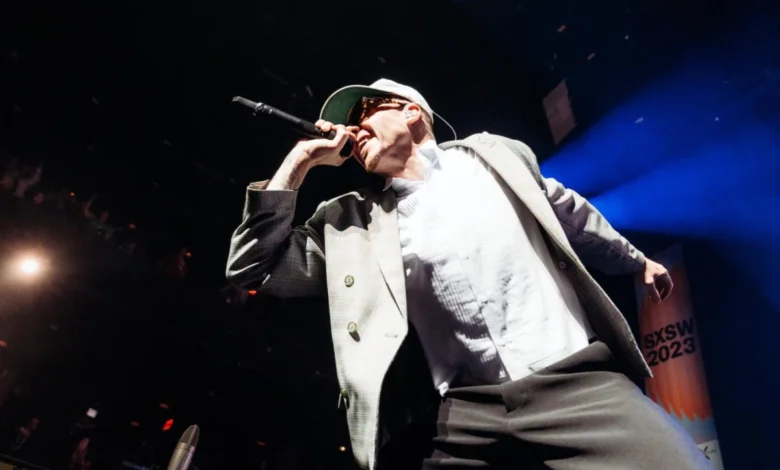
The current dispute traces its origins to early September 2024, when Macklemore performed at MetLife Stadium in New Jersey as part of Ed Sheeran’s ongoing tour. During those concerts, held on September 4 and 5, Macklemore performed his protest anthem "Hind’s Hall." The track, which serves as a searing indictment of the humanitarian catastrophe in Gaza, was accompanied by visual displays highlighting the devastation caused by the ongoing conflict.
In his lyrics, the artist characterized the actions taken by the Israeli military in the Gaza Strip as genocide—a classification that, while echoing the sentiments of some international bodies and human rights organizations, remains a point of intense diplomatic contention. The Israeli government and its allies, including the United States, have consistently denied allegations of genocide, citing the necessity of responding to the Hamas-led attacks on October 7, 2023. As of the most recent reporting from the Gaza Health Ministry, the casualty count has surpassed 73,000, with widespread famine and displacement affecting the remaining population.
Chronology of the Tour Cancellation
The removal of Macklemore from the tour did not happen in a vacuum; it was the result of high-level pressure applied to tour promoters. According to statements released by the artist, Robert Kraft—the owner of the New England Patriots and a significant figure in the entertainment and venue management space—played a pivotal role in the decision. Macklemore alleged that Kraft threatened to cancel tour dates at Gillette Stadium unless the rapper was removed from the bill.
On September 14, the tour’s promoter, Messina Touring Group, issued a formal statement confirming that Macklemore would no longer be participating in the remaining support dates. The promoter cited "notifications from venues" regarding their unwillingness to host an artist whose stage presence was deemed a "platform for hate speech" by some stakeholders.
The subsequent 48 hours saw a massive exodus of the tour’s other supporting acts. Finneas, Lukas Graham, and Aaron Rowe all announced their departures from the tour, citing solidarity with the Palestinian cause and dissatisfaction with the treatment of their fellow artist. This chain reaction effectively placed Ed Sheeran in a precarious professional position, forcing him to address the matter publicly. Sheeran clarified that while he was aware of the discussions, the final decision to drop Macklemore rested with the promoters and venue owners, not his own management team.
The Million-Dollar Challenge
In a public statement released on September 16, Macklemore announced he would be donating the entirety of his net earnings from the tour—totaling $1 million—to six organizations providing critical aid in the region. These organizations include the Palestine Children’s Relief Fund, HEAL Palestine, the Gaza Soup Kitchen, Medical Aid for Palestinians, the UNRWA USA National Committee, and Anera.
"Writing a check is one of the least costly forms of solidarity available to me," Macklemore wrote. "I am doing it because I can, and because these organizations are doing the work while much of the world debates it."
He then directly addressed Robert Kraft, inviting the billionaire to match the donation. The challenge serves as both a moral appeal and a strategic escalation, forcing a public dialogue regarding the responsibilities of venue owners in navigating the "culture wars" that have increasingly permeated the entertainment industry.
Official Responses and Corporate Stance
Robert Kraft, a well-known philanthropist and proponent of Jewish advocacy, responded to the controversy by emphasizing his commitment to preventing what he termed "hate speech" in spaces under his control. In a statement, Kraft acknowledged the suffering of innocent Palestinians but argued that "advocacy should not come at the expense of the Jewish community." He expressed a desire to sit down with the rapper to discuss the complexities of the situation, characterizing the common goal as "peace for all people."
Sheeran’s team, meanwhile, has attempted to decouple the musician’s artistic vision from the venue-level disputes. Sheeran’s statement emphasized his responsibility to his touring crew and the thousands of fans who had already purchased tickets. The pop star expressed regret over the situation, noting that he would never intentionally let down the people who rely on his tours for their livelihoods.
Broader Implications for the Music Industry
This incident highlights a growing tension within the entertainment industry: the shrinking space for overt political expression within large-scale, corporate-sponsored tours. Historically, music has served as a vehicle for political dissent, from the Vietnam War era to the anti-apartheid movement. However, the current landscape of massive stadium tours, which rely on a complex network of corporate sponsorships, private venue ownership, and global logistics, creates a highly sensitive environment where "apolitical" stances are often enforced by those holding the purse strings.
The case of the Loop Tour suggests that the "apolitical" norm is becoming increasingly difficult to maintain. As artists gain more agency through social media and direct fan engagement, the ability of corporate entities to gatekeep the stage is being challenged.
Data and Humanitarian Context
The organizations Macklemore has chosen to support operate in one of the most dangerous humanitarian environments in the world. The UNRWA, in particular, has faced immense budgetary and political pressure, making private donations of this magnitude significant. The six chosen charities are primarily focused on healthcare, food security, and pediatric relief—sectors that have been decimated by the ongoing conflict.
The total of $1 million represents a substantial contribution to these specific NGOs, which have seen a surge in demand as international aid corridors remain constrained. While critics may argue that the donation is performative or politically polarizing, supporters of the artist view the act as a necessary alignment of personal wealth with personal ethics.
Analysis: A New Era of Artist Activism
The fallout from the Loop Tour indicates that the industry is entering a new phase of accountability. When performers like Macklemore use their platform to voice opposition to state actions, they are no longer just artists; they are political actors operating within a corporate ecosystem that prefers neutrality.
The move by the other support acts to quit the tour is a significant indicator of shifting peer dynamics in the music industry. It suggests that for a younger generation of performers, the cost of "silence" is increasingly perceived as higher than the cost of losing a high-profile touring opportunity.
As the situation stands, the public, the promoters, and the stakeholders involved are locked in a debate that extends far beyond the stage. Whether Robert Kraft will respond to the challenge remains to be seen, but the incident has already served to illuminate the deep divisions regarding how the entertainment industry should handle sensitive geopolitical issues.
For now, the "Loop Tour" remains an example of how modern tour management, under the pressure of intense public discourse, is struggling to reconcile artistic expression with commercial stability. The conversation has shifted from the music itself to the fundamental question of what it means for an artist to hold a position of influence in a time of global crisis. As Macklemore noted in his final appeal: "When the news cycle moves on, which it will, don’t move with it." Whether the music industry will heed this advice or double down on its commitment to neutrality remains the central, unresolved question of this controversy.
Related posts: