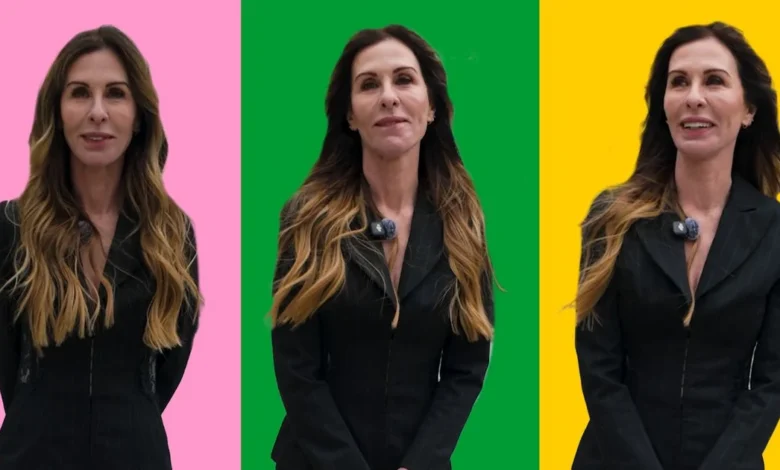
For four and a half decades, Carole Radziwill has navigated the shifting topography of New York City, witnessing its evolution from the grit of the late 1970s to the hyper-gentrified landscape of the 21st century. As a longtime resident, author, and television personality, her perspective offers a specific lens through which to examine the urban identity of a city that often demands a high price for entry and an even higher tolerance for its eccentricities. Her recent participation in the "NYQ" series highlights a long-standing discourse regarding what it truly means to be a "New Yorker"—a designation that has become increasingly contested as the city’s demographics, infrastructure, and cultural centers undergo constant, often rapid, transformation.
The Evolution of the New York Resident
The concept of the "authentic" New Yorker is a fluid construct. Historically, the title was tied to longevity and a specific set of survival skills—navigating the transit system during periods of municipal fiscal crisis, mastering the art of the street-level transaction, and maintaining a stoic detachment from the city’s more chaotic elements. Radziwill’s tenure, beginning in the late 1970s, places her in a cohort that experienced the transition from the city’s near-bankruptcy era to the revitalization projects of the 1990s and the subsequent economic booms.
Her habits—hailing taxis for short distances, utilizing the city’s vast park systems as a primary refuge, and maintaining a pragmatic, if sometimes weary, relationship with the subway—reflect a synthesis of traditional Manhattan elitism and the necessary compromises of urban living. The reliance on the yellow cab, for instance, serves as a marker of a specific socioeconomic class that values time over the fluctuating efficiency of the Metropolitan Transportation Authority (MTA).
Infrastructure, Transit, and Urban Etiquette
The MTA remains the circulatory system of the city, and the rules governing it are often unwritten but strictly enforced by social consensus. Radziwill’s insistence on a formal rule prohibiting passengers from placing bags on empty seats speaks to a broader frustration with public space management in a city of over 8 million people.
Data from the MTA indicates that daily subway ridership has been steadily recovering post-pandemic, yet the friction points remain largely the same as they were decades ago: overcrowding, service delays, and the perennial debate over shared space. When infrastructure fails—as is often the case with older, legacy systems—the "New Yorker" response is characterized by a rapid shift to alternative modes of transport, such as walking or the immediate hail of a taxi. This behavior highlights a fundamental truth about New York life: the city is only as functional as one’s ability to bypass its systemic delays.
The Socio-Spatial Geography of the Five Boroughs
Radziwill’s preference for "the city"—her shorthand for Manhattan—and her critique of developments like Hudson Yards underscore a divide in urban planning philosophy. Hudson Yards, a massive $25 billion private real estate project, has frequently been criticized for its sterile, corporate aesthetic, which many long-term residents argue lacks the organic, chaotic character of older neighborhoods.
Conversely, her affinity for landmarks like the Morgan Library and her fondness for the sounds of the city—specifically the mechanical hum of the bus fleet—suggest an appreciation for the mundane textures of New York that remain constant despite the luxury high-rises replacing the historic building stock. Her list of favorite locales, such as Nicola’s on Lexington Avenue, points to the importance of "third places"—social environments separate from the two usual social environments of home and the workplace—which have been declining due to rising commercial rents.
Chronology of a Changing City
To understand the context of Radziwill’s experience, one must look at the timeline of the city’s major shifts:
- 1976: The Bicentennial, which saw the arrival of the Tall Ships in New York Harbor—a formative memory for many of that generation.
- 1980s–1990s: A period of significant urban decay followed by aggressive municipal policy shifts under the Giuliani administration that prioritized safety and sanitation, fundamentally altering the city’s nightlife and public culture.
- 2000s–2010s: The "Bloomberg Era," marked by massive rezoning, the expansion of high-end real estate, and the rise of the tech-centric economy.
- 2020–Present: The pandemic-era exodus and the subsequent "return to the office" struggle, which has recalibrated the city’s relationship with its workforce and transit systems.
Radziwill’s admission that she no longer visits the Metropolitan Museum of Art, despite its cultural significance, reflects a common sentiment among long-term residents who find themselves increasingly alienated by the tourist-heavy, high-traffic nature of major cultural institutions.
The Psychology of Urban Resilience
The "New York" attitude is often characterized by a paradoxical mix of cynicism and sentimentality. Radziwill’s willingness to assist street performers or those distributing flyers, contrasted with her firm rejection of being filmed for social media, illustrates the boundaries of modern New York interactions. In a digital age where every street corner is a potential content studio, the "New Yorker" has developed a new defense mechanism: the refusal to participate in the performance of the city for external audiences.
Furthermore, her views on the city’s fauna—specifically the controversial affection for rats—touch upon a quintessential NYC survival trait: the normalization of the absurd. Whether it is the presence of pests or the frequent, often bizarre, celebrity sightings (such as her account of spotting Robert Redford at Rockefeller Center), the ability to process these events without alarm is a hallmark of someone who has integrated into the city’s frantic rhythm.
Implications for the Future of NYC
The discourse surrounding "what makes a New Yorker" is more than mere nostalgia; it is a vital conversation about the sustainability of urban culture. As the city continues to lose its small businesses and affordable housing, the demographic of who can afford to stay—and who chooses to leave—changes the city’s output.
Radziwill’s observations serve as a baseline for the "Old Guard" perspective. The implication for the future is clear: New York is currently in a state of flux where the tension between the "city that never sleeps" and the city that is becoming increasingly cost-prohibitive is reaching a breaking point. When residents like Radziwill note that being a New Yorker is defined by "staying in the city on the weekends in the summer," they are pointing to a commitment to the urban environment that transcends the transactional nature of transient residency.
As the city faces the next decade, the questions remain: Will the next generation of New Yorkers value the legacy institutions of the past, or will the city become a collection of disparate, high-rent enclaves? The answers likely lie in the daily, small-scale decisions of its residents—how they treat their neighbors, how they navigate the streets, and whether they maintain the grit that has historically defined the New York experience.
In conclusion, the portrait of New York City through the eyes of a 45-year resident is one of resilience, routine, and a deep-seated, if complicated, love for the environment. It is a city that provides a unique set of challenges, from the logistical to the social, but one that rewards those who can master its pace and appreciate its idiosyncrasies. Whether it is the sound of a bus or the sight of a rat in the subway, the essence of New York remains rooted in the acceptance of the city as a living, breathing, and occasionally frustrating organism that demands engagement rather than passive observation.