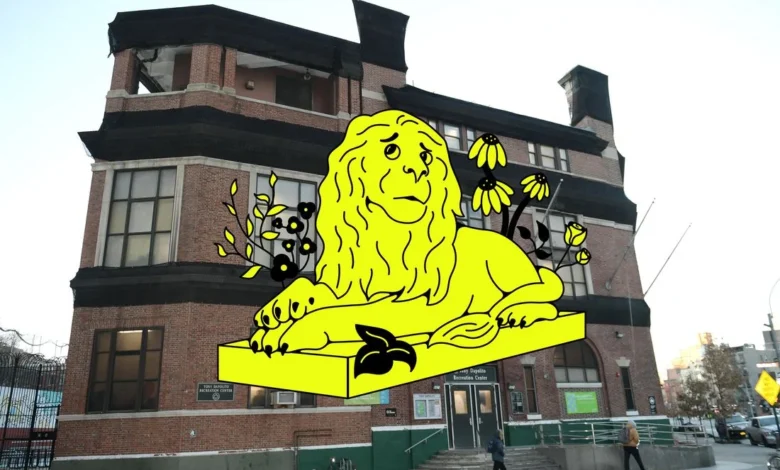
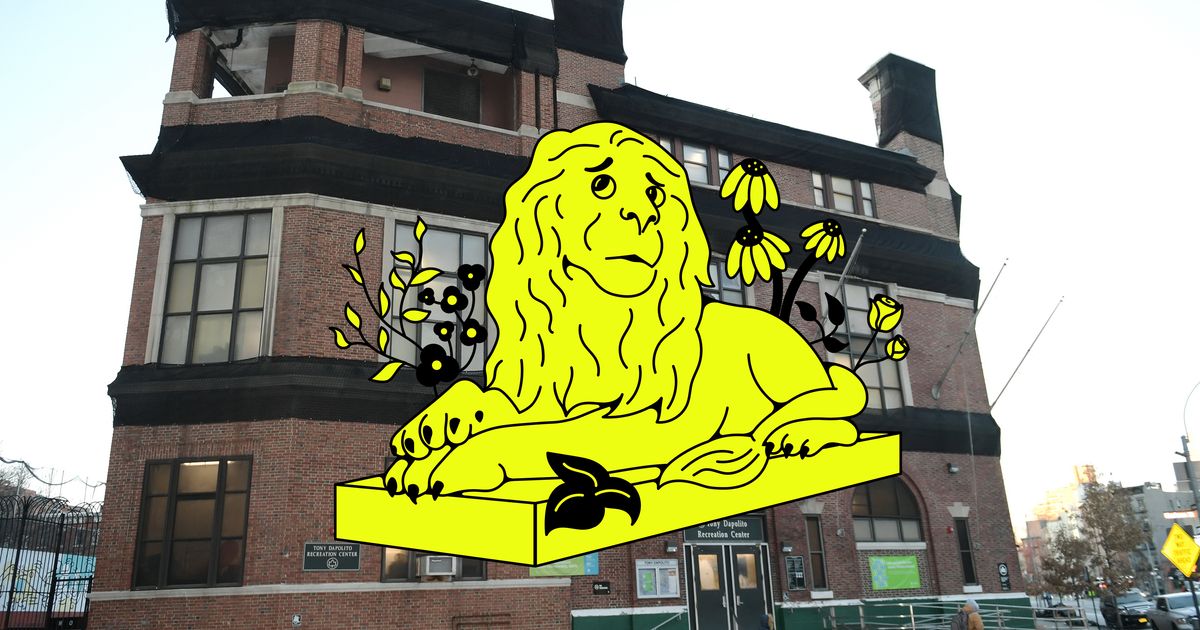
The Tony Dapolito Recreation Center stands as a 118-year-old red brick monument to a bygone era of municipal service. Situated at the convergence of Clarkson and Varick streets in the West Village, the structure—designed by the venerable firm of James Renwick Jr.—served as a vital public bathhouse for tenement dwellers at the dawn of the 20th century. Today, it has become the focal point of a fierce civic battle that encapsulates the broader, existential struggle facing New York City: the tension between preserving the architectural and social fabric of historic neighborhoods and the urgent, desperate mandate to expand the housing supply. At the center of this controversy is Andrew Berman, the executive director of Village Preservation, who finds himself increasingly isolated as the city’s political and social tides shift toward a pro-development, "Yes In My Backyard" (YIMBY) agenda.
A Legacy of Preservation Under Siege
For the past quarter-century, Andrew Berman has been the face of neighborhood advocacy in lower Manhattan. Under his leadership, the organization—formerly known as the Greenwich Village Society for Historic Preservation—successfully fought for the landmarking of hundreds of buildings and the establishment of numerous historic districts. During the mid-2000s, as the city saw a surge in high-rise development, Berman was frequently hailed as a hero of the "human scale," successfully lobbying to cap building heights and preserve the aesthetic continuity of the West Village, Soho, and Noho.
However, the political landscape of New York has undergone a seismic shift since those years. The city’s housing crisis, characterized by record-high rents and an acute shortage of affordable units, has catalyzed a new generation of activists. Organizations such as Abundance New York and Open New York have successfully framed the housing shortage as a humanitarian crisis, arguing that the restrictive zoning and historic preservation policies championed by figures like Berman are the primary culprits in preventing the construction of necessary new housing.
The Dapolito Center: A Case Study in Conflict
The current dispute over the Tony Dapolito Recreation Center is illustrative of this deepening divide. Closed since 2020, the facility was deemed structurally unsound by city officials, who proposed its demolition to make way for a new, larger development. The city’s plan, which includes the construction of "Hudson Mosaic"—a 35-story, 280-unit building providing 100 percent affordable housing—has become a flashpoint.
The city government argues that the new development is essential. Plans for the site include a state-of-the-art recreation center with a regulation-size pool, managed by the Parks Department, and the preservation of the iconic Keith Haring mural that currently adorns the existing pool wall. Yet, for Berman, the demolition is a bridge too far. He contends that landmarked buildings should remain protected and that tearing them down sets a dangerous precedent that undermines the entire regulatory framework of the Landmarks Preservation Commission.
"There is a lot of connected history here," Berman said during a recent site visit. "When they rip this down, they are ripping from the neighborhood a sense of place, a sense of continuity, and a connection to what came before."
Data and The "City of Yes" Reality
The debate is fueled by divergent interpretations of the city’s housing data. Proponents of development point to the stark disparity between landmarked and non-landmarked areas. According to recent urban development reports, the ten neighborhoods with the highest concentration of historic district protections have lost over 1,000 housing units over the last decade. Conversely, areas in those same neighborhoods outside of these restrictive zones have added nearly 65,000 units.
For critics like David Schleicher, a professor at Yale Law School, the obsession with preservation has crossed a line from historic stewardship into exclusionary zoning. "Nearly a quarter of buildings in Manhattan are under some form of landmark protection," Schleicher noted. "If we want to understand what life was like in 1900, preserving a building is a poor proxy for that history. Landmarking simply preserves the facade while the neighborhood becomes an enclave for the ultra-wealthy, effectively pricing out the very artists and working-class families that once defined these areas."
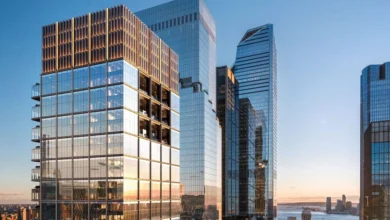
The Adams administration’s "City of Yes" initiative, which aims to produce 82,000 new units of housing over 15 years, is the legislative embodiment of this YIMBY philosophy. Berman has been one of the policy’s most vocal critics, arguing that the influx of luxury towers—such as the 538-foot-tall tower currently rising near 13th Street—does nothing to lower the cost of living for average New Yorkers. He likens the theory of "supply-side" housing to a flawed economic model, suggesting that building high-end inventory does not trickle down to the working class.
The Counter-Argument: Market Dynamics
Economists and housing advocates contest Berman’s "Maserati analogy"—the idea that new luxury supply does not lower the cost of existing, older units. Alex Armlovich of the Niskanen Center argues that the logic is inverted. "When you constrain the supply of new housing, you force the affluent to compete for the existing, older stock," Armlovich explained. "This drives up the price of everything, from luxury penthouses to pre-war walk-ups. The only way to alleviate the pressure is to allow for the construction of both high-end and market-rate housing, which in turn frees up the older, naturally occurring affordable housing stock."
The political stakes have also shifted. While former Mayor Michael Bloomberg often oversaw policies that aligned with preservationist goals, the current political climate—under an administration focused on addressing the housing shortage—has left Berman increasingly isolated. Even progressive candidates who once campaigned on promises to save such institutions as the Dapolito Center have, upon taking office, faced the harsh reality of the city’s housing needs, often opting to support the development projects they once opposed.

The Future of the Village
As the controversy over the Tony Dapolito Recreation Center drags on, the broader question remains: What does a sustainable New York look like in the 21st century?
Berman maintains that his fight is not against progress, but against a "right-wing, trickle-down, deregulatory approach" to urban planning. He argues that the high cost of housing is a function of extreme wealth inequality rather than a lack of building permits. To him, the destruction of historical architecture is a permanent loss that can never be recovered, regardless of how many units of "affordable" housing are built in its place.
Opponents, however, argue that the city cannot afford to remain a "theme park" of 19th-century architecture. They contend that the preservation of social history should be handled through commemorative plaques and digital archives, rather than by freezing the urban landscape in time.
The outcome of the Dapolito case may well serve as a bellwether for the future of New York City’s urban development. If the city moves forward with the demolition, it will signal a decisive shift in power, marking the end of the preservationist hegemony that has defined the West Village for decades. If Berman prevails, it will reinforce the strength of neighborhood-level resistance and ensure that the battle over every square inch of the city’s landscape continues to be a central feature of New York politics.
For now, the scaffolding remains, the building stays closed, and the debate rages on—a testament to the fact that in a city as dense and historically layered as New York, the fight for the future is always fought on the terrain of the past.