NASA’s ambitious Sun Radio Interferometer Space Experiment (SunRISE) mission, designed to provide an early warning system for potentially disruptive solar storms, is undergoing a significant shift in its launch vehicle. The constellation of six small satellites, originally slated to ascend into Earth orbit aboard a United Launch Alliance (ULA) Vulcan Centaur rocket, will now be carried into space by a SpaceX Falcon Heavy. This change, detailed in a recent NASA mission update, reflects the dynamic nature of space launch services and the U.S. Space Force’s ongoing reassessment of launch vehicle reliability for national security payloads.
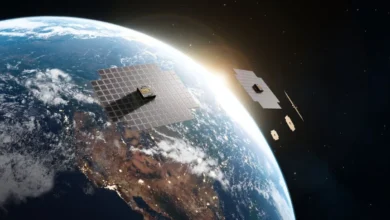
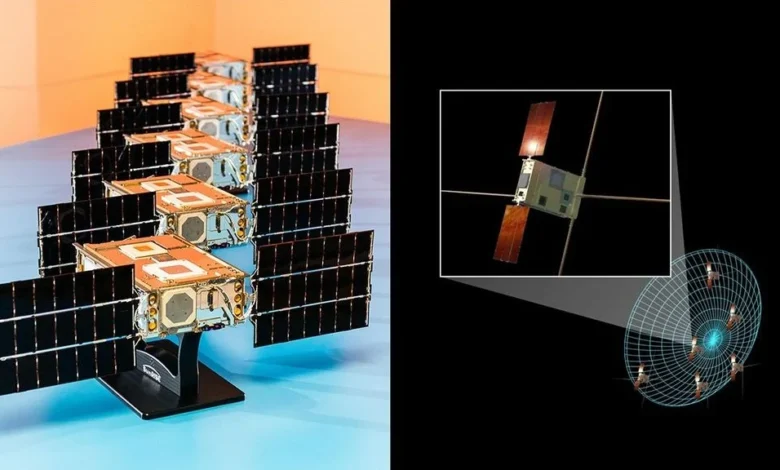
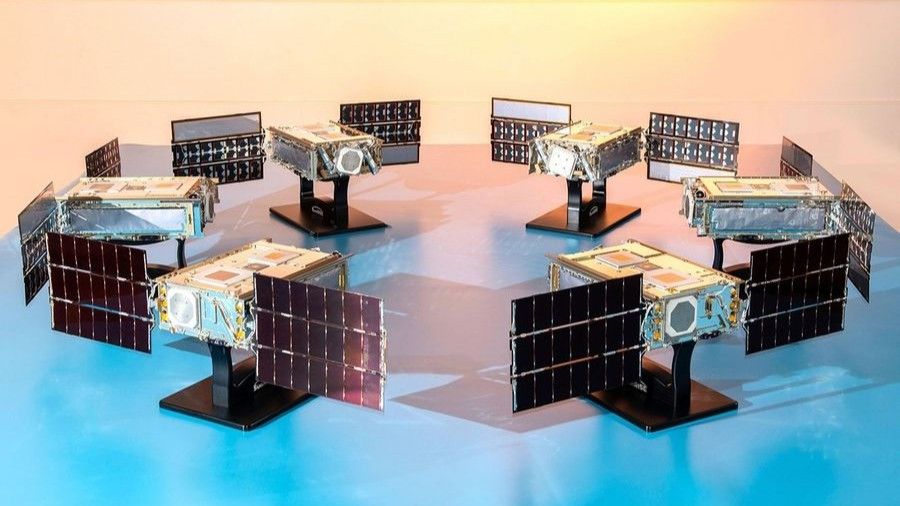
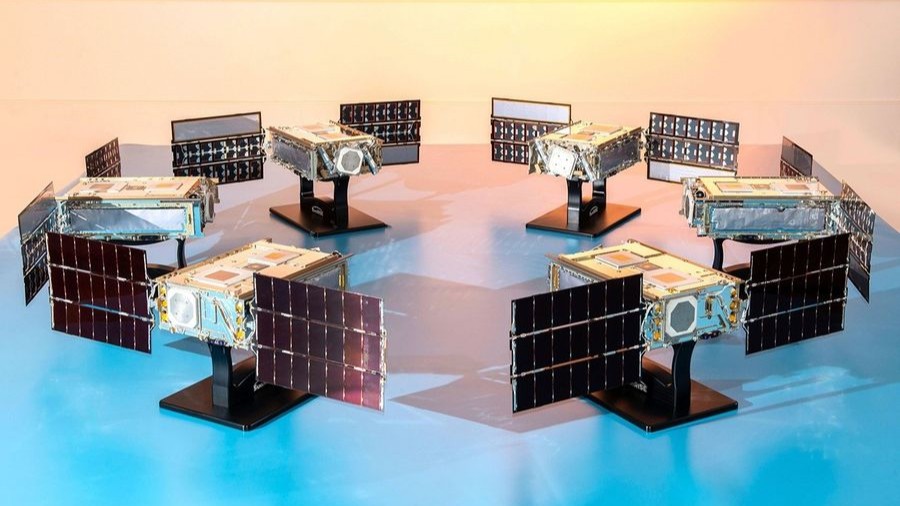
The SunRISE mission is a critical component of NASA’s heliophysics research, falling under the Science Mission Directorate’s "missions of opportunity" umbrella and managed by the Explorers Program. Led by scientists at the University of Michigan and managed at NASA’s Jet Propulsion Laboratory in Southern California, the mission aims to create a unique orbital radio telescope. The six mailbox-sized satellites will be deployed in a precise formation approximately 22,000 miles (35,000 kilometers) above Earth, forming a vast, 10-mile (16-kilometer) "X" shape. Each satellite will extend antenna booms to create a single, large radio telescope capable of tracking solar radio bursts.
The Science Behind SunRISE: An Early Warning System
The scientific rationale behind SunRISE is rooted in the physics of solar activity. Solar storms, characterized by coronal mass ejections (CMEs) and solar flares, can unleash vast amounts of energy and charged particles into space. While these events are awe-inspiring, they pose a significant threat to our increasingly technology-dependent society. Energetic particles and electromagnetic radiation from these storms can wreak havoc on satellites, disrupting communications, disabling sensitive scientific instruments, and impacting critical infrastructure like GPS systems.
Solar radio bursts, which SunRISE is designed to detect, are emitted by the same energetic processes that drive solar storms. Crucially, these radio bursts travel at the speed of light, reaching Earth well before the slower-moving CMEs and energetic particles. By studying these bursts with unprecedented precision using its distributed antenna array, SunRISE aims to improve the timeliness and accuracy of predictions for impending solar storm impacts. This early warning capability is vital for implementing mitigation strategies, such as powering down sensitive satellite electronics or rerouting aircraft away from polar regions affected by increased radiation.
A Shift in Launch Providers: The Vulcan Centaur and Space Force Considerations
The initial plan for SunRISE involved a launch on ULA’s Vulcan Centaur rocket. However, recent events have prompted a reevaluation of this arrangement, particularly by the U.S. Space Force (USSF), which plays a significant role in manifesting national security payloads and often utilizes rideshare opportunities.
The Vulcan Centaur experienced a notable anomaly during its most recent launch, USSF-87. During ascent, one of the rocket’s solid rocket boosters exhibited an issue, marking the second such incident in the rocket’s four launches to date. While the Vulcan Centaur successfully delivered its payload to orbit on that occasion, the recurrence of the booster problem led the Space Force to pause national security launches on the Vulcan rocket until the issue could be thoroughly investigated and resolved.
This decision by the Space Force has had ripple effects across the launch manifest. The Space Systems Command (SSC), part of the USSF, has already begun reallocating other missions between Vulcan and SpaceX’s Falcon 9 rocket. The shift of NASA’s SunRISE mission to a SpaceX Falcon Heavy suggests a couple of possibilities: either SunRISE has been re-manifested onto a different SSC rideshare mission utilizing a SpaceX vehicle, or another SSC mission originally slated for Vulcan has been moved entirely, freeing up a slot on a different rocket for SunRISE.
SpaceX Falcon Heavy: A Powerful New Ride
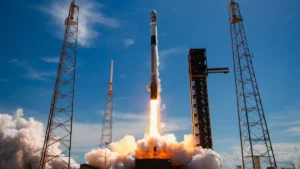
The choice of a SpaceX Falcon Heavy as the new launch vehicle for SunRISE brings a considerable increase in launch capability. The Falcon Heavy is SpaceX’s heavy-lift rocket, renowned for its immense power and versatility. It is essentially comprised of three modified Falcon 9 first stages joined together, allowing it to lift substantial payloads into orbit. Since its debut in 2018, the Falcon Heavy has completed 12 successful launches, including four that delivered national security payloads. Its most recent mission, in April of this year, successfully deployed the Viasat-3 F3 telecommunications satellite.
The Falcon Heavy’s capacity to carry large payloads to high Earth orbits makes it a suitable platform for launching the SunRISE constellation. The mission’s specific launch date has not yet been finalized, but it is anticipated to occur later this year. Notably, the Falcon Heavy’s next scheduled mission is to launch NASA’s highly anticipated Nancy Grace Roman Space Telescope, with a target launch date no earlier than August 30th. The SunRISE mission will follow, though a more precise launch window is yet to be announced.
Implications for Space Weather Forecasting and Infrastructure Protection
The successful deployment of SunRISE is crucial for advancing our understanding and prediction of space weather. By providing more accurate and timely alerts about solar radio bursts, the mission will enable scientists to refine their space weather models. These improved models can then be used by various entities, including satellite operators, power grid managers, and aviation authorities, to develop more robust mitigation strategies.
The impact of severe space weather events cannot be overstated. A powerful solar storm, such as the one that impacted Earth in January, can have far-reaching consequences. Satellites, the backbone of modern communication, navigation, and Earth observation, are particularly vulnerable. Their sensitive electronics and instruments can be damaged or rendered inoperable by the charged particles and electromagnetic interference associated with solar storms. This can lead to significant disruptions in critical services, economic losses, and even pose risks to human spaceflight and high-altitude aviation.
The SunRISE mission, therefore, represents a proactive step in safeguarding our technological infrastructure from the unpredictable forces of the Sun. Its ability to detect the earliest precursors of solar storms will empower us to better prepare for and potentially mitigate their damaging effects.
A Look Back: Previous Space Weather Events and Their Impact
To fully appreciate the importance of missions like SunRISE, it is helpful to recall historical instances of severe space weather. The Carrington Event of 1859, the most intense geomagnetic storm on record, caused widespread disruptions to telegraph systems, even setting telegraph paper alight. While the technological landscape of 1859 was vastly different from today’s, it provided an early indication of the Sun’s potential to impact terrestrial systems.
More recently, the "Halloween Storms" of 2003 unleashed a barrage of solar flares and CMEs that caused significant disruptions. Many satellites experienced temporary outages or permanent damage, and power grids in some regions were affected. The solar radiation storm in January of this year, while not as severe as the Carrington Event, still prompted warnings and demonstrated the ongoing threat posed by solar activity. These events underscore the need for continuous monitoring and improved forecasting capabilities.
The SunRISE Mission: A Collaborative Effort
The SunRISE mission is a testament to the collaborative spirit in space science. Beyond NASA’s lead, the involvement of the University of Michigan and the Jet Propulsion Laboratory highlights the contributions of leading research institutions. The U.S. Space Force’s role in facilitating the launch through rideshare opportunities is also critical, enabling smaller missions like SunRISE to access space more affordably.
The transition to a SpaceX Falcon Heavy, while necessitating adjustments to the mission’s timeline, also brings the added benefit of a proven and powerful launch vehicle. SpaceX’s track record with the Falcon Heavy, particularly in launching national security payloads, suggests a high degree of reliability. This provides NASA with confidence in the successful delivery of the SunRISE constellation to its intended orbit.
As the Sun enters a more active phase of its 11-year cycle, the importance of missions like SunRISE only grows. Understanding and predicting solar activity is not merely an academic pursuit; it is an essential endeavor for ensuring the continued operation of our vital space-based infrastructure and protecting our interconnected world from the powerful and dynamic nature of our nearest star. The successful deployment of SunRISE will undoubtedly be a significant step forward in our ability to forecast and respond to the challenges of space weather.