The Evolution of Digital Authority: How Backlinks and Answer Engine Optimization Shape the AI Search Landscape

The digital marketing industry is currently undergoing its most significant transformation since the inception of the commercial search engine, as approximately 58% of consumers now utilize AI-powered answer engines for product research on a weekly basis. This shift, driven by the rapid adoption of platforms such as ChatGPT, Perplexity, and Google’s AI Overviews, has forced a critical re-evaluation of traditional Search Engine Optimization (SEO) strategies. At the heart of this evolution is a fundamental question regarding the continued relevance of the backlink: does the traditional authority playbook still apply, or has Answer Engine Optimization (AEO) introduced a new set of rules for digital visibility?
As AI-powered discovery surfaces become the primary gateway for information, the relationship between backlinks and AEO has become increasingly nuanced. While traditional SEO relied on the volume and authority of inbound links to determine rankings, AEO prioritizes contextual relevance and semantic alignment. In this new paradigm, a high-authority backlink remains a necessary foundation, but it is no longer sufficient to guarantee visibility in AI-generated responses. Instead, AI systems seek "grounding sources"—content that can reliably provide accurate, structured, and verifiable information to support an AI’s generated answer.
A Chronology of Search: From Keywords to Conversational AI
To understand the current state of AEO, it is essential to trace the technological trajectory that led to this moment. For over two decades, the "Link Economy" dominated digital marketing, a period characterized by the following milestones:
- 1998–2010: The PageRank Era. Google’s foundational algorithm established the backlink as the primary vote of confidence. Success was largely a numbers game; more links generally equated to higher rankings.
- 2011–2015: The Quality Pivot. With the introduction of the Panda and Penguin updates, Google began penalizing low-quality links and keyword stuffing, shifting the focus toward content depth and "white-hat" link building.
- 2015–2021: The Rise of Intent. Algorithms like RankBrain and BERT introduced machine learning to better understand user intent, though the SERP (Search Engine Results Page) remained the primary interface.
- 2022–Present: The Generative Shift. The launch of ChatGPT in late 2022 marked the transition from search engines (which provide a list of links) to answer engines (which provide a synthesized response). By 2024, Google’s integration of AI Overviews and the rise of Perplexity have made AEO a distinct and necessary discipline.
In this current phase, the objective has shifted from earning a click to becoming the "source of truth" that the AI cites. This transition represents a move from ranking on a page to being embedded within the logic of a Large Language Model (LLM).
Redefining the Role of Backlinks in the Age of AI
The consensus among industry experts is that backlinks have not lost their value, but their function has been redefined. Nathaniel Miller, Head of Marketing at Ashbrook Technologies, recently noted that the companies ranking highest across AI platforms tend to possess both strong domain authority and highly specific backlink profiles. However, he cautioned that "if you’re not getting qualified traffic from that link, it’s basically a logo slap. The real value is in relevance and authority—not just size."
In traditional SEO, a link from a high-Domain Authority (DA) site provided a general boost to a page’s ranking potential. In AEO, however, the semantic adjacency between the linking source and the target brand is paramount. AI systems analyze the relationship between entities. If a brand is linked from a source that the AI already trusts as an authority on a specific topic, that link serves as a powerful "grounding" signal.
Furthermore, the impact of different link types has diverged between classic SEO and AEO. While a directory or aggregator link might provide a marginal boost in traditional rankings, it offers almost zero value for AEO. Conversely, a link from a niche industry publication with strong topical depth carries immense weight in AEO because it reinforces "entity authority"—the AI’s confidence that a brand is a legitimate expert in its field.
Beyond the Link: The Rise of Mentions and Co-Citations
One of the most striking differences in the AEO playbook is the importance of unlinked brand mentions. In traditional SEO, a mention without a hyperlink was often viewed as a missed opportunity. In the context of AI search, these mentions are critical data points.
Research shared by Charlie Graham, founder of RivalSee, indicates that roughly 85% of brands mentioned in ChatGPT responses receive no citation link at all. Users see the brand name, internalize the recommendation, and frequently perform a follow-up search for that specific brand. This "downstream effect" is a significant authority signal that traditional analytics often fail to capture.
AI systems use unlinked mentions and co-citations to map the "authority graph" of a given industry. A co-citation occurs when a brand is mentioned alongside other recognized leaders in the same content, even without a direct link. For an answer engine, this signals that the brand belongs in the same category of expertise as established incumbents. This suggests that digital PR and thought leadership are now as important for AEO as technical link building.
Strategic Framework: Optimizing Content for AI Extraction
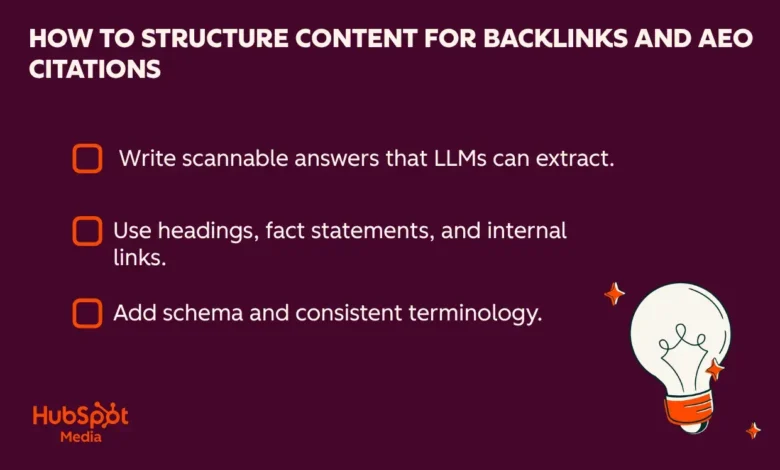
For content and SEO teams, the shift to AEO requires a structural overhaul of how information is presented. AI systems retrieve data from indexed content, and they are systematically biased toward content that is easy to parse and directly responsive. To maximize the likelihood of being cited, organizations are adopting a "scannable answer" framework:

- Direct Answer Extraction: Every major section of a page should begin with a self-contained, direct answer to the question posed in the heading. This "answer-first, evidence-second" structure allows LLMs to easily extract the core fact for use in a generated response.
- Entity Clarity and Schema: AI engines require confidence in identifying who a brand is and what they represent. Utilizing Organization, Person, and FAQ schema markup provides machine-readable metadata that clarifies these relationships. "Entity confusion"—where a brand uses inconsistent terminology or lacks structured data—is cited by consultants like Lars Lofgren as a "silent AEO killer."
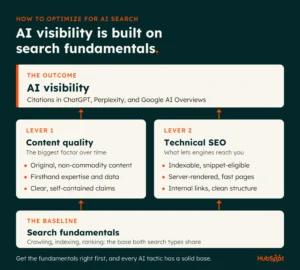
- Topical Depth via Internal Linking: A dense internal linking structure around a topic cluster signals to AI crawlers that a site possesses the "Topical Authority" necessary to be a grounding source. This aligns with the FSA framework: Freshness, Structure, and Authority.
Data-Driven Insights: What Moves the Needle?
Supporting data suggests that certain content formats earn a disproportionate share of AI citations. Original research and data reports are currently the most efficient vehicles for building AEO-salient mentions. By providing unique statistics, brands give other publishers a reason to reference them as a primary source. This creates a cycle of backlinks, brand mentions, and co-citations simultaneously.
Industry analysis indicates that when original research includes a "Key Findings" section with clearly labeled statistics, the likelihood of being cited by an AI answer engine increases significantly compared to narrative-heavy reports. This format is highly "extractable," making it an ideal input for AI models looking for factual grounding.
Official Responses and Market Implications
Technology providers are already pivoting to meet the demand for AEO measurement. HubSpot, for instance, has introduced specialized AEO tools designed to help marketing teams track how often their brand appears in AI answers. This move reflects a broader market recognition that traditional tools like Google Search Console and standard rank trackers provide an incomplete picture of a brand’s digital footprint.
The implications for marketing budgets are profound. As AI Overviews begin to occupy the "position zero" in search results, organic click-through rates (CTR) for traditional links may decline. However, the value of a "brand mention" within an AI response may be higher in terms of consumer trust. Organizations are increasingly reallocating funds from high-volume, low-relevance link-building schemes toward high-impact digital PR and original data creation.
Conclusion: A Unified Authority Strategy
The emergence of AEO does not signal the death of SEO or the end of the backlink. Instead, it represents the maturation of the digital authority landscape. Backlinks provide the structural credibility that allows content to be indexed and trusted. Meanwhile, brand mentions, entity clarity, and scannable content structures provide the semantic signals that tell an AI system a brand is worthy of being cited.
The most successful organizations in 2025 and beyond will be those that do not view AEO and SEO as competing interests. By running precise SEO programs that prioritize quality over volume and layering entity-aware strategies on top, brands can ensure visibility across both traditional search results and the rapidly expanding world of AI-powered answer engines. The future of search is no longer just about being found; it is about being the answer.