Journey to the Edge of Canada: Exploring the Isolated History, Geography, and Resilience of Newfoundland

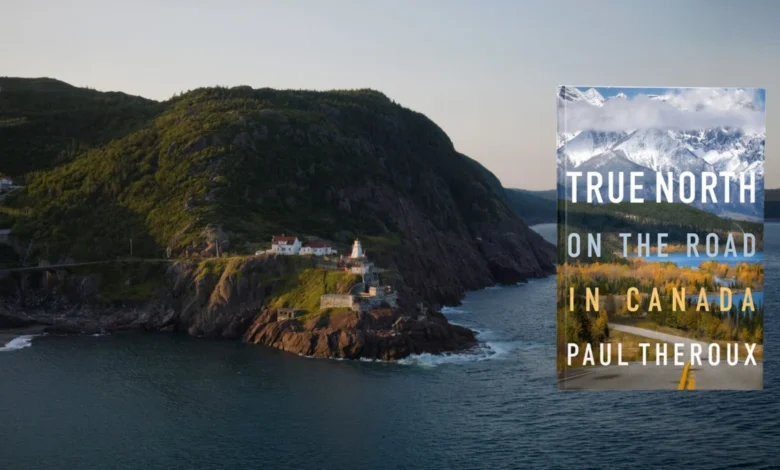
The maritime passage from North Sydney, Nova Scotia, to Port-aux-Basques, Newfoundland, remains one of North America’s most dramatic maritime commutes. Operating across the 110-mile channel at the mouth of the Saint Lawrence River, the ten-deck Marine Atlantic ferry Ala’suinu—whose name translates to "Traveler" in the Mi’kmaq language—serves as an essential economic and social lifeline. This vital shipping route connects mainland Canada to an island historically defined by its profound geographical isolation, distinct cultural identity, and remarkable ecological singularity. For travelers heading toward the rugged expanse of Newfoundland and the thousand-year-old Viking settlement of L’Anse aux Meadows at its northern tip, this crossing offers an introduction to a province that only joined the Canadian confederation in 1949.
The Maritime Crossing and Logistical Realities
The operational reality of traveling to Newfoundland reflects the untamed nature of the region. Passenger embarkation at the Marine Atlantic terminal in North Sydney often involves navigating a landscape of scruffy industrial storefronts and weathered port infrastructure before clearing security and customs-equivalent ticketing processes. Unlike modern luxury cruise liners, the overnight crossing aboard the Ala’suinu prioritizes utilitarian transport over opulent comfort. Passengers secure reclining aircraft-style seats for modest fees, sharing the enclosed saloons with families, truckers, and local commuters.
The voyage takes approximately eight hours, cutting through pitch-black waters beneath dense cloud cover that frequently obscures the horizon. Below deck, the cargo holds transport a heavy mix of commercial freight, contractor vans, and heavy-duty transport trucks—underscoring the vessel’s primary role as a commercial artery for the island’s supply chain. Upon arrival in Port-aux-Basques in the gray light of dawn, travelers are immediately greeted by a landscape shaped by both maritime weather and geological history.
Geological Heritage and Ecological Isolation
Geographically, Newfoundland appears on maps as a sprawling, asymmetrical landmass heavily fractured by deep bays, fjords, and coastal inlets. Ancient glacial activity has left permanent striations, grooves, and gouges across its exposed granite foundations. This geological separation has fostered a uniquely insular ecosystem that sets Newfoundland apart not only from the rest of Canada, but even from neighboring maritime provinces like Prince Edward Island and Nova Scotia.
The island’s fauna and flora exhibit striking anomalies due to this historical isolation:
- Absence of Apex Predators and Common Mammals: Native populations of raccoons, skunks, porcupines, and deer are entirely absent from the island.
- Reptile Limits: While mainland Canada supports various snake species, including vipers and rattlesnakes, Newfoundland is home exclusively to the harmless garter snake.
- Introduced Species: Red squirrels, colloquially referenced by locals as "tree rats," were only successfully introduced to the island in the 1960s.
This ecological distinctiveness mirrors the human demographics of the region. Until its democratic integration into Canada via a narrow referendum in 1949, Newfoundland operated as a distinct British colony. This historical trajectory fostered an independent cultural identity characterized by unique regional dialects, distinct culinary traditions, folklore, and an enduring self-reliance born from generations of weathering economic hardships and remote isolation.
Community Resilience in the Wake of Natural Disaster
The resilience of the local population is nowhere more evident than in Port-aux-Basques, a southwestern hub that serves as the primary gateway for visitors entering the island. The municipality bears the physical and psychological scars of Hurricane Fiona, which struck the region in September 2022. Meteorological records confirm that Fiona was the most severe tropical storm ever to impact Canadian soil, generating catastrophic storm surges and hurricane-force winds that devastated coastal infrastructure.
Cathy Lomond, owner and general manager of the Hotel Port aux Basques, recalled the sheer scale of the destruction. "We lost a hundred and thirty houses to Fiona," Lomond noted, describing how entire neighborhoods of traditional saltbox houses and white-framed coastal bungalows were swept into the sea or reduced to rubble.
Despite the devastation, the community’s response highlighted the deep-rooted solidarity typical of outport Newfoundland. "We’re used to storms," Lomond affirmed. "That was a bad one, but we got through it. Port aux Basques has community spirit; we know how to rebuild."
Beyond her role in hospitality, Lomond embodies the traditional outport lifestyle as an avid hunter who participates in the province’s highly regulated, lottery-based big game licensing system. This government-managed program permits successful applicants to harvest black bears, caribou, and moose during designated seasons. Game meat remains an integral part of the local culinary heritage, with slow-cooked moose in rich gamy gravies serving as a staple comfort food—earning historical praise from naturalists such as Henry David Thoreau, who famously compared its flavor profile to a richer, more robust veal.
Socioeconomic Implications and Tourism Outlook
The ongoing recovery of Port-aux-Basques and the broader southwestern coast underscores the delicate balance between climate vulnerability and economic sustainability in Atlantic Canada. As climate change increases the frequency and intensity of severe Atlantic storms, coastal communities face mounting infrastructure costs and difficult decisions regarding managed retreat versus coastal fortification.
At the same time, tourism continues to serve as a vital economic driver for the province. Visitors drawn to Newfoundland’s rich folklore, ghost stories, geological wonders, and historical landmarks like L’Anse aux Meadows inject critical capital into local economies that have historically relied solely on commercial fishing and resource extraction.
Ultimately, traveling to Newfoundland requires a deliberate investment of time and patience. Unlike standardized tourism corridors that offer predictable comforts and rapid transit, the journey to Canada’s easternmost frontier preserves the unhurried, rugged character of exploratory travel. For those willing to navigate the unpredictable weather of the Saint Lawrence channel and engage with the resilient communities dotting its granite coastlines, Newfoundland offers a rare glimpse into a distinct cultural and ecological world largely untouched by modern homogenization.