The Historical and Literary Framework of the Odyssey
The composition of the Odyssey reflects the transition of Ancient Greece from an oral-based tradition to a written literary culture. Scholars generally agree that the poem was compiled between 750 and 650 BCE. While Odysseus is a fictional character, the setting of the Trojan War has long been a subject of intense archaeological and historical scrutiny. The city of Troy, traditionally located in modern-day Hisarlik, Turkey, was identified by Heinrich Schliemann in the late 19th century. Excavations have revealed nine major layers of settlement, with Troy VI and VIIa frequently cited as potential candidates for the "Homeric" city destroyed by conflict.
Understanding the text requires a grasp of xenia—the ancient Greek concept of hospitality—which serves as the moral compass of the poem. Violations of xenia by the suitors in Ithaca, who exploit Odysseus’s household in his absence, drive the central conflict of the poem’s latter half. Conversely, the protagonist’s interactions with various divine entities, such as Athena and Poseidon, underscore the symbiotic relationship between humanity and the pantheon of Mount Olympus, a recurring theme that dictates the rhythm of the narrative.
Chronology of the Homeric Tradition
To comprehend the narrative scope of the Odyssey, one must analyze it alongside its precursor, the Iliad. The chronological sequence of these events is as follows:
- The Trojan War (c. 1200 BCE): The semi-historical backdrop of the conflict between the Achaean Greeks and the Trojans.
- The Iliad: Focuses on the final year of the siege, specifically the "wrath of Achilles" and the death of Hector.
- The Odyssey: Details the immediate aftermath of the war and the arduous decade-long voyage of Odysseus.
- The Transmission Period (8th Century BCE): The oral tradition is formalized into the written Greek alphabet, allowing for the standardization of the poems.
- The Hellenistic and Roman Reception: Authors like Virgil, drawing heavily on Homeric themes, codified the Odyssey as the archetype for the "Hero’s Journey" in Western epic literature.
Exploring the Mythological Underpinnings
Modern analysis of the Odyssey often focuses on the juxtaposition of the "heroic" with the "monstrous." Figures such as the Cyclops Polyphemus or the sorceress Circe represent the existential threats faced by the early Greeks as they navigated the unknown waters of the Mediterranean.
One notable tragic figure often discussed in the periphery of these events is Laocoön, the Trojan priest who warned against the wooden horse. His demise—as depicted in the famous Vatican sculpture group—serves as a poignant reminder of the agency of the gods in determining human outcomes. Such myths were not merely entertainment; they were didactic tools used to reinforce social norms, piety, and the consequences of hubris.
Furthermore, the descent into the Underworld, or nekyia, serves as a critical literary device. It allows the protagonist to gain wisdom from the dead, including his fallen comrades from the Trojan War. This journey highlights the Greek perception of the afterlife, which, while often perceived as bleak, was integral to the cultural understanding of legacy and memory.
Scientific and Archaeological Investigations
In recent decades, interdisciplinary researchers have attempted to reconcile the fantastical elements of the Odyssey with geographic reality. Researchers such as Matt Kaplan have argued that while the monsters of the Odyssey are clearly mythological, they may be allegorical representations of natural phenomena. For instance, the whirlpool Charybdis is often theorized to be based on the dangerous currents of the Strait of Messina, while the "Sirens" may reflect the hazardous coastal navigation that sailors feared.
Archaeological evidence continues to provide a foundation for these stories. The discovery of Mycenaean pottery across the Mediterranean suggests that the Greeks were indeed active traders and explorers during the Bronze Age, lending credibility to the idea that the Odyssey acts as a "map" of the early Greek worldview, albeit a distorted one.
Educational Resources and Media Integration
For students and enthusiasts seeking a comprehensive understanding of these texts, several academic resources have been curated to facilitate learning:
- Analytical Guides: Experts such as Jill Dash have provided structural breakdowns of the poem, emphasizing that the text should be read not as a single linear story, but as a collection of modular episodes that explore human nature under duress.
- Mythological Case Studies: The story of Baucis and Philemon, often used to contrast the hospitality of commoners with the indifference of the elite, remains a crucial counterpoint to the more bellicose themes of the Odyssey.
- Character Studies: Analysis of Achilles, arguably the most complex figure in Greek mythology, reveals the inherent contradictions in the "ideal" warrior—a man born of a divine nymph yet destined to die in a war that ultimately cost him everything.
Implications for Modern Media and Game Theory
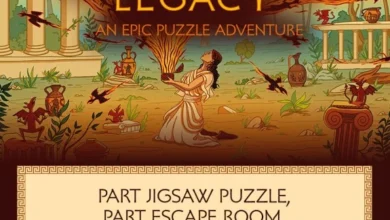
The enduring nature of these myths has led to a surge in interactive storytelling. Games such as Pandora’s Legacy represent a modern trend in the "gamification" of classical history. By placing participants in an escape room environment based on Greek mythology, creators are attempting to bridge the gap between academic study and immersive engagement.
The success of these platforms suggests that the "Homeric" model of storytelling remains highly effective. The archetypal hero, the trials of the journey, and the eventual return are narrative structures that continue to resonate with contemporary audiences. The transition from oral tradition to digital interactive media signifies that the stories of Odysseus and his contemporaries have successfully adapted to every epoch of human history.
Academic and Cultural Analysis
The impact of the Odyssey on Western civilization cannot be overstated. From the development of character-driven narrative to the philosophical exploration of justice and vengeance, the text provides the vocabulary for much of our modern literary criticism.
"The Odyssey is not merely a relic of a dead civilization," notes one scholar of the classics. "It is a dynamic document that changes as we change. Every generation reads the suitors’ defiance and the hero’s return through the lens of its own social and political anxieties."
The current academic consensus emphasizes that while we may never find a literal "Odysseus," the "Odyssey" itself is a true record of the Greek psyche. By analyzing the poem through the lenses of history, science, and psychology, we ensure that these ancient narratives remain relevant. As technology allows for more sophisticated simulations and educational tools, the ability to "visit" the world of Homer becomes more accessible, ensuring that the legacy of the Trojan War and the long voyage home remains a cornerstone of humanities education for generations to come.
Through continued study of these seven core themes—from the structural complexity of the epic poem to the environmental realities that inspired its myths—the global community maintains a direct line of communication with the foundations of antiquity. Whether through video analysis, archaeological excavation, or narrative-driven gameplay, the Odyssey serves as a permanent bridge between the ancient world and our own.