Lunar Spectacle: Waxing Gibbous Moon Illuminates Night Sky Ahead of Rare May Full Moon Event

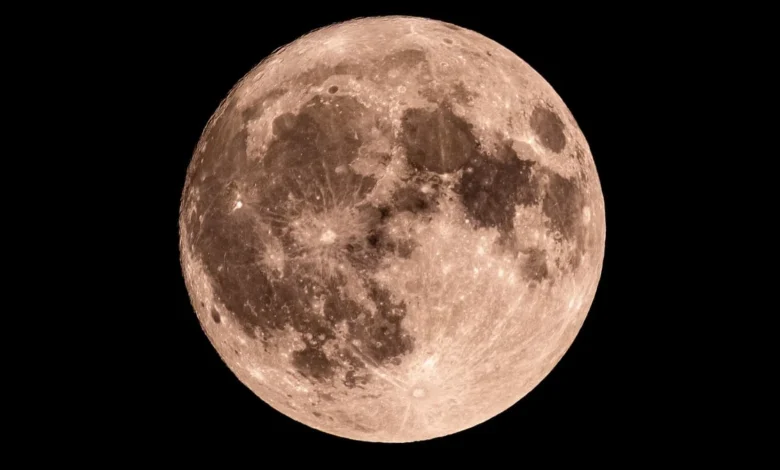
As of today, Monday, May 25, observers around the globe are treated to a captivating display as the Moon enters its Waxing Gibbous phase, with a significant portion of its surface brightly illuminated in the night sky. With approximately 69% of the lunar disc visible, according to data from NASA’s Daily Moon Guide, this growing luminosity serves as a celestial prelude to an eagerly anticipated Full Moon event slated for May 31. This particular Full Moon holds special significance, as it marks the second full illumination within the calendar month, a phenomenon colloquially known as a "Blue Moon."
The journey from a slender crescent to a fully radiant orb is a continuous ballet of light and shadow, dictated by the Moon’s intricate orbit around Earth and its dynamic relationship with the Sun. The Waxing Gibbous phase, characterized by more than half of the Moon’s face being illuminated but not yet completely full, offers a unique viewing opportunity. During this period, the angle of sunlight creates striking contrasts across the lunar landscape, enhancing the visibility of many prominent features that might otherwise appear washed out during a completely full phase. This current phase provides an ideal window for both casual stargazers and dedicated amateur astronomers to explore our nearest celestial neighbor with remarkable clarity.
Understanding the Current Lunar Spectacle: Waxing Gibbous Explained
The term "Waxing Gibbous" describes the Moon’s appearance as it grows from a First Quarter Moon (half-illuminated) to a Full Moon. "Waxing" signifies that the illuminated portion is increasing, while "Gibbous" refers to the shape, which is more than a semicircle but less than a full circle. As the Moon progresses through this phase, the terminator – the line separating the illuminated side from the dark side – gradually shifts, revealing more of the lunar surface each night. On this May 25, with 69% illumination, the Moon presents a breathtaking vista, hinting at the full grandeur yet to come.
This progression is a direct consequence of the Moon’s approximately 29.5-day synodic period, its orbital duration relative to the Sun as observed from Earth. During this cycle, the Moon completes one full orbit, causing the changing angles of sunlight to create the eight distinct phases we observe. The current Waxing Gibbous phase underscores the dynamic nature of this celestial dance, offering a daily reminder of the Moon’s constant transformation. Astronomers often emphasize that observing the Moon during its gibbous phases can be particularly rewarding, as the oblique angle of sunlight casts long, dramatic shadows that accentuate craters, mountains, and mare ridges, providing a three-dimensional perspective difficult to achieve during a completely full moon.
A Guide to Celestial Observation: What You Can See Tonight
For those gazing upwards tonight, the Waxing Gibbous Moon promises a wealth of visible details, even without specialized equipment. The interplay of light and shadow at this phase brings out features with remarkable clarity.
With the unaided eye, several prominent lunar features are readily discernible:
- Mare Crisium (Sea of Crises): Located in the northeastern quadrant, this is one of the few maria that is not circular. Its dark, smooth basin stands out against the brighter highlands. Mare Crisium is an ancient impact basin, approximately 555 kilometers (345 miles) in diameter, filled with solidified basaltic lava, indicative of past volcanic activity on the Moon. Its distinctive shape and dark color make it an easy target for naked-eye observation.
- Mare Fecunditatis (Sea of Fecundity): Situated south of Mare Crisium, this large mare is characterized by its somewhat irregular shape and several prominent craters within and along its edges. Like other maria, it represents a vast plain of solidified lava. Its name, "Sea of Fecundity," reflects the romantic and imaginative nomenclature bestowed upon lunar features by early astronomers.
- Tycho Crater: A relatively young and highly prominent impact crater located in the southern highlands. Tycho is renowned for its spectacular ray system, bright streaks of ejecta that extend for thousands of kilometers across the lunar surface. While the full extent of its rays might be best appreciated during a Full Moon, the crater itself, with its bright rim and central peak, is clearly visible during the Waxing Gibbous phase due to the contrasting shadows. Its formation is estimated to have occurred relatively recently, about 108 million years ago, making it one of the youngest large craters on the Moon.
For those with a pair of binoculars, the viewing experience is further enhanced, revealing finer details and additional features:
- Endymion Crater: A large, ancient, and heavily eroded impact crater located near the Moon’s northeastern limb. Its floor is dark and smooth, having been resurfaced by lava flows. Its proximity to the limb means its appearance changes significantly with libration, the apparent wobbling of the Moon. Binoculars allow for a clearer resolution of its dark interior and surrounding, battered terrain.
- Apennine Mountains (Montes Apenninus): A rugged mountain range forming the southeastern border of the Mare Imbrium. These mountains are part of the rim of the immense Imbrium impact basin, one of the largest and most ancient impact structures on the Moon. With peaks reaching over 5,000 meters (16,000 feet), the Apennines offer a dramatic display of lunar topography, especially when illuminated by the oblique light of the Waxing Gibbous Moon, which accentuates their towering forms and deep valleys.
- Clavius Crater: One of the largest and oldest craters on the Moon, located in the southern highlands. It is a vast, ancient impact basin with multiple smaller craters dotting its floor, forming an arc. Its impressive scale, approximately 231 kilometers (144 miles) in diameter, makes it a fascinating target for binocular observation, allowing viewers to appreciate its complex interior structure.
Finally, for dedicated enthusiasts equipped with a telescope, the lunar surface truly comes alive, revealing details of extraordinary scientific and historical significance:
- Apollo 16 and 17 Landing Sites: These are not visually prominent features themselves, but knowing their precise locations adds immense historical context to lunar observation. Apollo 16 landed in the Descartes Highlands, a region of ancient lunar crust, while Apollo 17, the last human mission to the Moon, landed in the Taurus-Littrow valley, a geologically complex area at the edge of Mare Serenitatis. Telescopes, especially those with higher magnification, can resolve subtle topographical details near these sites, allowing observers to mentally place the momentous human achievements that occurred there. While you won’t see the lunar modules, the surrounding terrain offers a tangible link to humanity’s past explorations.
- Rima Ariadaeus: A prominent linear rille (a narrow, canyon-like depression) located near the Moon’s equator. This rille is a prime example of a graben, a geological structure formed by the collapse of a section of the lunar crust between two parallel fault lines. Stretching for approximately 300 kilometers (186 miles), Rima Ariadaeus is a captivating target for telescopic observation, showcasing the Moon’s tectonic history and providing insight into the forces that shaped its surface. The shadows cast during the Waxing Gibbous phase make its relatively shallow depth more apparent.
The Journey to Full Illumination: The Upcoming Full Moon
The current Waxing Gibbous phase is a clear indicator of the impending Full Moon, which, as stated, is due to occur on May 31. This event is particularly noteworthy as it represents the second Full Moon within the month of May. While the exact date of the first Full Moon in May is implied by the text, the phenomenon of two Full Moons in a single calendar month is known as a "Blue Moon." This definition, distinct from the older seasonal definition, has become widely accepted in popular culture.
The May Full Moon is traditionally known as the Flower Moon, a name originating from Native American, colonial American, and European traditions. This moniker reflects the abundance of flowers blooming across the Northern Hemisphere during this vibrant spring month. Other traditional names for May’s Full Moon include the Corn Planting Moon, Milk Moon, and Hare Moon, all reflecting agricultural or ecological markers of the season.
The occurrence of a Blue Moon is not rare in an astronomical sense, happening approximately every 2.5 to 3 years. It’s a calendrical anomaly rather than an actual change in the Moon’s color or appearance. Given the Moon’s 29.5-day cycle, if a Full Moon occurs early in a month (e.g., on the 1st or 2nd), there is sufficient time for another Full Moon to occur before the month concludes, especially in longer months like May. This calendrical quirk adds an extra layer of fascination to the upcoming May 31st Full Moon, making it a double celebration for lunar observers.
The Dance of Light and Shadow: Deconstructing Lunar Phases
The familiar changes in the Moon’s appearance are not due to the Moon itself changing shape, but rather to the varying angles at which we view its illuminated surface as it orbits Earth. The same side of the Moon always faces Earth due to tidal locking, but the proportion of that face that is lit by the Sun changes, creating the eight primary lunar phases:
- New Moon: The Moon is positioned directly between the Earth and the Sun. From Earth, the side of the Moon facing us is completely dark, making it invisible in the night sky. This phase is ideal for observing deep-sky objects as there is no lunar glare.
- Waxing Crescent: A thin sliver of the Moon’s right side (for observers in the Northern Hemisphere) becomes visible shortly after sunset. "Waxing" means growing, indicating the illuminated portion is increasing.
- First Quarter: Approximately seven days after the New Moon, exactly half of the Moon’s face is illuminated on the right side. It appears as a perfect "half-Moon." This phase is often visible high in the sky during the afternoon.
- Waxing Gibbous: Following the First Quarter, more than half of the Moon’s face is lit, but it is not yet fully illuminated. The illuminated portion continues to grow, moving towards the Full Moon. This is the current phase being observed.
- Full Moon: The entire face of the Moon is illuminated by the Sun, appearing as a complete, bright circle in the sky. The Earth is positioned between the Sun and the Moon, allowing the Sun’s light to fall directly on the Moon’s Earth-facing side. This is the brightest phase, often affecting the visibility of fainter stars.
- Waning Gibbous: Immediately after the Full Moon, the illumination begins to decrease from the right side (for Northern Hemisphere observers). The Moon is still more than half lit, but the illuminated portion is shrinking. "Waning" means decreasing.
- Third Quarter (or Last Quarter): About seven days after the Full Moon, exactly half of the Moon’s face is illuminated, but this time it’s the left side. It again appears as a "half-Moon," typically rising around midnight and setting around noon.
- Waning Crescent: Only a thin sliver of the Moon’s left side remains visible before it becomes completely dark again, completing the lunar cycle and returning to the New Moon phase. This phase is best observed in the pre-dawn sky.
This predictable cycle has profound implications beyond casual observation, influencing tides, ancient calendars, and even human culture and mythology for millennia.
Historical and Cultural Resonance of the Moon
Humanity’s relationship with the Moon is as old as civilization itself. Across diverse cultures, the Moon has been revered as a deity, a timekeeper, a symbol of fertility, and a guide for navigation. Ancient civilizations meticulously tracked lunar phases to create calendars, which were essential for agriculture, religious festivals, and predicting astronomical events. The consistent, cyclical nature of the Moon made it a reliable celestial clock, predating complex solar calendars.
Many mythologies feature lunar deities, such as Selene in Greek mythology, Luna in Roman, and Chandra in Hinduism, often associated with night, mystery, magic, and the feminine principle. The Moon’s influence on tides has been observed for centuries, though its scientific explanation came much later. This gravitational dance between Earth and its satellite shapes our planet’s oceans and has even been theorized to affect geological processes over vast timescales. The concept of a "Blue Moon" itself, though a modern calendrical term, taps into this deeper cultural fascination, associating rarity and uniqueness with lunar phenomena.
The Moon as a Scientific Frontier: Past, Present, and Future Exploration
Beyond its cultural and aesthetic appeal, the Moon represents an invaluable scientific laboratory. Its surface bears the scars of billions of years of solar system history, preserving records of impacts and volcanic activity that have largely been erased on Earth by erosion and tectonic shifts. The visible features tonight, from ancient maria to relatively young craters like Tycho, offer direct evidence of these processes.
The Apollo missions, which saw humans land on the Moon between 1969 and 1972, fundamentally reshaped our understanding of lunar geology and the formation of the Earth-Moon system. The Apollo 16 and 17 landing sites, visible with a telescope, represent monumental achievements in human exploration and scientific endeavor. Samples returned from these missions, along with seismic data and other measurements, have provided critical insights into the Moon’s composition, internal structure, and evolutionary timeline. The detection of water ice in permanently shadowed craters at the lunar poles has further ignited scientific interest, making the Moon a potential resource hub for future long-duration space missions.
Today, there is a renewed global interest in lunar exploration. NASA’s Artemis program aims to return humans to the Moon, including the first woman and person of color, establishing a sustained human presence. International partners and private companies are also planning missions, focusing on resource utilization, scientific research, and developing technologies for future deep-space travel. Understanding lunar phases is not merely an academic exercise; it is crucial for mission planning, ensuring optimal illumination for solar-powered landers, managing thermal conditions, and identifying suitable landing and exploration sites. The ongoing scientific scrutiny of the Moon continues to unlock secrets not just about our celestial companion, but about the origins and evolution of the entire solar system.
Tips for Aspiring Stargazers
Observing the Moon is one of the most accessible forms of astronomy. To make the most of tonight’s Waxing Gibbous display and future lunar events:
- Find a Dark Spot: While the Moon is bright, reducing light pollution will enhance contrast and visibility of fainter features.
- Check the Weather: Clear skies are essential. Even thin clouds can obscure details.
- Allow Your Eyes to Adjust: Give your eyes 15-20 minutes to adapt to the darkness for better night vision.
- Use Binoculars: Even a modest pair of binoculars (e.g., 7×50 or 10×50) can dramatically improve your view, revealing craters and maria in stunning detail. Steady your binoculars against a fence, tree, or tripod.
- Invest in a Telescope (Optional): For those serious about lunar observation, a small refracting or reflecting telescope will bring the Moon’s surface into sharp focus, allowing you to explore the features like the Apollo landing sites and rilles.
- Consult a Moon Atlas or App: Digital and physical atlases can help you identify specific craters, mountains, and maria, enriching your viewing experience. Many smartphone apps provide real-time moon phase and visibility information.
- Dress Warmly: Even on a mild evening, temperatures can drop, especially during prolonged observation.
Conclusion: An Enduring Celestial Beacon
The Waxing Gibbous Moon tonight, steadily progressing towards its Full illumination on May 31, offers a profound connection to the cosmos. From its ancient cultural significance to its role as a modern scientific frontier, the Moon continues to captivate and inspire. Whether viewed with the naked eye, binoculars, or a powerful telescope, it serves as a constant reminder of the dynamic universe beyond our terrestrial confines. As the May "Flower Moon" approaches its rare "Blue Moon" manifestation, it invites us all to look up, appreciate its enduring beauty, and ponder the vast mysteries it still holds.
Related posts: