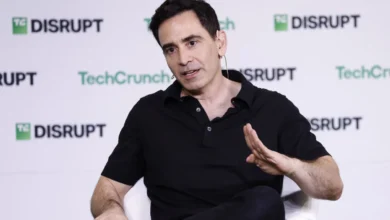
Fermi Shaken by Abrupt Leadership Departures Amidst Project Matador Challenges and Strategic Reorientation


Fermi, the ambitious AI nuclear power firm, experienced significant upheaval on Monday as co-founder and CEO Toby Neugebauer, along with CFO Miles Everson, abruptly departed their executive roles, triggering a sharp 22% decline in the company’s shares. The unexpected leadership changes come at a critical juncture for Fermi, which is spearheading Project Matador, an ambitious initiative to develop a massive AI campus in Amarillo, Texas, powered by advanced nuclear reactors. This strategic evolution, termed "Fermi 2.0" by the company, seeks to reassure investors and stakeholders amidst growing concerns about the project’s progress and recent operational friction.
The Executive Exodus and Market Reaction
The news, disseminated via a company press release on Monday, April 20, 2026, at 8:30 AM PDT, confirmed that Toby Neugebauer has stepped down as chairman of the board, though he will retain his seat as a board director. His departure from the top executive role marks a significant shift for the company he co-founded. Simultaneously, CFO Miles Everson has also transitioned from his executive position, now serving as a board director, a move facilitated by the exercise of director designation rights held by the Melissa A. Neugebauer 2020 Trust. In the immediate aftermath, Marius Haas, previously the Lead Independent Board Director, has assumed the role of chairman, signaling an attempt by the board to establish stability and continuity.
The market’s reaction was swift and unforgiving. Fermi’s stock plummeted by 22% in early trading, reflecting investor anxiety over the sudden change in leadership at a company engaged in a capital-intensive, high-stakes venture. This significant drop underscores the fragility of investor confidence in early-stage, disruptive technology companies, particularly those navigating complex regulatory and operational landscapes like nuclear energy and large-scale AI infrastructure. Analysts quickly pointed to the potential for delays in Project Matador and increased operational uncertainty as primary drivers for the sell-off. For a company like Fermi, which relies heavily on sustained investor confidence to fund its colossal projects, such a market reaction could have long-term implications for its fundraising capabilities and overall valuation.
Background: Fermi’s Ambitious Vision and Project Matador
Fermi was established with a bold, futuristic vision: to merge the burgeoning demands of artificial intelligence with the stable, carbon-free power generation of nuclear energy. Co-founded by Toby Neugebauer and former U.S. Energy Secretary Rick Perry, the company positioned itself at the nexus of two of the most critical technological and environmental challenges of the 21st century: the insatiable energy demands of advanced AI computations and the global imperative to transition to clean energy sources.
The cornerstone of this vision is Project Matador, an envisioned multi-billion-dollar AI campus located near Amarillo, in the Texas panhandle. The choice of Amarillo was strategic, leveraging Texas’s energy expertise, vast land availability, and relatively favorable regulatory environment for large industrial projects. The plan involves constructing a massive data center complex, powered primarily by a fleet of advanced small modular reactors (SMRs) or other next-generation nuclear technologies. These reactors are designed to provide a consistent, high-density power supply, crucial for the continuous and energy-intensive operations of AI models, which can consume hundreds of megawatts for training and inference.
The concept behind Project Matador addresses a looming crisis in the tech sector. The exponential growth of AI, particularly large language models and generative AI, has led to an unprecedented surge in electricity consumption. Traditional power grids, often reliant on intermittent renewables or carbon-intensive fossil fuels, are struggling to keep pace. Nuclear power, with its high capacity factor and minimal emissions, offers a compelling solution, promising energy independence and environmental sustainability for AI infrastructure. Fermi’s proposition was to offer a vertically integrated solution: owning both the data centers and their dedicated power sources, thereby ensuring reliability, cost predictability, and a green footprint. This audacious goal attracted significant initial investment and media attention, positioning Fermi as a potential pioneer in a new industrial era.
A Timeline of Challenges and Strategic Shifts
Fermi’s journey, while ambitious, has not been without its complexities and hurdles, which now appear to be culminating in this significant leadership restructuring.
- Early 2020s: Fermi is founded with an initial vision to tackle the growing energy demands of advanced computing, bringing together expertise from the energy sector, technology, and government. Rick Perry’s involvement lends significant credibility and political weight to the endeavor.
- Mid-2020s: Project Matador is publicly unveiled, detailing plans for the Amarillo AI campus and its nuclear power integration. Initial capital is raised, and preliminary site work and regulatory engagement begin. The company emphasizes the long-term sustainability and economic benefits for Texas.
- Late 2025 – Early 2026: Reports begin to surface of operational difficulties within Project Matador. Bloomberg, citing sources familiar with the matter, specifically highlighted "friction with a key customer." While the identity of this customer was not disclosed, such friction could indicate disputes over contractual terms, project timelines, or technical specifications, all of which can severely impact a project of this scale and complexity. These unconfirmed reports of internal strife and external client issues likely contributed to internal pressures and a reassessment of the company’s trajectory.
- April 20, 2026: The company announces the departures of Toby Neugebauer and Miles Everson, framing it as part of a broader "Fermi 2.0" strategic evolution. This includes the establishment of a new corporate headquarters in Dallas, signaling a potential shift in operational focus or a move to a more established business hub to attract new talent and foster closer ties with financial institutions. The announcement emphasizes the ongoing commitment to Project Matador while subtly acknowledging the need for a renewed approach.
Inferred Statements and Industry Reactions

While official statements from Fermi have been limited to the press release, the implications of these changes have reverberated across the industry and among stakeholders.
A spokesperson for Fermi, likely Marius Haas in his new capacity as chairman, might issue a statement emphasizing the company’s renewed commitment: "Fermi 2.0 represents a pivotal moment for our company, a strategic evolution designed to accelerate our mission of delivering sustainable, high-density power for the AI revolution. We remain fully committed to Project Matador in Amarillo and are confident that our new leadership structure and refined strategic focus will ensure its successful realization. We thank Toby Neugebauer and Miles Everson for their foundational contributions and look forward to their continued guidance on the board." Such a statement would aim to project confidence and stability, crucial after a significant executive shake-up.
From an investor perspective, a prominent institutional investor, requesting anonymity, might express mixed feelings: "While leadership changes always introduce uncertainty, especially in a company pioneering such complex infrastructure, the market will be watching closely to see if ‘Fermi 2.0’ delivers tangible results. The challenges at Project Matador were a known concern, and perhaps this restructuring is a necessary step towards greater efficiency and clearer strategic direction. However, the capital requirements for nuclear AI campuses are immense, and consistent, strong leadership is paramount."
Industry analysts are likely to view the situation with a cautious but pragmatic lens. Dr. Elena Petrova, a senior energy analyst at a leading tech market research firm, could comment: "Fermi’s situation highlights the inherent risks and complexities of integrating cutting-edge AI with nuclear power infrastructure. These are multi-decade projects requiring unprecedented levels of capital, regulatory approval, and specialized talent. Leadership stability is often seen as a cornerstone of investor confidence in such long-term ventures. The ‘friction with a key customer’ suggests that even with a compelling vision, execution challenges, particularly in securing anchor tenants and managing large contracts, can quickly derail progress. The Dallas move might be an attempt to pivot towards a more corporate-centric, rather than purely engineering-centric, management approach."
Local officials in Amarillo, while potentially concerned about the stability of such a large-scale project, would likely reaffirm their support. A statement from the Amarillo Economic Development Corporation might read: "Project Matador represents a tremendous opportunity for job creation and economic diversification in the Texas Panhandle. We understand that large projects evolve, and we remain in close communication with Fermi to ensure that the vision for a cutting-edge AI campus powered by clean energy continues to move forward for the benefit of our community."
Broader Impact and Implications
The shake-up at Fermi carries significant implications not just for the company itself, but for the broader intersection of AI, nuclear energy, and large-scale infrastructure development.
Impact on Fermi’s Future: The "Fermi 2.0" rebranding suggests a strategic pivot. While the company maintains its commitment to Project Matador, the move of its corporate headquarters to Dallas could indicate a shift towards a more diversified strategy, perhaps exploring other avenues for AI power solutions or seeking new partnerships. The immediate challenge will be to recruit new executive talent capable of navigating the dual complexities of nuclear energy regulation and the rapidly evolving AI landscape, while simultaneously restoring investor confidence. Without the co-founder at the helm, the company will need to clearly articulate its renewed vision and demonstrate concrete progress on Project Matador to stem further capital flight. The company will also need to address the underlying issues that led to "friction with a key customer," as securing reliable anchor tenants is critical for the financial viability of such massive data center projects.
Implications for the AI-Nuclear Sector: Fermi is not alone in its pursuit of nuclear-powered AI data centers, but it is one of the most prominent. Its struggles could serve as a cautionary tale for other companies looking to enter this capital-intensive and highly regulated space. The incident underscores the monumental challenges associated with merging these two distinct industries: the rapid iteration cycles of AI versus the decades-long development timelines and stringent safety protocols of nuclear power. It may lead investors to scrutinize similar ventures more closely, demanding clearer roadmaps, more robust risk mitigation strategies, and proven executive leadership with deep experience in both domains. However, it also highlights the undeniable market need for such solutions, meaning the drive to find a scalable, sustainable power source for AI will continue unabated, potentially spurring alternative approaches or increased government involvement.
Energy Landscape and Texas’s Role: Project Matador’s initial promise was to solidify Texas’s position as a leader in both energy innovation and cutting-edge technology. The state has long been a hub for fossil fuels and increasingly for renewable energy. The introduction of advanced nuclear power for AI presented an opportunity for Texas to diversify its energy portfolio and attract next-generation industries. Any significant delays or scaling back of Project Matador could temper these aspirations, though the underlying drivers for high-density, reliable power in the state remain. The Electric Reliability Council of Texas (ERCOT), which manages the state’s power grid, is already grappling with record demand, and the additional load from AI data centers poses a substantial challenge. Successful deployment of nuclear facilities like those envisioned by Fermi would significantly alleviate this pressure and provide invaluable grid stability.
Regulatory and Public Perception: Nuclear power, despite its environmental benefits, often faces public apprehension and complex regulatory hurdles. Incidents involving leadership instability or project delays in a high-profile venture like Fermi could inadvertently fuel existing skepticism, potentially making it harder for other nuclear projects to gain traction. The industry will need to work even harder to communicate the safety, reliability, and necessity of nuclear energy in powering the future, especially when linked to transformative technologies like AI.
In conclusion, the executive departures at Fermi represent a significant inflection point for the company and a bellwether for the nascent AI-nuclear power industry. While Fermi’s "2.0" strategic evolution aims to steady the ship, the true test will be its ability to translate this new direction into tangible progress on Project Matador, attract new leadership, and maintain investor confidence in a sector defined by immense promise and equally immense challenges. The eyes of the tech and energy worlds will remain fixed on Amarillo, watching to see if Fermi can navigate this turbulent period and ultimately deliver on its visionary commitment to power the future of artificial intelligence.
Related posts: