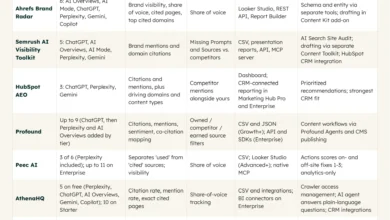
The Evolution of Search: A Comprehensive Analysis of HubSpot AEO and SE Ranking in the Era of Generative AI

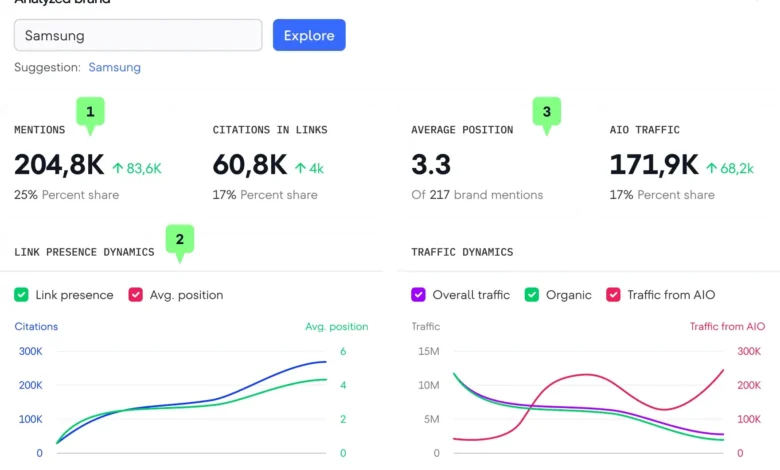
The digital marketing landscape is currently undergoing its most significant transformation since the inception of the search engine, as consumer behavior shifts from traditional keyword queries to conversational interactions with Large Language Models (LLMs). This transition has birthed a new discipline known as Answer Engine Optimization (AEO), also referred to as Generative Engine Optimization (GEO). As platforms like ChatGPT, Google Gemini, and Perplexity become the primary gateways for product discovery and brand evaluation, companies are increasingly forced to choose between specialized tools to manage their "AI visibility." Among the leading solutions emerging in this space are HubSpot AEO, SE Visible, and the broader SE Ranking suite, each offering distinct methodologies for capturing share-of-voice in the generative era.
The New Search Paradigm: From Keywords to Conversations
For over two decades, Search Engine Optimization (SEO) was the undisputed king of digital visibility. Success was measured by a website’s ability to rank on the first page of Google for specific keywords. However, recent data indicates a cooling of traditional search traffic. According to industry analysis, organic traffic for many B2B and B2C brands has decreased by approximately 27% year-over-year. Conversely, referral traffic from AI engines has tripled in the same period.
The shift is driven by the efficiency of AI-generated answers. Rather than browsing ten blue links, users now receive synthesized, direct answers. For businesses, the stakes are high: if a brand is not cited or recommended by an AI engine during a buyer’s research phase, it effectively ceases to exist in that buyer’s consideration set. Data from HubSpot reveals that 42% of CRM buyers now utilize AI search as a core part of their evaluation process. Crucially, these AI-referred leads are proving to be higher in quality, converting at three times the rate of traditional search visitors.

A Chronology of Search Evolution
To understand the current competition between HubSpot and SE Ranking, one must look at the timeline of technological shifts that led to the AEO boom:
- November 2022: The launch of ChatGPT marks the beginning of mass-market generative AI, introducing users to conversational search.
- May 2023: Google announces Search Generative Experience (SGE), now known as AI Overviews, signaling the integration of LLMs into traditional search results.
- Early 2024: Market saturation of AI "answer engines" like Perplexity and the rebranding of Bard to Gemini creates a fragmented search environment.
- Late 2024: Software providers begin launching dedicated tracking tools. HubSpot introduces HubSpot AEO to bridge the gap between AI visibility and CRM data, while SE Ranking releases SE Visible to provide specialized monitoring across global markets.
Comparative Analysis of Core Platforms
Marketing teams today face a strategic fork in the road: whether to invest in a specialist tool designed specifically for the AI era or to utilize a generalist SEO suite that has integrated AI tracking features.
HubSpot AEO: The Specialist and Workflow Orchestrator
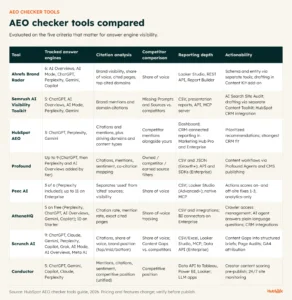
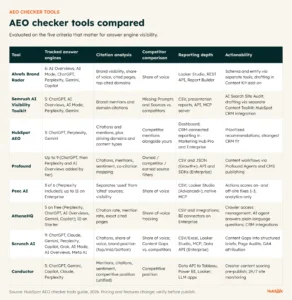
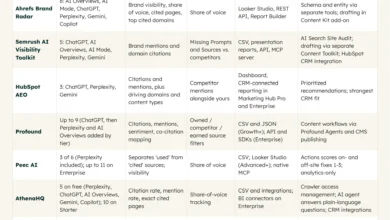
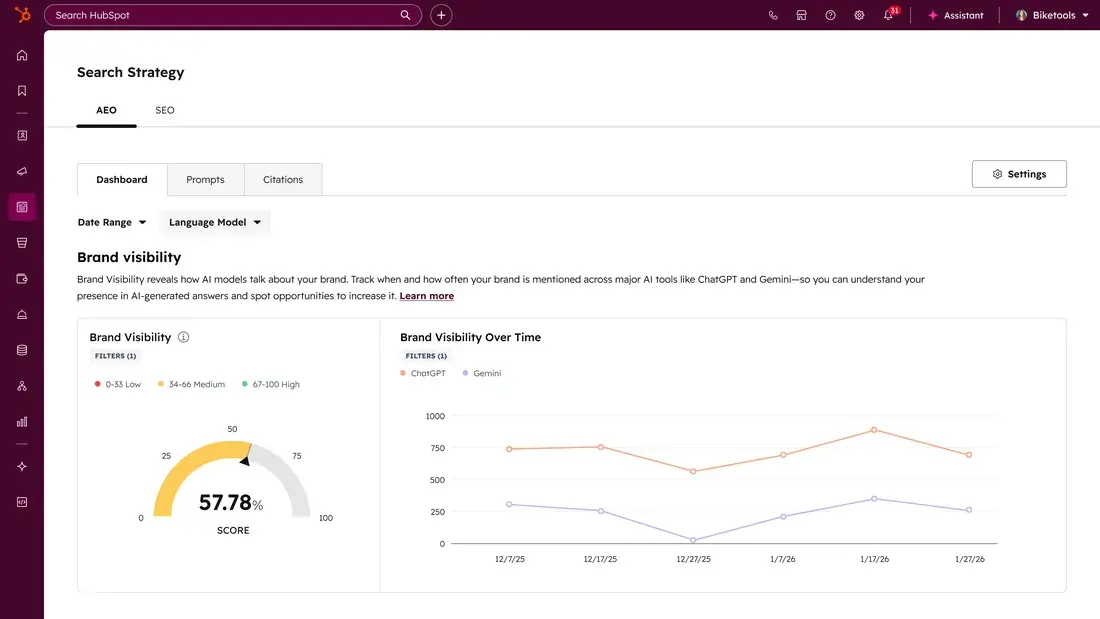
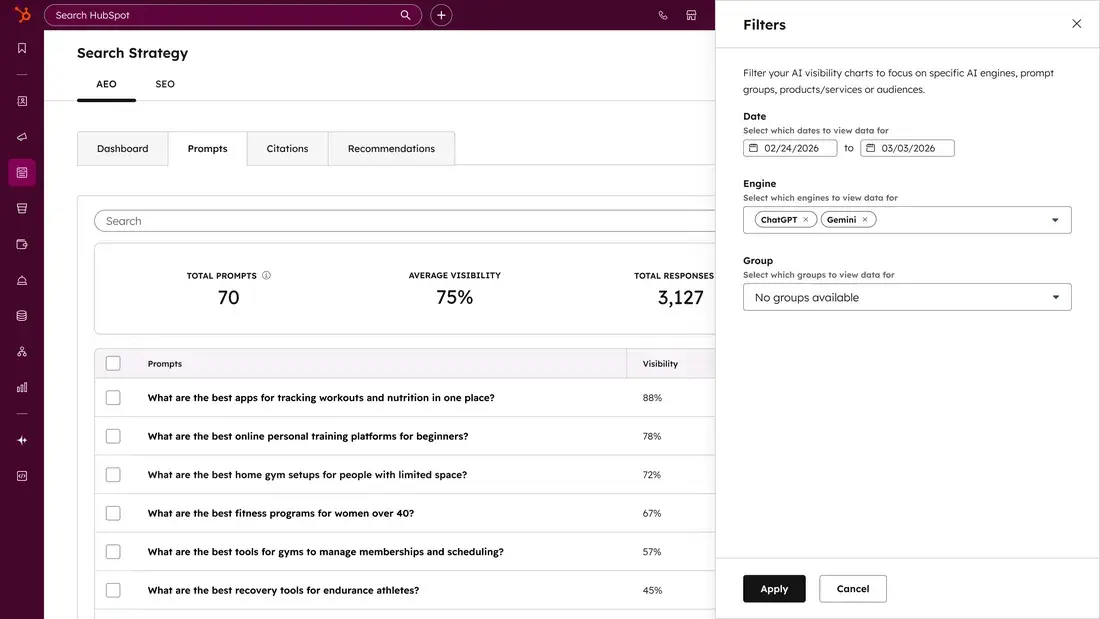
HubSpot AEO is positioned as a specialist tool designed for high-growth teams and existing HubSpot users. Its primary value proposition is the "AEO Grader," which assesses brand visibility across five dimensions: sentiment, share of voice, presence quality, brand recognition, and market position.
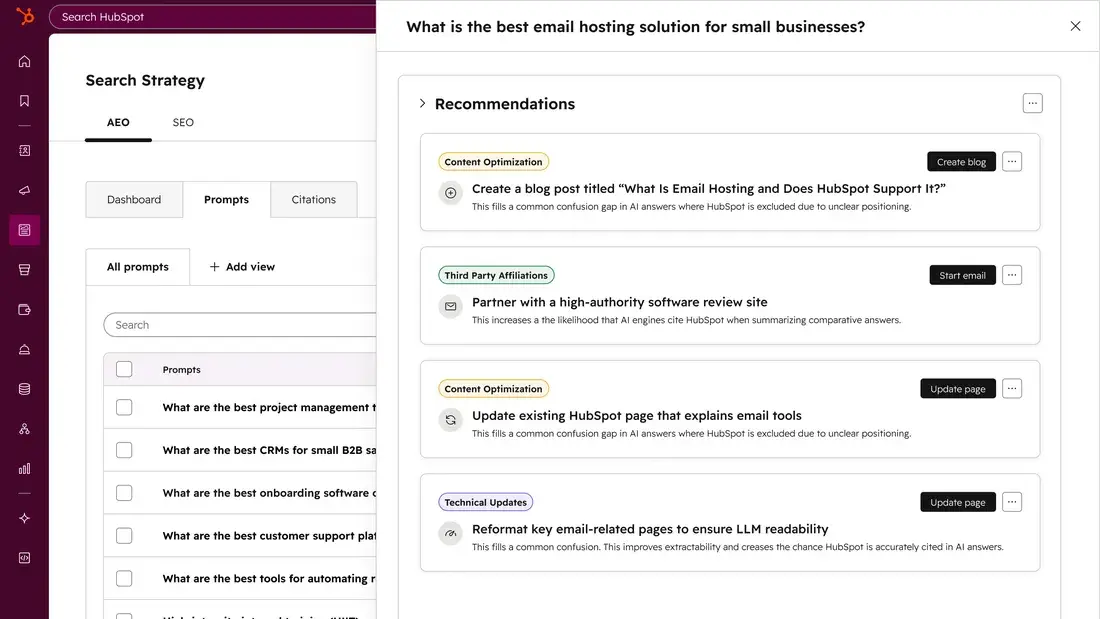
Unlike traditional SEO tools, HubSpot AEO is built with an "actionability" layer. When the tool detects that a competitor is being cited more frequently for a specific prompt, it does not merely report the data; it generates prioritized recommendations. Because these recommendations can be linked directly to HubSpot’s Marketing Hub, teams can update their content library and track the impact on their CRM-connected leads in real-time. This native integration makes it a formidable choice for in-house marketers who require a closed-loop system between visibility and revenue.
SE Visible: The Global Monitoring Powerhouse
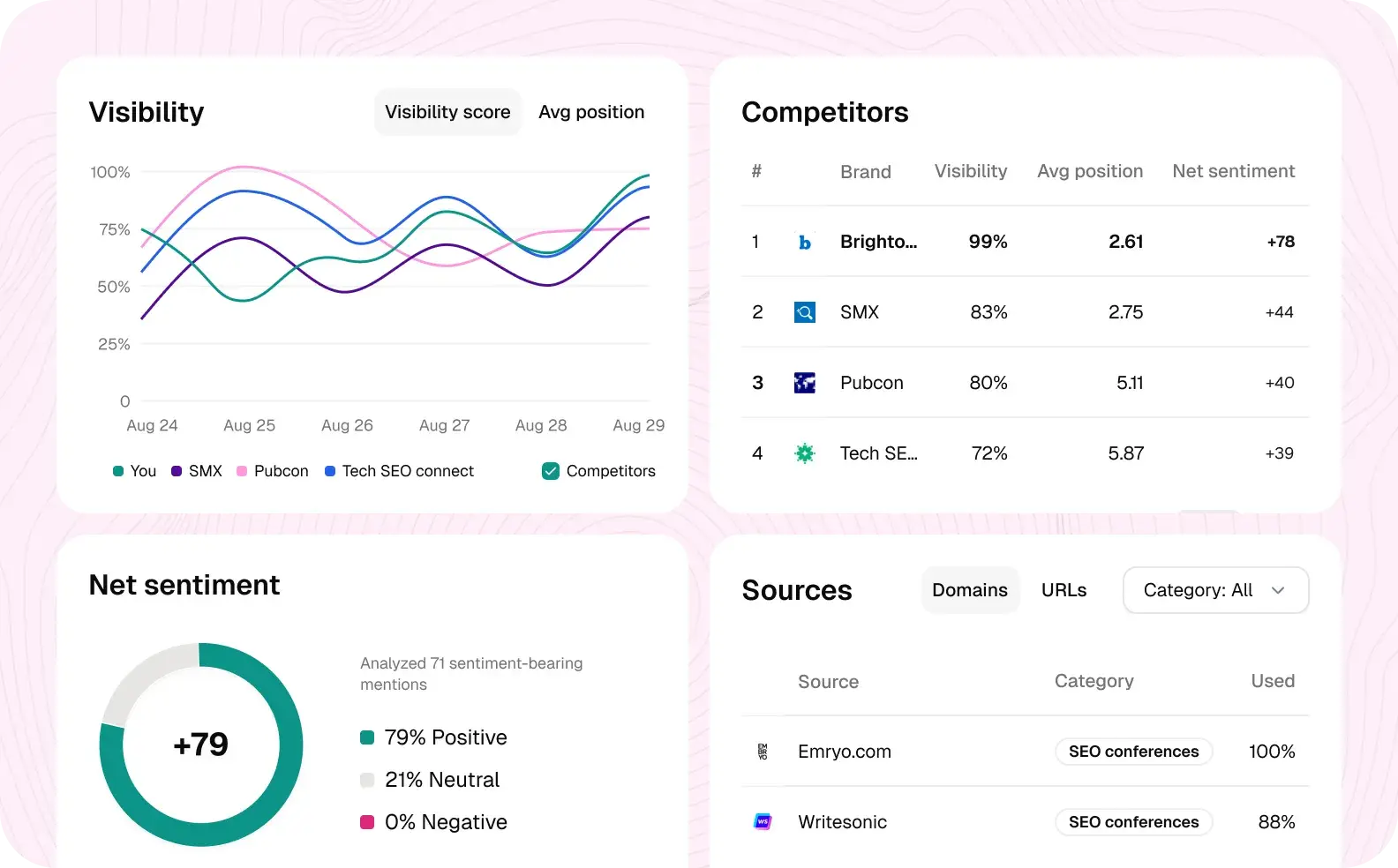
SE Visible, a standalone product from the SE Ranking team, serves a different segment of the market. While HubSpot focuses on the workflow, SE Visible focuses on deep, multi-market monitoring. It tracks brand representation across five major platforms: ChatGPT, Gemini, Perplexity, Google AI Overviews, and Google AI Mode.
One of SE Visible’s most significant advantages is its international scope. It supports tracking across seven countries (including the US, UK, France, and Germany) and five languages. For global brands and PR agencies, this level of granularity is essential. It provides a "source gap analysis," identifying which specific URLs, blogs, or forums are being used as citations by AI engines, allowing teams to target their outreach more effectively.
SE Ranking: The Comprehensive SEO Suite
SE Ranking remains the "generalist" in this comparison. It is a full-featured SEO suite that includes rank tracking, site audits, and backlink analysis. Its "AI Search Toolkit" is an add-on feature rather than the core focus. This makes SE Ranking the preferred choice for SEO agencies and freelancers who need to manage traditional SEO health while keeping a watchful eye on AI-generated results. It handles high-volume daily keyword checks and technical audits, which neither HubSpot AEO nor SE Visible are designed to perform.
Technical Features and Integration Ecosystems
The effectiveness of an AEO tool is often determined by its ability to automate repetitive data collection. AI models are updated constantly, meaning a brand’s visibility can shift overnight.
- Prompt Tracking: HubSpot AEO allows for daily tracking of 25 custom prompts on its base plan. In contrast, SE Visible offers a higher volume, starting at 200 prompts, making it more suitable for brands with large product catalogs.
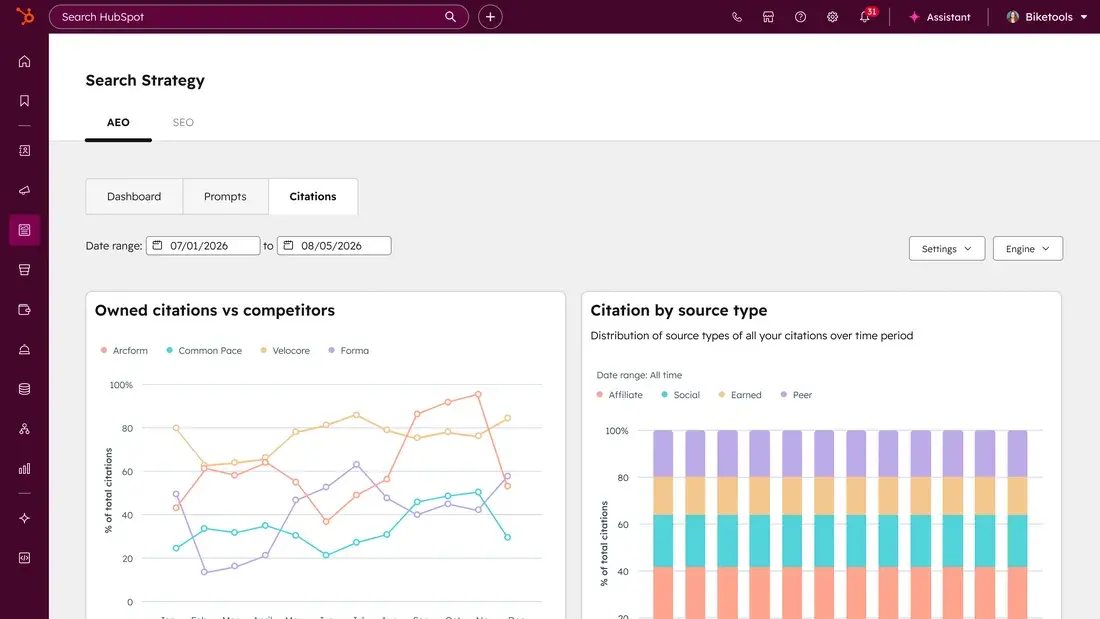
- Citation Analysis: Both tools offer citation analysis, but they approach it differently. HubSpot highlights which sources AI cites in direct relation to your competitors, while SE Visible provides a broader breakdown of source categories, such as media outlets versus community forums.
- Automation: HubSpot automates the content refresh workflow, whereas SE Ranking excels at automating technical SEO reports and rank tracking through integrations with platforms like Zapier, Make, and Looker Studio.
The Economic Impact: Conversion and ROI Data
The urgency to adopt AEO tools is supported by aggressive ROI metrics. Ahrefs data indicates that visitors arriving via AI search can generate a 23x better conversion rate compared to traditional organic search. This is likely because AI engines act as a "pre-filter," only recommending brands that specifically meet the user’s criteria.
From a pricing perspective, the barrier to entry is relatively low. HubSpot AEO starts at $50 per month, offering a standalone entry point that does not require a full CRM subscription. SE Visible starts at $79 per month (billed annually), reflecting its focus on higher prompt volumes. SE Ranking sits at the top of the price bracket, starting at approximately $103 per month, but this covers an entire suite of SEO tools, potentially replacing multiple other subscriptions.
Strategic Implementation: A 14-Day Sprint
Industry experts suggest that brands can establish an AEO baseline within a two-week window. The process generally follows a standardized chronology:
- Days 1-3 (Baseline): Use a tool like the HubSpot AEO Grader to establish a current score. Identify the core "buyer questions" that define your category.
- Days 4-7 (Tracking): Configure prompts in HubSpot AEO or SE Visible. Monitor which engines (ChatGPT vs. Gemini) are citing your brand and which are ignoring it.
- Days 8-12 (Optimization): Analyze the citation sources. If AI engines are citing a specific industry blog or a competitor’s whitepaper, focus content efforts on creating more authoritative, structured data that mirrors those successful sources.
- Days 13-14 (Review): Compare early visibility shifts. While full re-indexing by AI models can take 4 to 8 weeks, early signals in sentiment changes can often be detected within the first fortnight.
Official Responses and Market Implications
Market reactions to these tools have been polarized between traditionalists and early adopters. Traditional SEO practitioners argue that AEO is merely an extension of "Featured Snippet" optimization. However, software providers like HubSpot and SE Ranking contend that the "black box" nature of LLMs requires entirely new tracking methodologies that traditional crawlers cannot replicate.
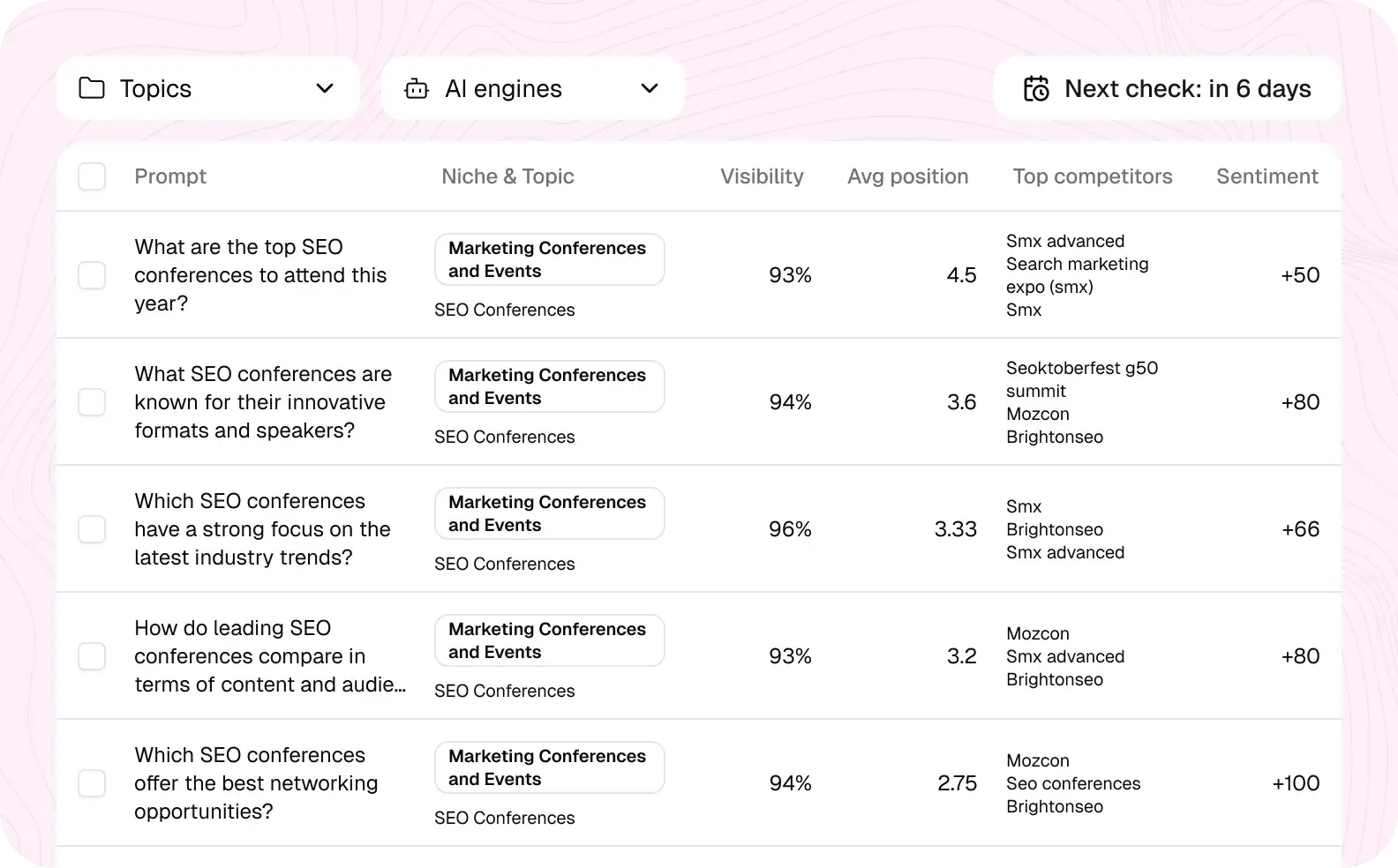
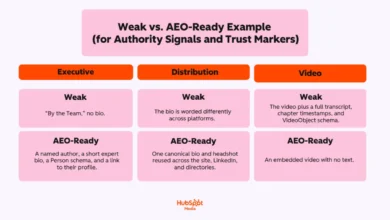
The broader implication for the industry is a shift toward "Brand Authority" over "Keyword Density." Because AI models prioritize consensus and citations from reputable sources, the future of search visibility will likely rely more on PR, third-party reviews, and community sentiment than on technical on-page tricks.
Conclusion: Navigating the Future of Visibility
As search behavior continues to fragment, the "winner" in the HubSpot AEO vs. SE Ranking debate depends entirely on organizational goals. HubSpot AEO is the clear choice for teams that want a direct line between AI insights and content execution within a CRM environment. SE Visible is the superior option for brands requiring deep, multi-market monitoring and competitive citation analysis at scale. Finally, SE Ranking remains the essential foundation for teams that cannot afford to ignore traditional SEO while they transition into the AI era.
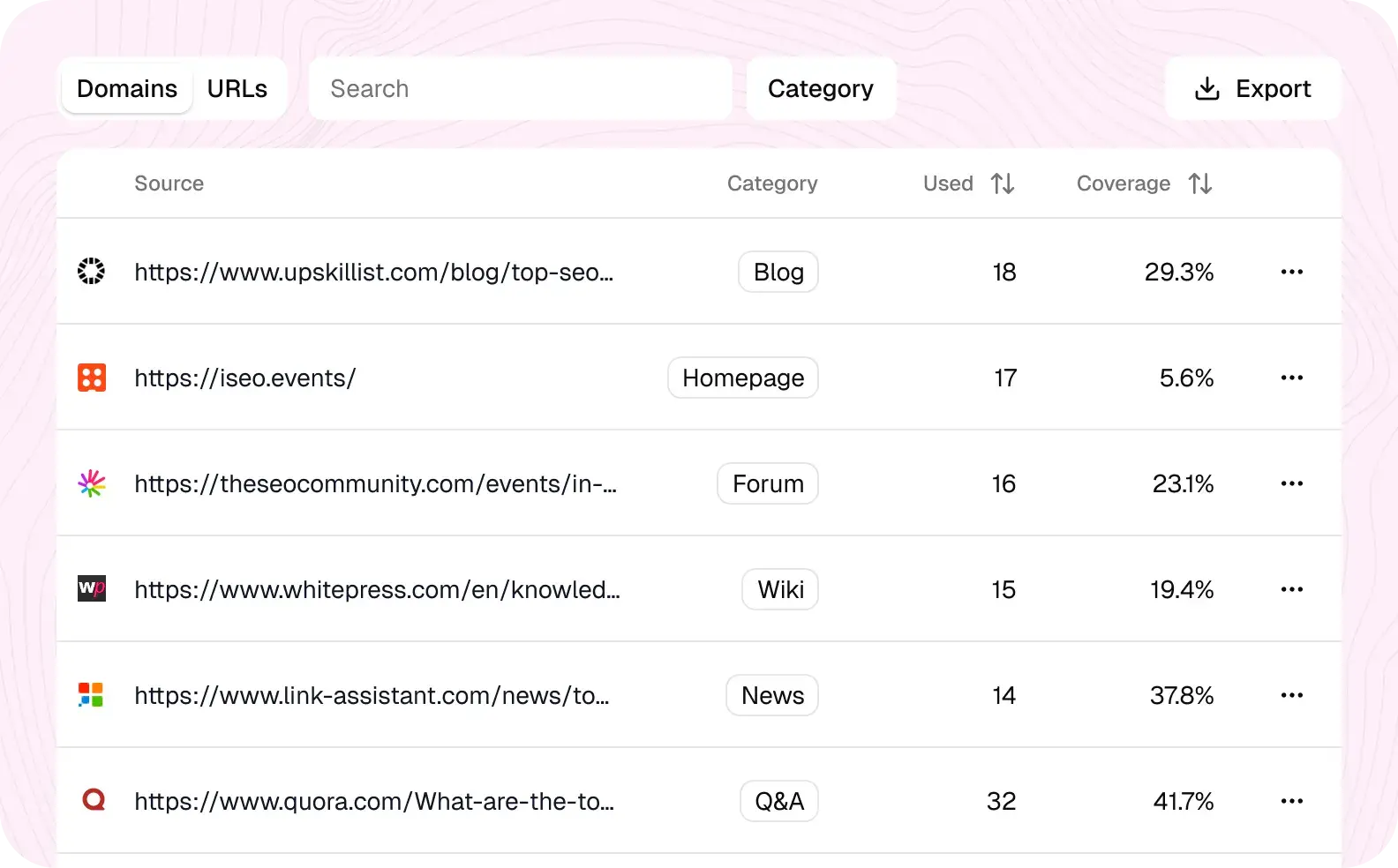
Regardless of the tool chosen, the data is clear: the era of "Googling" is being supplemented—and in some cases replaced—by the era of "Asking." Brands that fail to measure their presence in these digital conversations risk becoming invisible to the next generation of buyers.
Related posts: