Station Casinos Marks 50th Anniversary by Awarding Over 70 Million Dollars in Equity to Nearly 10,000 Employees

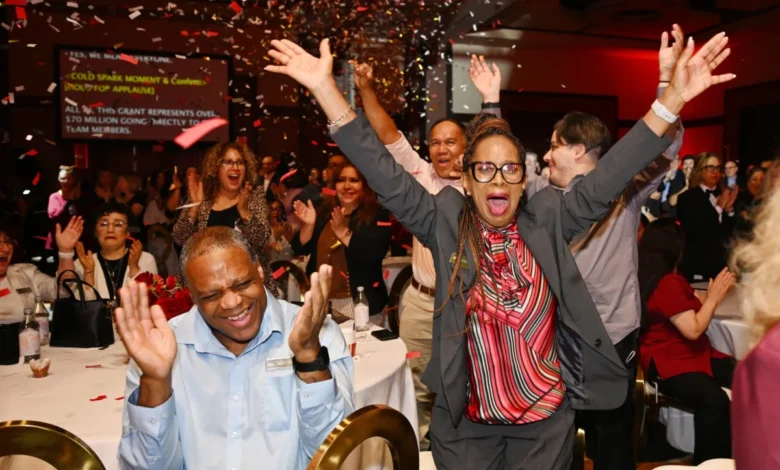
In a significant departure from traditional corporate retention strategies, Las Vegas-based casino operator Station Casinos has transformed its workforce into shareholders, distributing more than $70 million in company stock to nearly 10,000 full- and part-time employees. The move, announced during the company’s 50th-anniversary celebration, represents a calculated investment in human capital, granting staff members $1,000 in Red Rock Resorts Class A stock for every year of service. This initiative serves as a landmark moment in the gaming industry, shifting the paradigm of employee benefits from standard compensation to long-term wealth participation.
The announcement was made by Frank Fertitta III, chairman and CEO of the company’s parent entity, Red Rock Resorts, alongside Vice Chairman Lorenzo Fertitta. Addressing a packed ballroom of employees, the leadership team emphasized a fundamental change in the organizational relationship between the company and its staff. By converting years of service into equity, the firm has effectively repositioned its workforce from laborers to stakeholders, aiming to foster a sense of collective ownership that aligns individual performance with the company’s long-term financial success.
A Half-Century of Evolution
The history of Station Casinos is deeply intertwined with the development of the modern Las Vegas locals’ market. Founded in 1959 by Frank Fertitta Jr., who moved from Galveston, Texas, the company began its formal casino operations in 1976. The inaugural property, a 5,000-square-foot facility known simply as The Casino, was a modest operation featuring only 100 slot machines and six table games. At its inception, the workforce consisted of just 90 individuals.
The company’s trajectory of growth is marked by several pivotal milestones:
- 1976: The opening of The Casino in Las Vegas.
- 1977: The facility is rebranded as the Bingo Palace, establishing a strong local following.
- 1984: The property undergoes a transformation and is renamed Palace Station, signaling the start of the brand’s expansion.
- 2024/2025: The company celebrates its 50th anniversary, now operating 14 properties across the Las Vegas Valley, including premium destinations like Red Rock Casino Resort & Spa, Green Valley Ranch, and the recently opened Durango Casino & Resort.
This growth has not come at the expense of the company’s stated foundational values. Throughout the expansion, the Fertitta family maintained a focus on the local community, emphasizing that the success of their business model is predicated on the relationships fostered between employees and guests.
Impact of the Equity Distribution
The distribution of $70 million in equity is tiered based on longevity, resulting in significant payouts for the company’s most dedicated staff. Eligible employees began claiming their shares on the Monday following the announcement. The impact is most profound for legacy employees; for instance, Ida Johnson, who has been with the organization since 1977, was awarded $49,000 in stock. Similarly, six other employees who joined the staff during the Bingo Palace era each received equity valued at over $45,000.
For a sector often characterized by high turnover rates, this gesture acts as a powerful retention tool. By providing a tangible financial stake in the parent company, Red Rock Resorts is attempting to mitigate the churn that typically plagues the hospitality industry. The psychological shift described by Lorenzo Fertitta—urging employees to walk out not just as workers, but as owners—is intended to translate into improved guest services and greater operational efficiency, as staff now have a vested interest in the company’s bottom line.
Comparative Industry Context
Station Casinos is not the first major corporation to utilize broad-based stock awards to boost morale and retention, though its approach is unique within the regional gaming industry. Large-scale equity distributions have become a growing trend among multinational corporations seeking to share the wealth generated by periods of high profitability.
- Bank of America: In 2022, the financial giant implemented a $1 billion restricted-stock pool for its global workforce, aimed at rewarding staff for their contributions during the pandemic era.
- Apple: Following the 2017 tax reform, Apple distributed $2,500 in restricted stock units to the vast majority of its employees, signaling a commitment to sharing tax-advantaged windfall gains.
- Samsung: In late 2025, the electronics manufacturer initiated a program to grant shares worth up to $20,000 to employees outside of executive management, responding to public calls for more equitable profit-sharing.
- Fibrebond Corp: The manufacturing firm set a record in late 2025 when the owner carved out a $240 million bonus pool upon the company’s sale, resulting in an average payout of $443,000 per employee.
These examples illustrate a broader macroeconomic trend: companies are increasingly recognizing that the traditional salary-and-bonus model is insufficient to keep top talent engaged in a competitive labor market. By tying compensation to stock price, companies are effectively incentivizing employees to remain focused on the long-term health of the organization.
Strategic Implications and Market Analysis
From a financial perspective, the decision by Red Rock Resorts to issue shares to nearly 10,000 employees carries several implications. While the move dilutes the share pool, the cost of this dilution is likely offset by the anticipated gains in employee productivity, decreased recruitment and training costs, and enhanced brand loyalty.
Analysts suggest that such initiatives serve as a hedge against labor volatility. In the gaming industry, where personal service is the primary product, high employee engagement is directly correlated with customer satisfaction. By empowering staff with equity, Red Rock Resorts is positioning itself as an employer of choice in a competitive market, which may provide a strategic advantage over regional competitors who rely solely on traditional wage structures.
Furthermore, the timing of the announcement—coinciding with the 50th-anniversary celebration—serves as a high-visibility marketing event. It reaffirms the company’s image as a "local favorite" that cares for its people, reinforcing the brand identity that Frank Fertitta Jr. established five decades ago.
The Road Ahead
As the company moves into its next 50 years, the leadership team faces the challenge of maintaining this culture of ownership. During the ceremony, Frank Fertitta III noted that the current award is a reflection of the values that have guided the company since its inception. He concluded by thanking the staff for their role in making the last five decades possible and expressed optimism for the future.
The long-term success of this initiative will be measured by the company’s ability to sustain this culture and whether the stock-based compensation leads to a measurable increase in employee retention and guest satisfaction scores. For the thousands of staff members who are now shareholders, the value of their holdings will rise and fall with the performance of Red Rock Resorts, effectively bridging the gap between the boardroom and the casino floor.
Ultimately, this move by Station Casinos highlights a shifting landscape in labor relations. Whether this represents a permanent change in how hospitality companies reward their staff or remains a one-time gesture tied to a milestone anniversary remains to be seen. However, the precedent set by the $70 million distribution provides a compelling case study for other large-scale employers looking to incentivize their workforces through ownership rather than just annual salary adjustments.