Andreessen Horowitz Launches Ambitious Academy to Challenge the Traditional Higher Education Model

The landscape of American higher education is facing a period of profound introspection as the dual pressures of skyrocketing tuition costs and the disruptive potential of artificial intelligence converge. For the nation’s elite students, the traditional four-year degree is increasingly being viewed through a cost-benefit lens that many find unfavorable. With the average cost of a private university education now approaching a half-million dollars when adjusted for long-term debt and opportunity costs, and the rapid automation of entry-level professional roles, the value proposition of a traditional diploma is under scrutiny.
In response, Andreessen Horowitz (a16z), one of the world’s most prominent venture capital firms, has officially launched the Andreessen Horowitz Academy. This initiative marks the first time a major venture capital firm has sought to provide a direct, for-profit alternative to the university system. By targeting high-achieving young individuals before they commit to traditional undergraduate paths, the Academy aims to position itself as a "future-forward" training ground for the next generation of technologists and founders.
A Strategic Pivot Toward Alternative Education
The Academy, which is legally structured as a separate entity from the venture capital firm, has secured $42 million in funding from a16z and a coalition of private investors. The program, based in San Francisco, is designed to be an intensive, one-year experience for an inaugural class of approximately 50 students, scheduled to commence in September 2027.
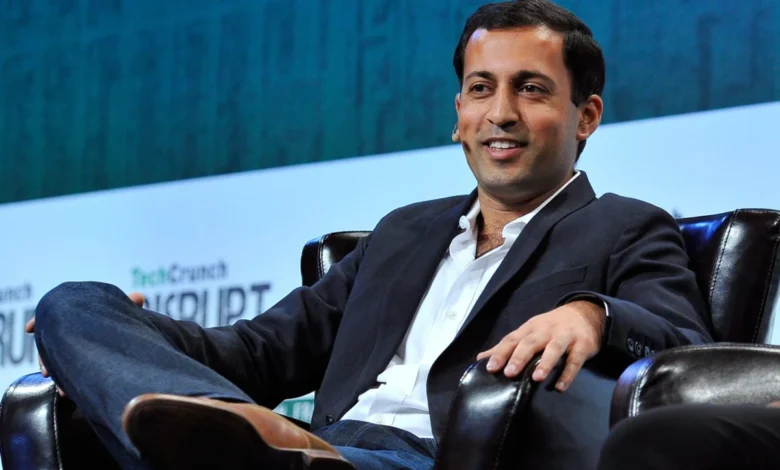
Gagan Biyani, a co-founder of the educational technology giant Udemy, has been tapped to lead this new venture. Biyani views the $2 trillion higher education sector as a market ripe for structural evolution. "The bet is that there’s an opportunity to educate the next generation in a way that is more future-forward, and that’s a big market opportunity," Biyani stated.
Unlike a traditional university, the Academy will not pursue accreditation, will not issue degrees, and will not participate in federal student aid programs. Furthermore, the institution does not guarantee post-graduation employment or paid internships. However, for the founding class, the program is tuition-free and includes $50,000 in compute credits and a $5,000 travel stipend, underscoring the firm’s commitment to attracting top-tier talent.
The Institutional Roadmap: From Prototype to Scaled Model
The development of the Academy follows a deliberate, multi-phase timeline. The initial 2027 launch serves as a pilot program designed to validate the curriculum and pedagogical approach. By 2028, the Academy intends to seek regulatory approval to expand into a two-year program. Should this transition prove successful, Biyani has indicated that the cost structure will likely shift to align with elite private universities, with projected annual tuition ranging between $60,000 and $90,000.
This ambition faces significant regulatory and operational hurdles. Historically, alternative educational models have struggled to achieve the legitimacy and long-term sustainability of established institutions. Because the Academy will not accept federal aid, it must find a way to make the high price point viable for families—likely through corporate sponsorships, industry partnerships, or future income-share agreements that have yet to be finalized.
Curriculum Design and Industry Integration
The Academy’s curriculum is markedly different from the liberal arts foundations of traditional colleges. It focuses on practical, high-velocity skill acquisition, with courses ranging from "AI Inference Engineering" and "The Craft of Selling" to a historical survey titled "Origins and Innovations in Digital Computing 1940–2025."
The teaching staff comprises a unique mix of Silicon Valley luminaries. While guest speakers—including figures such as Sam Altman, Jensen Huang, Satya Nadella, Mira Murati, Fei-Fei Li, and Travis Kalanick—are slated to provide high-level insights during fireside chats, the core faculty includes established industry leaders like Instacart co-founder Max Mullen and former Windows president Steven Sinofsky.
Perhaps most significant is the integration with ten founding corporate partners, including Anduril, Anthropic, Coinbase, Google, Meta, Nvidia, OpenAI, Palantir, Replit, and Stripe. These partners are expected to provide more than just curriculum advice; they will host students for "co-ops" during the summer months. While the Academy is not a direct hiring funnel, the proximity to these companies provides students with unparalleled access to the infrastructure and networks of the tech industry.
The Challenge of Scalability and Credibility
Critics of the initiative, including economists and industry analysts, have raised questions regarding the long-term viability of the project. Bryan Caplan, an economist at George Mason University and author of The Case Against Education, suggests that while the model may function for a small, hand-picked cohort of 50 students, it faces severe challenges when attempting to scale.
"Something that can work for 50 handpicked people isn’t going to work even for the top 5,000," Caplan observed. He argues that the prestige of the Academy acts as a signaling mechanism, essentially validating the "weirdness" of students who forgo traditional degrees. However, this signaling power is inherently tied to the exclusivity of the program. Once a program scales, it risks losing the very elite status that makes it attractive to employers.
Ryan Craig, managing director at Achieve Partners, points to the historical failure of similar "innovative university" startups. "It’s a bootcamp with a plan to be a college, but I’d say not a realistic plan to be a college," Craig noted. He emphasizes that the primary advantage of traditional universities remains their access to federal subsidies, which allow them to maintain operations at a scale that private, for-profit entities struggle to match.
Implications for the Broader Higher Education Market
The entry of Andreessen Horowitz into the educational space reflects a growing sentiment within the tech sector that traditional universities are failing to adapt to the speed of modern innovation. By recruiting "pre-idea founders"—high schoolers who have already demonstrated technical acumen through projects like AI-driven startups—the Academy is attempting to bypass the undergraduate experience entirely.
The admissions process, which prioritizes "proof of work" over standardized testing, signals a shift toward a portfolio-based assessment of talent. This aligns with broader trends in the labor market, where skills-based hiring is increasingly replacing credential-based hiring.
However, the Academy’s success will ultimately depend on whether it can provide a sufficiently robust environment to replace the extracurricular, social, and networking benefits of a four-year residential college. While the Academy offers access to a high-powered network, it lacks the multi-generational alumni base and institutional stability of an Ivy League or Tier-1 research university.
Conclusion: An Experiment in Human Capital
As of now, the Andreessen Horowitz Academy remains a high-stakes experiment. The firm is betting that the current inefficiencies in the education market create a vacuum that can be filled by an industry-led, for-profit alternative.
Whether the Academy will become a viable blueprint for the future of education or remain a boutique training program for a select few remains to be seen. The coming years will serve as a stress test for the model, particularly as the institution attempts to bridge the gap between a lean, tech-centric bootcamp and the complex regulatory and societal requirements of a full-fledged educational institution. For now, the eyes of the tech world and the higher education establishment are fixed on San Francisco, waiting to see if this "pre-idea" incubator can deliver on its promise to rewrite the rules of professional development.