Most email marketing teams know the basics of the craft: authenticate your domain, scrub your mailing list, craft a punchy subject line, and conduct a final test before hitting send. However, for enterprise and mid-market organizations, the threshold for performance is significantly higher. In these complex environments, operational efficiency often stalls not due to a lack of basic knowledge, but because of the structural friction that emerges when a database grows from 50,000 to 500,000 contacts. When automation workflows begin to collide, sender reputation becomes fragmented, and leadership demands clear proof of how email contributes to closed-won revenue, the traditional "best practices" often fall short.
The challenges faced by large-scale organizations are rarely rudimentary. They are deep-seated infrastructure, governance, and measurement problems that demand a sophisticated, systematic approach. As marketing programs scale, the failure points multiply, turning minor oversights into systemic roadblocks that can stifle growth and obscure the true impact of marketing investment.
The Evolution of Enterprise Email Challenges
At a smaller scale, a monthly newsletter sent to a segmented audience is a manageable task. For a demand generation team managing multi-channel nurture sequences across a global, heterogeneous database, the reality is entirely different. Scale acts as a multiplier for both productivity and risk.
Governance is typically the first casualty of rapid growth. When multiple business units—each with their own regional priorities and sales goals—share a single sending domain and contact database, the lack of centralized rules leads to "customer fatigue." Without robust suppression logic, a single prospect might receive simultaneous, conflicting communications from sales, marketing, and customer success teams. This results in an immediate spike in unsubscribe rates and complaint reports, which in turn damages the domain’s sender reputation.
Data hygiene also suffers over time. Enterprise databases are fed by a deluge of sources: CRM imports, event registrations, third-party enrichment, and product signups. Without rigid validation logic applied at the point of ingestion, duplicate records and invalid addresses accumulate, eventually triggering bounce rates that alert internet service providers (ISPs) to poor list management.
The Deliverability Crisis
Deliverability remains the foundational requirement for email marketing success. Without it, even the most creative campaigns fail to reach the inbox. Historically, deliverability was viewed as a technical concern, but in the current landscape, it is a business-critical performance metric.
Since February 2024, when industry giants Google and Yahoo implemented stricter requirements for bulk senders, the implementation of SPF, DKIM, and DMARC has transitioned from a best practice to a mandatory prerequisite for inbox placement. Enterprise teams failing to adhere to these protocols are now facing immediate rejection of their campaigns.
The data supports this urgency. Research suggests that an email spam complaint rate exceeding 0.1% can trigger aggressive filtering by Gmail. To combat this, enterprise teams must monitor their domain reputation through tools like Google Postmaster Tools and maintain strict hygiene. Hard bounce rates exceeding 2% are widely considered an early warning sign of impending reputation collapse. Consequently, industry leaders are increasingly moving toward dedicated IP addresses to isolate their reputation from the fluctuations of shared infrastructure.
Optimizing Engagement Through Precision
Low engagement is often misdiagnosed as a creative failure, when in reality, it is a symptom of poor targeting and timing. At the enterprise level, the "batch and blast" approach is obsolete. Modern performance requires hyper-segmentation, where lifecycle stages are combined with behavioral triggers and firmographic data.
.png)
Dynamic list building has become the standard for high-performing teams. By utilizing smart lists that update in real-time based on product usage or content interaction, marketers can ensure that messaging is relevant to the user’s current journey. Furthermore, the use of Send Time Optimization (STO)—a feature that leverages engagement history to deliver emails at the moment a recipient is most likely to open them—has been shown to increase open rates significantly across geographically diverse contact bases.
Testing discipline is equally vital. A/B testing is frequently misused by teams who test too many variables at once. To achieve actionable insights, enterprise teams must adopt a scientific framework: isolate a single variable—such as subject line framing or CTA placement—and ensure the sample size is statistically significant, ideally at least 1,000 recipients per variation.
Bridging the Gap to Revenue Attribution
The most significant pressure on contemporary marketing teams is the demand for clear attribution. Leadership is no longer satisfied with vanity metrics like open rates or click-through rates. The current objective is to connect email activity to the pipeline and, eventually, to closed-won revenue.
This requires a fundamental shift in how data is tracked. By moving away from campaign-level aggregates toward contact-level engagement data, organizations can map the customer journey across multiple touchpoints. In complex B2B sales cycles, a single email is rarely the sole driver of a deal. Multi-touch attribution models, which distribute credit across the various interactions that precede a purchase, are becoming the gold standard for justifying marketing budgets.
Evidence indicates that teams tracking "influenced pipeline"—the total value of deals where a contact interacted with an email within a specific timeframe—have a higher success rate in securing executive support for long-term technology investments.
AI and the Future of Production
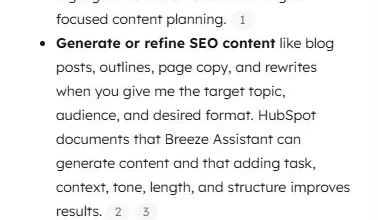
The integration of artificial intelligence into email production offers a pathway to efficiency, provided it is managed with strict governance. AI, such as HubSpot’s Breeze, is most effective in the "drafting" and "testing" phases. By compressing the time required to generate variations of copy and subject lines, AI allows creative teams to focus on strategy rather than rote production.
However, the risk of over-reliance on AI is significant. Content generated without human oversight often lacks brand voice consistency and, in regulated industries, can create compliance liabilities. The most effective enterprise strategy involves using AI to handle the "heavy lifting" of drafting, followed by a mandatory human-led review process that ensures the content aligns with established compliance and brand standards.
A Strategic 30-Day Path Forward
For teams looking to stabilize and optimize their programs, a structured 30-day intervention is often more effective than an attempt at a total overhaul.
- Week 1: Establish the deliverability foundation by auditing authentication records (SPF, DKIM, DMARC) and implementing a suppression list for high-risk contacts.
- Week 2: Perform a segmentation cleanup, prioritizing behavioral criteria over static list imports to ensure the audience is active and relevant.
- Week 3: Conduct one high-volume, single-variable A/B test to build institutional knowledge about what drives audience engagement.
- Week 4: Implement a cross-channel frequency cap to prevent over-messaging and finalize a report that links email engagement to the current sales pipeline.
By following this disciplined, iterative cycle—diagnose, fix, test, and measure—enterprise marketing teams can move beyond the "basics" of email marketing and transform the channel into a verifiable driver of business growth. The path to performance at scale is not found in a single tool or a one-time fix, but in the relentless application of operational rigor and data-backed decision-making.
Related posts: