Stocks surge as market sentiment recovers following Federal Reserve rate hike decision and retreating bond yields

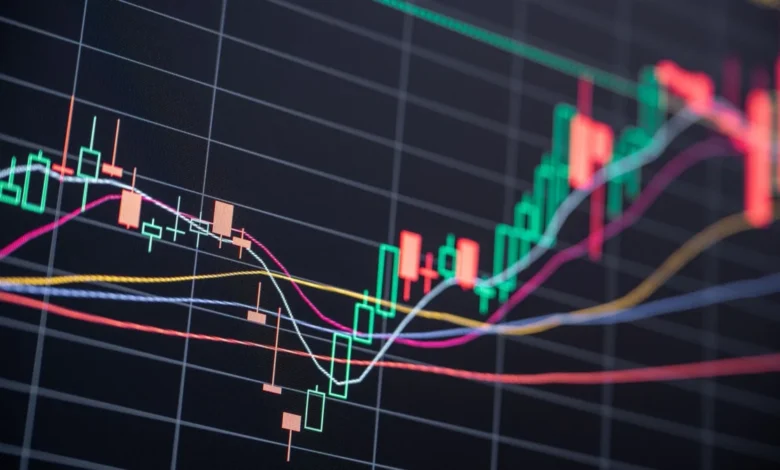
Wall Street staged a decisive recovery on Thursday, erasing the losses incurred during Wednesday’s session, which had been prompted by the Federal Reserve’s move to tighten monetary policy. As investors processed the central bank’s latest interest rate decision, the equity market found renewed momentum fueled by cooling Treasury yields, a softening in global oil prices, and robust gains across the mega-cap technology sector. By the close of trading, the Dow Jones Industrial Average rose 0.6% to finish at 51,778, the S&P 500 climbed 1.1% to reach 7,637, and the technology-heavy Nasdaq Composite led the charge with a 1.7% increase, closing at 26,418.
The Federal Reserve Pivot and Market Reaction
The market’s performance this week has been defined by the Federal Reserve’s first interest rate hike since 2023, a decision that initially triggered a broad-based sell-off on Wednesday. The central bank’s action reflected the ongoing struggle to contain inflationary pressures that have persisted longer than policymakers previously anticipated. During the post-meeting press conference, Chair Kevin Warsh struck a resolute tone, characterizing current inflation levels as unacceptably high.
"The plain fact is that inflation is too high and has been for too long," Warsh stated, emphasizing that the quarter-percentage-point rate hike was a necessary step to guide the economy back toward the Committee’s established 2% inflation target. While the initial reaction to the announcement was one of caution, the market’s pivot on Thursday suggests that investors are beginning to price in the tightening cycle, viewing the move as a long-awaited resolution to months of policy-related uncertainty.
Market analysts suggest that the "uncertainty premium" that previously weighed on equities has begun to evaporate. Bob Edwards, chief investment officer at Edwards Asset Management, noted that the clarity provided by the Fed allows the market to resume its trajectory. According to Edwards, the "wall of worry" that investors have been climbing is thinning, as the path forward for monetary policy becomes more transparent.
Shifts in Bond Markets and Commodity Pricing
Beyond equities, the fixed-income market experienced a significant repricing. Treasury yields, which had been climbing in anticipation of the Fed’s announcement, retreated on Thursday as market participants digested the implications of the rate hike for long-term growth. The yield on the 2-year Treasury note dropped 5.4 basis points to 4.673%, while the 10-year Treasury yield saw a more pronounced decline of 6.8 basis points, settling at 4.936%.
For institutional and retail investors alike, the pullback in yields presents a nuanced landscape. Analysts suggest that while the bond market’s most volatile days may be behind it, the current elevated yield environment remains an attractive entry point for those looking to lock in fixed-income returns.
Simultaneously, the energy sector provided a tailwind for the broader market. West Texas Intermediate (WTI) crude futures fell 0.5%, settling at $101.91 per barrel. Lower energy costs are generally viewed as a positive for the consumer and corporate sectors, as they help alleviate margin pressures and support household discretionary spending, providing an additional layer of support for the market’s upward momentum.
Technology Sector Resurgence: The AI Narrative
Technology stocks reclaimed their position as the market leaders on Thursday, a rebound that was particularly significant given the sector’s recent volatility. Nvidia, a bellwether for the artificial intelligence industry, climbed 2.5% during the session. This recovery comes after a period of instability earlier in the week, sparked by concerns raised by leaders in the AI space regarding the safety of rapidly evolving models and the potential for regulatory "guardrails."
Despite these concerns, the fundamental growth narrative for AI remains intact. Nvidia CEO Jensen Huang, speaking from the United Kingdom, reinforced the industry’s optimism by projecting that the company’s chip sales could double in the coming year. This demand-driven outlook continues to serve as a primary catalyst for tech stocks, which are increasingly decoupled from the immediate anxieties surrounding interest rate policy.
Complementing this growth, Ciena, a provider of high-speed networking equipment, announced a positive long-term outlook, projecting annual revenue growth of approximately 30% over the next three years. Argus Research analyst Jim Kelleher highlighted the structural shift in the industry, noting that Ciena’s expansion is driven by a surge in orders from data center operators who are scrambling to build the infrastructure necessary for AI integration. While Kelleher acknowledged that heavy capital investment might impact margins in the short term, he maintains a Buy rating on the stock with a $550 price target, underscoring the massive upside potential he sees for firms positioned at the heart of the digital transformation.
Industrial Gains and the Amazon-Generac Partnership
While technology dominated the headlines, the industrial sector saw notable activity, particularly regarding Generac Holdings. Generac led the S&P 500 on Thursday with an 18.3% surge following the announcement of a monumental long-term supply agreement with Amazon.
Under the terms of the deal, Generac will supply up to $8 billion in backup power generation equipment to Amazon’s massive network of data centers through 2033. The agreement also includes a significant equity component: Amazon has been granted the right to acquire up to 1.7 million shares of Generac at $201 per share, contingent upon hitting specific purchasing milestones.
UBS Global Research analyst Jon Windham described the deal as a transformative event for Generac. "In our view, this is a significant positive for GNRC, a company that only announced the intent to enter the large data center market in 2025," Windham stated. The partnership underscores the critical importance of power reliability for hyperscale computing, an industry that is currently consuming massive amounts of electricity to run AI-capable server farms.
Other industrial giants followed suit, with Caterpillar gaining 2.0% and Deere & Company rising 2.4%, reflecting a broader investor appetite for companies tied to infrastructure and heavy capital expenditure.
Implications and Future Outlook
The market’s performance on Thursday signals a maturation of the post-Fed environment. The initial shock of the rate hike has been replaced by a pragmatic assessment of the economic landscape. The data points from the last 48 hours indicate that while the Federal Reserve is committed to its inflation-fighting mandate, the underlying corporate economy—specifically in technology and infrastructure—remains insulated by high demand.
However, market observers remain cautious. The transition toward a 2% inflation target is expected to be a multi-quarter process, and future policy decisions will likely remain data-dependent. Investors are advised to maintain a disciplined approach, as individual company successes, such as the Generac-Amazon deal, may not always be indicative of a uniform trend across the entire market.
As the calendar turns toward the next fiscal quarter, the focus will likely shift from the central bank’s rhetoric to the actual impact of higher rates on corporate earnings. For now, the market has demonstrated resilience, finding support in the strength of AI-driven technology and the massive infrastructure investments required to power the next generation of computing. The "wall of worry" remains, but for the time being, the path of least resistance for equity markets appears to be to the upside.