U.S. Inbound Tourism Plummets Further in August as Visitor Numbers Fall 11.8% Following a Disappointing Summer Season

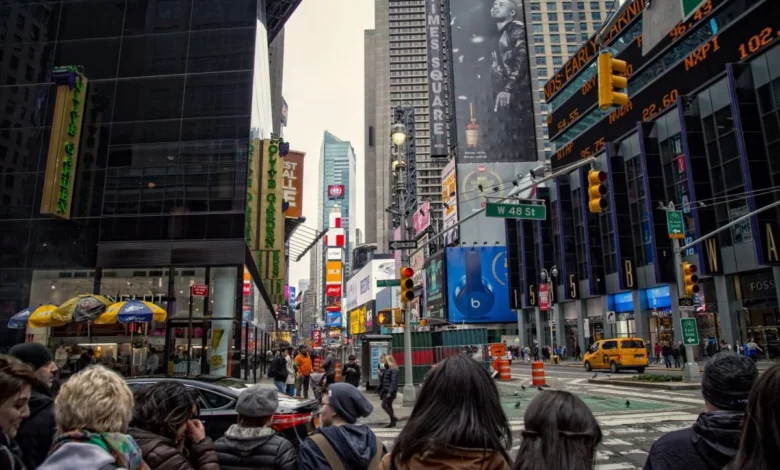
The United States travel and tourism sector is facing an increasingly severe downturn as inbound international visitation numbers continue to slide deep into the autumn shoulder season, culminating in a steep 11.8% year-over-year decline in August, according to official federal data.
The latest figures, released on Thursday by the National Travel and Tourism Office (NTTO), reveal that the U.S. received approximately 3.1 million international visitors during the month of August. This troubling performance follows an already dismal mid-summer period, marked by a 7% decrease in inbound tourism during July. Together, these consecutive monthly drops have shattered early-season industry projections that had anticipated a banner summer for the American travel economy, leaving hospitality leaders, airline executives, and tourism boards scrambling to reassess their economic forecasts for the remainder of the year.
The contraction in inbound travel has been broad-based, affecting virtually every major global region and dampening hopes of a robust, post-pandemic recovery for high-spending international travelers.
A Summer of Broken Promises
At the onset of the year, travel industry analysts and economic forecasters were overwhelmingly optimistic about the U.S. tourism outlook. Buoyed by the removal of remaining global travel restrictions, a surge in pent-up demand, and a high-profile calendar of international sporting events—chiefly the preparations for and execution of various high-stakes soccer tournaments, including matches drawing global audiences—stakeholders expected a historic influx of foreign capital.
Instead, the summer season proved to be a profound disappointment. The momentum that the industry desperately needed stalled significantly by mid-year. While domestic travel within the United States remained relatively resilient, supported by local consumers taking road trips and regional flights, the lucrative international segment—vital for high-margin hotel bookings, luxury retail, and long-haul aviation—failed to materialize at expected levels.
The shortfall was particularly acute during major global sporting events, such as early rounds and associated festivities of the World Cup, where visitor turnout significantly missed internal forecasts set by hospitality groups and destination marketing organizations. Rather than serving as a massive economic catalyst, the summer of international tourism quickly transformed into a period of inventory surplus, discounted hotel rates, and canceled charter flights.
Chronology of the Decline
The downward trajectory of inbound international travel to the United States throughout the recent summer and late-summer months highlights a compounding crisis for the sector:
- May: Initial warning signs appeared as year-over-year growth in international arrivals began to flatten, defying historical seasonal patterns that usually show a sharp upward tick ahead of Memorial Day.
- June: Visitor numbers remained largely stagnant compared to the previous year, with international flight forward bookings showing signs of softness, particularly from long-haul markets in Asia and Europe.
- July: The U.S. travel sector suffered its first major statistical blow when the NTTO reported a 7% year-over-year decrease in inbound tourism. Industry leaders initially dismissed the drop as a temporary blip caused by shifting holiday schedules and extreme weather events.
- August: The crisis deepened considerably. The NTTO data released on Thursday confirmed that inbound tourism dropped by 11.8% year-over-year, bringing total arrivals down to approximately 3.1 million visitors and erasing any remaining hopes of a summer recovery.
- September and Beyond: As the industry transitions into the autumn shoulder season, forward-looking indicators suggest that the weakness in international arrivals will likely persist, forcing travel providers to pivot toward domestic marketing and deep discounting to fill rooms and seats.
Geographic Breakdown of the Slump
The August data from the NTTO illustrates that the contraction in inbound tourism is not isolated to a single struggling market, but rather represents a global retreat of travelers choosing the United States as their destination. Arrivals to the U.S. declined across all geographic regions, with varying degrees of severity.
The steepest drop was recorded in the African market, which saw a staggering 25.5% year-over-year reduction in visitor volume. Central America followed closely behind, registering a 20.6% decline in arrivals. Meanwhile, Western Europe—historically one of the most reliable and highest-spending feeder markets for American tourism, culture, and business travel—experienced a severe 14.8% drop.
Even regions that had shown relative stability earlier in the year posted negative growth figures for August. The combination of macroeconomic headwinds, currency fluctuations, and shifting consumer preferences has created a formidable barrier to entry for travelers considering a trip to the United States.
Macroeconomic Factors and Structural Challenges
To understand the sudden and steep decline in international visitors, economists and travel industry analysts point to a confluence of structural, economic, and logistical factors that have made the U.S. a less attractive or accessible destination over the past year.
Foremost among these challenges is the strength of the U.S. dollar. A persistently strong greenback has made traveling to the United States exceptionally expensive for foreign tourists. When converted from local currencies, the cost of lodging, dining, transportation, and entertainment in major American cities has surged to prohibitive levels for middle-class families in Europe, Latin America, and parts of Asia. Consequently, many potential visitors are opting for more budget-friendly destinations within their own continents or are choosing countries where their home currency holds significantly more purchasing power.
Compounding the currency issue are persistent logistical bottlenecks, most notably the protracted wait times for U.S. visitor visas in key emerging markets. Despite efforts by the Department of State to streamline consular operations, prospective travelers in critical growth regions often face months-long delays just to secure a visa interview. For vacationers working with fixed annual leave schedules, the uncertainty and bureaucratic friction of the U.S. visa process frequently serve as a deterrent, leading them to book trips to destinations with more welcoming and efficient entry requirements, such as the European Union, the United Kingdom, or various Asian nations.
Furthermore, persistent concerns regarding domestic safety, gun violence, and the polarized political climate in the United States continue to be cited in international travel sentiment surveys as deterrents for risk-averse tourists. While these qualitative factors are difficult to measure precisely, destination marketing professionals note that negative international media coverage can subtly erode a country’s appeal as a safe and welcoming vacation spot.
Industry Reactions and Stakeholder Concerns
The consecutive monthly drops in inbound tourism have triggered widespread concern across the American travel and hospitality ecosystem. Trade associations, including the U.S. Travel Association, have repeatedly called on federal policymakers to take immediate action to address the systemic barriers hindering international visitation.
In statements reacting to the broader summer slump, industry representatives have emphasized that the United States is steadily losing global market share in international travel. While global travel volumes have largely rebounded to pre-pandemic levels worldwide, the U.S. share of that global pie has lagged behind competitors who have aggressively marketed themselves, eased visa restrictions, and implemented competitive pricing strategies.
Major hotel chains, commercial airlines, and destination marketing organizations in gateway cities such as New York, Miami, Los Angeles, and Chicago are feeling the pinch. Hoteliers report that while domestic leisure travel has remained steady, the absence of high-spending international tourists—who typically stay longer, book higher-tier rooms, and spend more per day than domestic travelers—is directly impacting profit margins. Similarly, international long-haul routes, which represent some of the most profitable segments for commercial airlines, have seen softer load factors, prompting carriers to reallocate aircraft to domestic or regional routes where demand remains more predictable.
Broader Economic Implications and Future Outlook
The decline in international tourism carries significant economic implications that extend far well beyond the hospitality sector. Travel and tourism is a major export for the United States, injecting billions of dollars of foreign capital directly into the domestic economy. When international visitors spend money on hotels, restaurants, retail shops, museums, and transportation, they support millions of American jobs, ranging from hospitality workers and tour guides to agricultural producers and retail employees.
A prolonged slump in inbound tourism threatens to slow job growth in the service sector and reduce tax revenues for state and local governments that rely heavily on tourism-related taxes, such as hotel occupancy taxes and sales taxes.
As the industry looks ahead, the focus is shifting toward mitigating further losses during the autumn and winter seasons. Destination marketing organizations are ramping up targeted digital campaigns in resilient markets, while travel coalitions continue to lobby federal officials for comprehensive visa processing reforms and increased funding for national tourism promotion initiatives like Brand USA.
Whether these efforts will be enough to reverse the current downward spiral remains to be seen. For now, the August data serves as a stark reminder that the post-pandemic recovery of the U.S. travel industry is far from guaranteed, and that winning back the world’s travelers will require a concerted, strategic response from both private industry leaders and government policymakers.