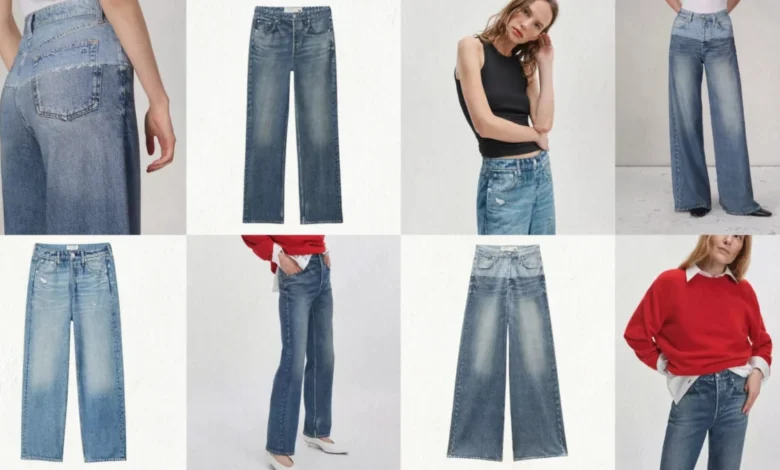
The eternal dilemma of modern air travel has long centered on a stark sartorial compromise: the choice between the unkempt comfort of loungewear and the restricting formality of traditional denim. For decades, frequent flyers have debated the merits of stretchy leggings versus stiff jeans, often sacrificing physical well-being on long-haul journeys for the sake of a polished arrival. However, shifts in consumer preferences following the post-pandemic travel boom have accelerated a new category of apparel known as hybrid travel wear—garments engineered to bridge the gap between active relaxation and high-end street style. Among the brands capitalizing on this shift is contemporary label Rag & Bone, whose viral "sweatpant jeans" have emerged as a focal point in discussions surrounding functional luxury airport attire.
The origin of this viral phenomenon traces back to the brand’s engineering of the rb Miramar collection, a line of garments crafted entirely from 100-percent cotton loopback terry cloth that utilizes high-definition digital printing to replicate the exact visual texture, fading, and seams of authentic denim. While the concept of faux-denim lounge pants has existed in various iterations within the fast-fashion market for years, Rag & Bone elevated the concept to the luxury sector by incorporating tailoring elements such as functional metal hardware, structured waistbands, and authentic pocket configurations. This fusion of lounge-level comfort and tailored aesthetics has resonated deeply with frequent business travelers and vacationers alike, driving substantial demand across major luxury retailers including Saks Fifth Avenue and the brand’s standalone boutiques, where prices hover between $198 and $268 per pair.
Chronology and Evolution of the Travel-Wear Market
To understand the sudden proliferation of hybrid denim in airports globally, industry analysts point to the fundamental transformation of travel wardrobes that began in 2020. As global aviation ground to a near halt and subsequently rebounded with packed economy cabins, tighter seating configurations, and extended transit delays, passengers increasingly prioritized ergonomic clothing that could withstand multi-hour flights without inducing discomfort or circulation restriction.
Traditional denim, prized for its durability and structured silhouette, historically ranked poorly among long-haul flyers due to its rigid cotton weaves, lack of stretch in older vintage cuts, and tendency to bind at the waist and knees while seated in cramped quarters. Conversely, athletic joggers and standard cotton sweatpants, while yielding maximum comfort, frequently failed to meet the dress codes expected at high-end hospitality venues, luxury hotel check-in desks, or impromptu business meetings immediately following a flight.

The introduction of luxury print-engineered loungewear addressed this market gap. By tricking the eye with hyper-realistic indigo washes, whiskering details, and contrast stitching, manufacturers enabled travelers to bypass the psychological pressure of dressing up for transit without looking disheveled upon landing in destination cities such as Rome, London, or New York. The viral adoption of these pants on social media platforms further accelerated their popularity, turning an insider styling hack among frequent flyers into a mainstream retail success story.
Product Line Breakdown and Specifications
The rb Miramar portfolio encompasses several distinct silhouettes designed to cater to varying consumer preferences, ranging from classic straight-leg cuts to contemporary wide-leg variations. Evaluating these options reveals significant differences in both construction and utility for travelers.
rb Miramar Shea Ankle Relaxed Straight Pant
Retailing at approximately $268, the Shea model serves as the flagship iteration for travelers seeking a traditional denim aesthetic. Constructed from a medium-weight 100-percent cotton loopback terry, this style features a mid-rise fit, a functional metal button closure, a working zipper fly, and fully operational front and back pockets. The Lakewood colorway offers a standard medium-indigo wash that is virtually indistinguishable from traditional cotton denim from a distance of a few feet.
- Pros: Exceptional tactile softness comparable to sleepwear; inclusion of real hardware and pockets; polished straight-leg silhouette suitable for upscale environments.
- Cons: Premium price point; generous sizing runs large at the waist; length profiles tend to run exceptionally long, often pooling at the floor for average-height wearers.
rb Miramar Sofie Wide-Leg Pant
Priced at $258, the Sofie introduces a dramatic wide-leg silhouette and frequently incorporates unique two-tone color blocking, such as the Antonia wash. Like the Shea, it maintains functional hardware including a zipper and button closure, marrying the comfort of loungewear with the high-fashion volume of runway-inspired denim trends.
- Pros: Distinctive, fashion-forward visual design; highly breathable wide-leg airflow; functional pockets and hardware.
- Cons: Extreme length dimensions require professional tailoring for individuals under 5 feet 10 inches; limited color availability in ankle-specific cuts.
rb Miramar Wide-Leg Ankle Pant
Positioned at a slightly more accessible price point of $198, this model leans closer to traditional loungewear mechanics by utilizing a pull-on elastic waistband paired with a printed faux-button detail and non-functional pockets.

- Pros: Lower financial barrier to entry; maximum waist elasticity for abdominal comfort during bloating associated with high-altitude air travel; available in both dedicated ankle and regular length tiers.
- Cons: Reduced realism due to the absence of functional hardware and pockets; aesthetically reads closer to a traditional sweatpant than its heavily structured counterparts.
Sizing, Fit Dynamics, and Practical Considerations
One of the most critical logistical challenges highlighted by consumers and product testers revolves around the garment’s sizing architecture. Industry feedback indicates that the entire rb Miramar line tends to run large in both circumference and vertical measurement. Because the fabric relies on a soft, unstructured loopback terry foundation rather than the rigid tension of woven denim, the waistband possesses significant give, prompting stylists to recommend sizing down for a more secure fit.
Vertical dimensions present an even greater variable. Rag & Bone manufactures these styles in designated "ankle" and "regular" length tiers. However, field testing reveals that the ankle-length variants—nominally tailored for consumers measuring 5 feet 4 inches and under—frequently brush the floor when paired with flat footwear or low-profile sneakers, requiring platform shoes or slight heels to maintain clearance. Meanwhile, the regular length tiers are proportioned for individuals standing 5 feet 5 inches and above, though testers note that users under 5 feet 10 inches almost universally require professional hemming, even when wearing substantial footwear. Conversely, taller travelers find the regular lengths to be an optimal solution for maintaining proper coverage while in transit.
Broader Economic and Industrial Implications
The commercial success of hybrid apparel lines like the rb Miramar collection underscores a permanent structural shift within the multi-billion-dollar global athleisure and denim markets. Traditional denim legacy brands, historically reliant on rigid selvedge fabrics and heritage weaving techniques, are increasingly forced to innovate with knit-denim hybrids, spandex-infused blends, and digital textile printing to capture market share from consumers whose daily dress codes have permanently relaxed.
Furthermore, the rise of luxury travel wear reflects changing consumer values in post-pandemic retail. Modern buyers are exhibiting a preference for cost-per-wear versatility, demanding that single wardrobe investments—such as a $268 pair of pants—perform multiple functions across a single trip, transitioning seamlessly from the harsh cabin environment of an economy flight to the polished atmosphere of a five-star hotel lobby or an urban walking tour.
As supply chain technologies continue to improve the fidelity of digital fabric printing and sustainable cotton processing, industry observers expect hybrid apparel to expand beyond denim simulations into tailored wool trousers, structured chinos, and formal suiting fabrics. For the modern traveler, this evolution signals an end to the historic compromise between physical comfort and professional presentation, cementing functional luxury as a permanent fixture of contemporary fashion.