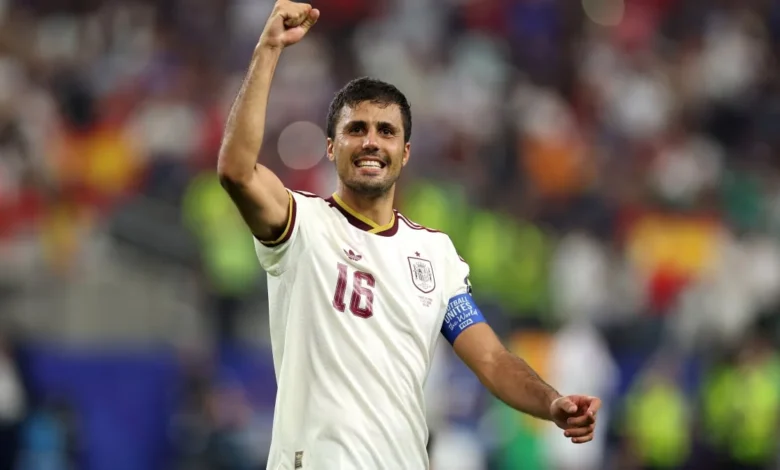
The highly anticipated 2026 FIFA World Cup final is set to culminate in a titanic clash between Spain and defending champions Argentina. Football enthusiasts worldwide are eagerly awaiting the decisive match, scheduled to kick off at 3 p.m. ET on July 19 at the state-of-the-art New York New Jersey Stadium. For those seeking to experience this monumental event live, free streaming options are available through BBC iPlayer and ITVX in the United Kingdom, accessible globally via the strategic deployment of a Virtual Private Network (VPN) such as ExpressVPN, an Official Supporter of the FIFA World Cup 2026. This final promises to be a thrilling conclusion to a tournament that has already delivered weeks of unparalleled drama, spectacular goals, and unforgettable moments, cementing its place as a cornerstone of global sporting culture.
The Genesis of the 2026 FIFA World Cup: A New Era of Global Football
The 2026 FIFA World Cup marks a significant departure from previous tournaments, ushering in an expanded format designed to include more nations and generate even broader global interest. Hosted across three North American countries – the United States, Canada, and Mexico – this iteration of the quadrennial event features an unprecedented 48 teams, a substantial increase from the 32-team format that had been in place since 1998. This expansion necessitated a revised tournament structure, leading to more matches and a longer competition window, ultimately contributing to weeks of "electric entertainment" as highlighted in early reports. The decision to distribute hosting duties across multiple nations reflects FIFA’s ambition to maximize reach and engagement, leveraging existing infrastructure and diverse fan bases across the continent. From the opening ceremonies to the group stage surprises, through the intense knockout rounds, the tournament has been a testament to the universal appeal of football, showcasing the pinnacle of athletic talent and strategic prowess.
The journey to the final has been fraught with challenges and triumphs for all participating nations. The enlarged field meant that traditional powerhouses faced stiffer competition earlier, while emerging footballing nations had more opportunities to make their mark on the global stage. This format has undoubtedly contributed to the "controversy, moments of ecstasy, and incredibly displays of talent" that have characterized the 2026 World Cup. As the competition progressed, the narratives of teams battling against the odds, individual brilliance shining through, and collective team spirit overcoming adversity have captivated billions. The stakes are now higher than ever, with Spain and Argentina standing as the last two teams vying for the sport’s most coveted prize.
Spain’s Resurgent Campaign: From Group Stage Struggles to Final Ascent
Spain’s path to the 2026 FIFA World Cup final has been a compelling narrative of resilience and tactical evolution. Often lauded for their technical proficiency and possession-based football, La Roja entered the tournament with high expectations but initially "struggled to hit their best form in the group stage." Early matches saw them grappling with inconsistency, facing formidable opponents who challenged their traditional dominance in midfield. While they managed to navigate their way out of a competitive group, their performances were marked by moments of vulnerability, leading to cautious optimism rather than outright confidence among their supporters. Analysts pointed to a perceived lack of clinical finishing and occasional defensive lapses as areas needing urgent attention.
However, the knockout rounds proved to be a turning point for the Spanish squad. Demonstrating a remarkable ability to adapt and grow under pressure, "they’ve built momentum through the knockout rounds," transforming their cautious approach into a more dynamic and incisive style of play. Key victories against formidable opponents in the Round of 16 and quarterfinals showcased a newfound defensive solidity combined with their characteristic attacking flair. The team’s midfield maestros began to dictate the pace of play with greater authority, while their forwards found their rhythm, converting chances with increased precision. This surge in form culminated in an "impressive victory over favorites France in the semi-final stage." That semi-final match, widely regarded as a tactical masterpiece, saw Spain dismantle a highly-fancied French side, displaying not only their technical superiority but also an unwavering mental fortitude. This triumph solidified their credentials as legitimate contenders for the World Cup trophy, proving that their early tournament struggles were merely a prelude to a powerful resurgence. The Spanish squad, a blend of experienced veterans and prodigious young talents, appears to have peaked at the opportune moment, poised to challenge for their second World Cup title, their first having been secured in 2010.
Argentina’s Tenacious Defense: A Rocky Road for the Reigning Champions
For Argentina, the 2026 FIFA World Cup has been a test of character for the "defending champions." Following their triumphant campaign in 2022, expectations were sky-high for Lionel Messi and his Albiceleste teammates. However, their journey through the 2026 tournament has been far from straightforward. The team has "stuttered through the tournament, relying on late goals" to secure crucial victories and progression. Unlike their dominant run in the previous World Cup, where they often controlled matches, Argentina in 2026 has frequently found themselves in precarious positions, forced to dig deep and showcase their legendary grit.
In the group stages, Argentina faced unexpectedly stern challenges, drawing or narrowly winning matches where they were expected to dominate. Opponents, perhaps emboldened by the champions’ perceived vulnerability, played with renewed intensity, pushing Argentina to their limits. This often meant that the team had to rely on moments of individual brilliance, often from their talismanic captain, or a collective surge in the dying minutes of a game to snatch victory from the jaws of a draw or even defeat. The knockout stages continued this pattern, with Argentina involved in several nail-biting encounters. While their defensive resilience and never-say-die attitude were commendable, the consistent need for late heroics raised questions about their overall coherence and ability to control games for extended periods. Despite these challenges, Argentina’s ability to consistently find a way to win, even when not playing at their absolute best, speaks volumes about their mental strength and championship pedigree. Their path to the final, though arduous, has showcased a team that refuses to yield, proving that even when "stuttering," they remain an incredibly dangerous force. They are now just one match away from achieving the rare feat of back-to-back World Cup titles, a testament to the enduring legacy of this generation of Argentine footballers.
Anticipating the Final Matchup: A Fiery Battle of Stars
The impending final between Spain and Argentina is widely anticipated to be a "fiery battle between two teams laden with stars." On one side, Spain brings its refined tiki-taka philosophy, characterized by intricate passing, high possession, and fluid movement. Their squad boasts a constellation of technically gifted midfielders capable of dictating the tempo, alongside dynamic wingers and opportunistic strikers who have grown in confidence throughout the tournament. The Spanish defense, having solidified remarkably in the latter stages, will aim to neutralize Argentina’s potent attack.
Argentina, conversely, will rely on their unparalleled individual genius, particularly their captain, combined with a tenacious team spirit and tactical flexibility. Their ability to absorb pressure and launch devastating counter-attacks, often spearheaded by their world-class forwards, makes them a constant threat. The experience of having won the previous World Cup will undoubtedly imbue them with a psychological edge, yet the pressure of defending their title can also be immense. The midfield battle will be crucial, as both teams will vie for control of the central park. Spain’s precision passing will test Argentina’s robust tackling and ability to disrupt rhythm, while Argentina’s directness and individual flair will challenge Spain’s organized defensive lines. The tactical chess match between the two coaching staffs, adjusting to each other’s strengths and weaknesses, will be a fascinating subplot. This final is not just a contest of skill but also of wills, a true championship clash between two distinct footballing philosophies.
Key Match Details: Date, Time, and Venue
The grand finale of the 2026 FIFA World Cup is scheduled for July 19, with kick-off at 3 p.m. ET. This prime-time slot ensures maximum global viewership, allowing fans across various time zones to tune in for the climax of the tournament.
The historic match will unfold at the New York New Jersey Stadium, a colossal venue specifically chosen to host one of the most significant sporting events in the world. Located in East Rutherford, New Jersey, just outside New York City, this stadium boasts a seating capacity exceeding 82,500 spectators, making it one of the largest and most modern football arenas in North America. Its selection as the final venue underscores the expansive scale of the 2026 World Cup, which has seen matches played across numerous cities in the United States, Canada, and Mexico. The stadium’s infrastructure is equipped with cutting-edge technology to enhance the fan experience, from high-definition video boards to advanced connectivity, ensuring that the atmosphere, whether inside the stadium or viewed remotely, is truly immersive. Hosting the final in such a prominent metropolitan area also highlights the cultural and economic impact of the World Cup, drawing tourists and media attention from every corner of the globe.
Global Access: Free Streaming Options in the UK
For viewers residing in the United Kingdom, the 2026 FIFA World Cup final between Spain and Argentina will be available to live stream for free on two prominent national broadcasting platforms: BBC iPlayer and ITVX. Both services are renowned for their extensive coverage of major sporting events, offering high-quality, free-to-air access to UK license fee payers.
BBC iPlayer, the streaming service of the British Broadcasting Corporation, is a staple for sports fans, providing live and on-demand content across various devices. Its coverage is known for expert commentary, in-depth analysis, and multi-angle viewing options, ensuring a comprehensive viewing experience. Similarly, ITVX, the streaming platform from ITV, offers robust live streaming capabilities, often with its own distinct commentary teams and pre-match/post-match studio analysis. The availability of the World Cup final on these free platforms is a testament to the UK’s commitment to making major national and international events accessible to its entire populace, reflecting a long-standing tradition of public service broadcasting. These platforms are typically geo-restricted, meaning direct access is limited to users with a UK IP address.
Overcoming Geo-Restrictions with VPN Technology
The geographical restrictions imposed by BBC iPlayer and ITVX mean that international fans attempting to access these free streams directly will encounter blocks. This is where Virtual Private Network (VPN) technology becomes an indispensable tool. A VPN works by encrypting your internet connection and routing it through a server located in a country of your choice. By connecting to a secure server in the UK, a VPN effectively masks your real IP address (your digital location) and assigns you a temporary UK IP address. This makes it appear as though you are browsing from within the United Kingdom, thereby allowing you to bypass geo-restrictions and "unblock BBC iPlayer and ITVX to live stream the 2026 World Cup final for free from anywhere in the world."
The process of using a VPN to stream geo-restricted content is straightforward:
- Subscribe to a reputable VPN service: Choose a provider known for its speed, reliability, and strong unblocking capabilities.
- Download and install the VPN app: Install the application on your streaming device (computer, smartphone, tablet, smart TV, etc.).
- Connect to a UK server: Open the VPN app and select a server located in the United Kingdom.
- Access the streaming platform: Once connected, navigate to the BBC iPlayer or ITVX website or app.
- Enjoy the match: You should now be able to stream the Spain vs. Argentina final without any geographical limitations.
While the "best VPNs for streaming are not free," many reputable providers offer either free trials or comprehensive money-back guarantees. By strategically leveraging these offers, users can access the free live streams of the 2026 World Cup final without incurring a long-term cost. This temporary solution provides ample time to stream the entirety of the match before deciding whether to continue the subscription or claim a refund, thus effectively allowing users to "recover your investment." It is crucial for users to understand the terms and conditions of these guarantees to ensure eligibility for a full refund.
Choosing a Reliable VPN for Sports Streaming
When selecting a VPN for high-stakes live sports streaming like the World Cup final, several factors are paramount to ensure an uninterrupted and high-quality viewing experience. Reliability, speed, server network size, and strong security features are key.
ExpressVPN is consistently highlighted as a top recommendation for bypassing geo-restrictions for live sports on platforms like BBC iPlayer and ITVX. Its advantages include:
- Blazing-fast speeds: Essential for streaming high-definition video without buffering.
- Extensive server network: A wide array of servers, including numerous options in the UK, ensures reliable connections.
- Robust security protocols: Military-grade encryption protects user data and privacy.
- User-friendly interface: Intuitive applications make it easy for anyone to connect.
- Dedicated support: 24/7 customer support to assist with any technical issues.
- Unblocking prowess: Proven ability to consistently bypass geo-blocks on major streaming services.
While ExpressVPN typically offers a 30-day money-back guarantee, the article notes a specific promotional period (July 11 to Aug. 11) during which this guarantee is not available for new subscriptions. Instead, customers during this period have a chance to win an iPhone 17 Pro as part of a "Summer Tech Sweepstakes promotional period." This means that for those subscribing specifically for the World Cup final within this window, a direct refund option might be temporarily suspended, requiring them to pay the monthly rate if they don’t win. However, ExpressVPN remains a premium choice for its performance. As an alternative, Proton VPN is mentioned as still offering a "money-back guarantee," providing flexibility for those seeking to stream the event for free without a long-term commitment.
A two-year subscription to ExpressVPN is currently on sale for $68.40, including an extra four months for free, representing an 81% discount for a limited time. Alternatively, a one-month plan is available for $12.99, which is sufficient to cover the duration of the World Cup final. These pricing options cater to different user needs, from long-term security to short-term event access.
Wider Implications: The Global Phenomenon of the World Cup
The FIFA World Cup transcends mere sport; it is a global cultural phenomenon that unites nations, sparks intense rivalries, and creates indelible memories. The final match, irrespective of the teams involved, becomes a shared experience for billions, fostering a sense of collective identity and excitement. Economically, the tournament generates massive revenues through broadcasting rights, sponsorships, tourism, and merchandising, significantly impacting the host nations and FIFA itself. The expanded 2026 format, with its multi-national hosts, is projected to further amplify these economic benefits, creating jobs and stimulating local economies across North America.
Culturally, football holds an almost sacred status in countries like Spain and Argentina. In Spain, football is deeply interwoven with national identity, with club rivalries often reflecting regional pride. A World Cup victory would be a moment of immense national celebration, reinforcing their standing as a footballing powerhouse. For Argentina, football is a religion, a source of profound passion and emotional investment. Having won the previous World Cup, the prospect of defending their title carries immense historical weight, particularly as it might be one of the final international tournaments for their legendary captain. The outcome of this final will undoubtedly echo through the streets of Madrid and Buenos Aires, influencing national mood and providing talking points for generations. The accessibility provided by free streaming options, even when requiring a VPN for global audiences, democratizes access to this global spectacle, ensuring that the magic of the World Cup final can be experienced by as many people as possible, regardless of their geographical location or economic standing.
In conclusion, the 2026 FIFA World Cup final between Spain and Argentina is poised to be an unforgettable encounter, a clash of titans that will cap off a truly remarkable tournament. With free streaming options available via BBC iPlayer and ITVX in the UK, and the technological bridge provided by VPNs like ExpressVPN, football fans across the globe are empowered to witness every moment of this historic battle.
Related posts: