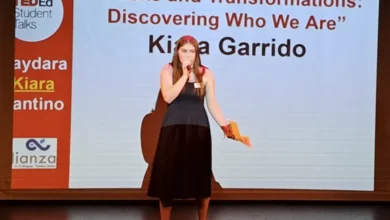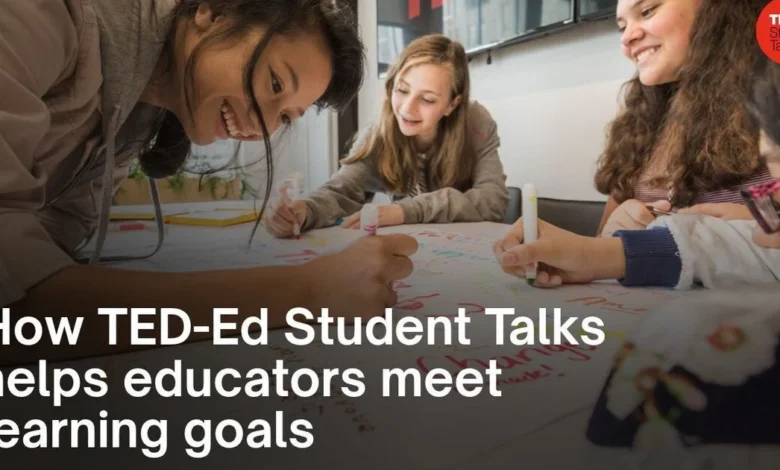
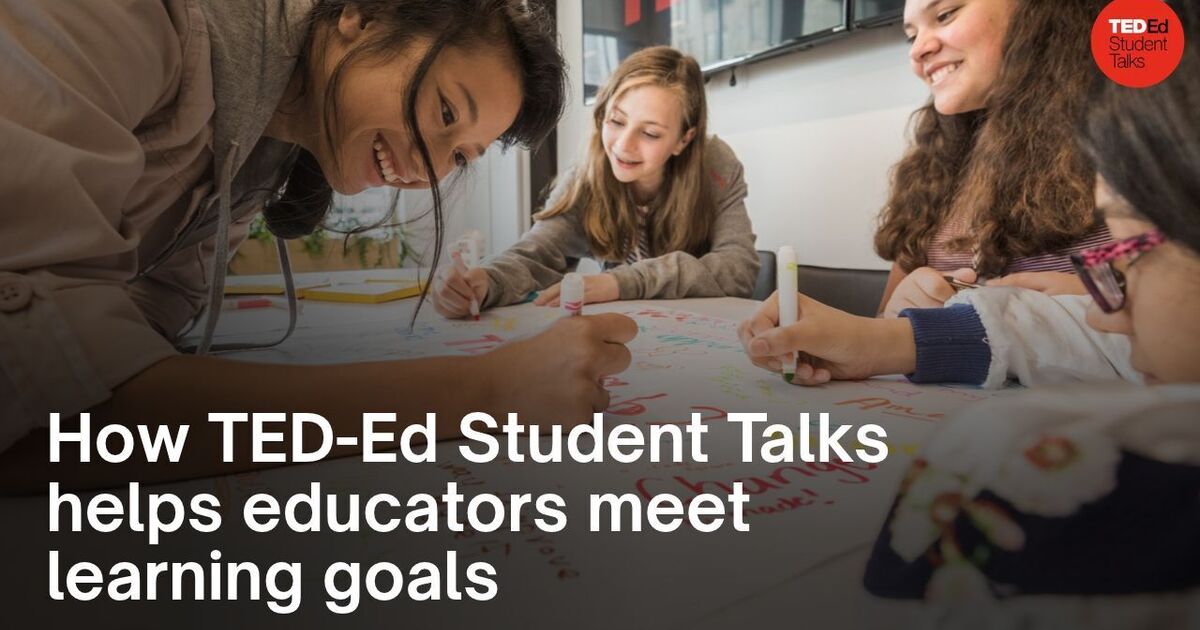
In the rapidly evolving landscape of 21st-century education, school administrators and classroom teachers are increasingly tasked with bridging the gap between traditional academic curricula and the practical, durable skills required by the modern global economy. As artificial intelligence and automation continue to disrupt traditional labor markets, the pedagogical focus is shifting from rote memorization toward the cultivation of uniquely human capabilities. At the forefront of this educational movement is the TED-Ed Student Talks program, a global initiative designed to empower students aged 6–18 by providing a structured framework to discover, develop, and deliver original ideas.
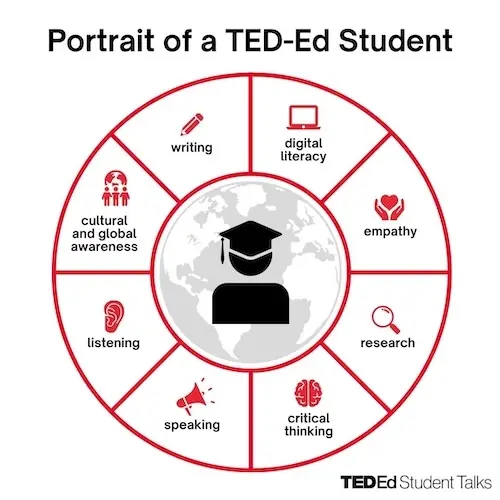
The program, which operates as a free, customizable resource, serves as a catalyst for students to move beyond passive consumption of information. By engaging in the process of crafting a TED-style talk, students navigate a rigorous three-part trajectory—Discover, Develop, and Share—that mirrors the cognitive processes utilized by professional researchers and thought leaders. This initiative is not merely a public speaking exercise; it is an integrated pedagogical tool designed to foster critical thinking, communication, empathy, and digital literacy.
The Evolution of Durable Skills in a Digital Era
The urgency for programs like TED-Ed Student Talks is underscored by the World Economic Forum’s 2025 Future of Jobs Report. The report identifies a significant pivot in employer demand, prioritizing what are now termed "durable skills." Unlike technical skills that may become obsolete as software evolves, durable skills—such as complex problem-solving, active listening, critical thinking, and the ability to synthesize information—remain inherently portable across industries.
Data from the Aspen Institute further reinforces the necessity of these skills, categorizing them as the foundational human competencies that provide long-term career resilience. As AI systems become more adept at routine data processing and basic analytical tasks, the professional premium on communication and interpersonal collaboration has risen sharply. Educational institutions are now tasked with providing "real-world" environments where these competencies can be tested and refined. TED-Ed Student Talks facilitates this by forcing students to articulate complex thoughts clearly, iterate based on peer feedback, and navigate the nuances of audience engagement—a process that requires a high degree of cognitive flexibility.
A Chronology of Pedagogical Integration
The integration of the program into school environments typically follows a deliberate, phased approach, often beginning with teacher training and curriculum alignment.
- Phase One: Foundational Training (Months 1–2): Educators gain access to the program’s resource library, which is mapped against major international standards, including the Common Core State Standards, the IBO Learner Profile, and ISTE standards for students. Teachers identify how the program will supplement existing units, whether in literature, science, or social studies.
- Phase Two: The Discovery and Development Cycle (Months 3–5): Students identify topics of personal significance. This stage emphasizes research methodology, including lateral reading and fact-checking, to ensure that the arguments presented are grounded in credible evidence.
- Phase Three: Peer Review and Revision (Months 6–7): This stage is critical for the development of social-emotional learning (SEL) goals. Students exchange feedback, fostering a growth mindset and the ability to handle constructive criticism—an essential skill for professional maturity.
- Phase Four: The Presentation (Month 8): Students deliver their talks in a formal setting, demonstrating the synthesis of their research, writing, and speaking skills.
Empirical Evidence and Educator Observations
The impact of the program has been documented by educators globally, who have noted significant shifts in both academic performance and student engagement metrics. In Romania, educator Andreea Laurențiu conducted a comparative analysis of student outcomes, finding that those who participated in the TED-Ed program outperformed their peers on standardized oral examinations by a consistent and statistically significant margin.
In the United States, particularly within districts such as those overseen by Jenn Petraglia in California, the program has been utilized as a longitudinal intervention. By tracking 25 schools, the administration observed measurable gains in reading vocabulary benchmarks. Perhaps more importantly, the program has had a qualitative impact on school climate; students participating in the initiative reported higher scores on internal surveys regarding school belonging and community engagement.
These findings are corroborated by educators in diverse socio-economic contexts. In Brazil, teacher Lucas Serniker observed that even the most reserved students developed the ability to organize information effectively and project confidence. In India, Neera Channan noted that the program’s structured peer-feedback loops were instrumental in teaching students how to pose purposeful, analytical questions rather than simply absorbing content.
Alignment with Global Educational Standards
A primary barrier to the adoption of supplemental programs in schools is the "standards crunch"—the pressure for teachers to adhere strictly to state or national curricula. To mitigate this, TED-Ed has developed a cross-walk resource that aligns the program’s activities with major international frameworks.
For instance, in Germany, Soniya Jadhav has successfully integrated the program to meet International Baccalaureate (IB) requirements for research and public speaking. Similarly, in São Paulo, Carolina Batisteli Marques de Mello has aligned the program with Brazilian national standards regarding the analysis of discourse, using the preparation process to teach students how to identify bias and rhetorical intention in spoken language. This adaptability ensures that the program is not treated as an "add-on," but as a vehicle for achieving the core learning objectives already mandated by school boards.
Socio-Emotional and Developmental Implications
The psychological benefits of the program extend beyond academic achievement. For students in vulnerable or marginalized populations, the opportunity to claim "voice" is transformative. Lhakpa Tsering, who leads a group for Tibetan students in exile, noted that the program provided a rare platform for these students to share original ideas with authenticity and courage. This mirrors the experience of Laura El Chami in Saudi Arabia, who reported that a previously disengaged, shy student found a renewed sense of purpose and a newfound willingness to participate in debating and public speaking after her initial TED-Ed experience.
This shift from passive learning to active contribution is the hallmark of the program. By requiring students to articulate their ideas publicly, the program forces them to reconcile their internal logic with the external reality of an audience, a process that builds resilience and self-awareness.
Future Perspectives: The Role of the Educator as Facilitator
As the educational landscape moves toward 2030, the role of the teacher is increasingly viewed as that of a facilitator of complex, human-centric experiences. The consensus among the educators interviewed for this report is that the TED-Ed Student Talks program provides the necessary structure to make abstract concepts like "student voice" and "critical thinking" tangible and visible.
Shivani Devgan, a humanities educator in India, posits that the program’s greatest value is not in the creation of a polished speech, but in the psychological development of the student. "I believe its greatest value lies in helping students not just learn what to think, but develop the confidence and skills to think for themselves," Devgan stated. This sentiment is echoed by Hossam Souhaili in Morocco, who views the initiative as a long-term investment in global leadership. "Speaking in front of people is also leading people," Souhaili remarked, highlighting that the skills cultivated today—empathy, articulation, and rigorous research—will ultimately dictate the quality of tomorrow’s global discourse.
Concluding Analysis
The TED-Ed Student Talks program represents a significant, scalable effort to modernize the classroom experience. By grounding its activities in the "durable skills" identified by international economic bodies and aligning its outcomes with rigorous academic standards, the program manages to remain relevant in a high-stakes testing environment while simultaneously addressing the holistic needs of the student.
As technology continues to displace routine labor, the ability to synthesize, communicate, and lead becomes the new baseline for professional viability. For school leaders looking to prepare their student bodies for an unpredictable future, the evidence suggests that fostering these human-centric skills is not a peripheral luxury, but a strategic necessity. Through its continued expansion and integration into diverse cultural and academic contexts, the TED-Ed initiative provides a robust model for what effective, future-oriented education can look like in the 21st century.