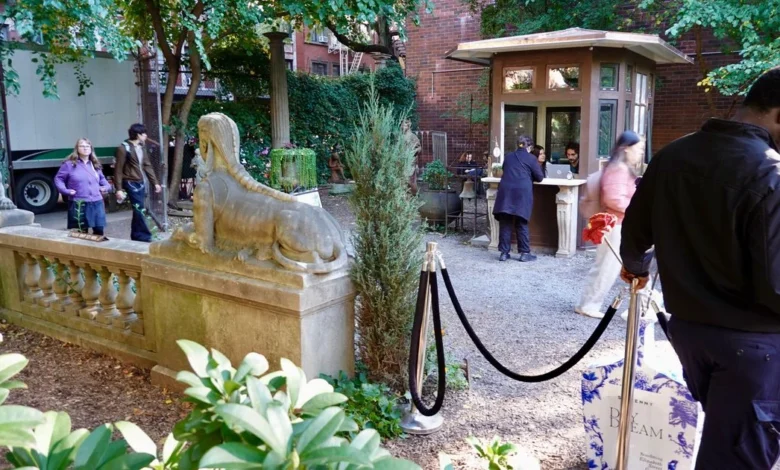
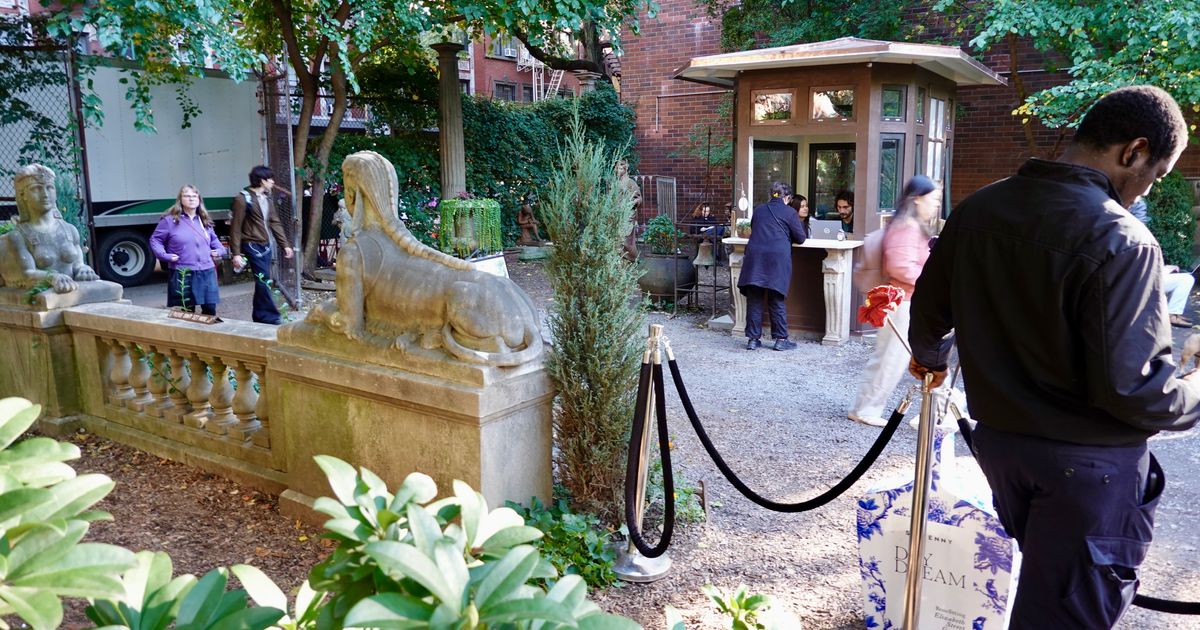
On a crisp, sun-drenched afternoon in November 2026, the quiet serenity of the Elizabeth Street Garden—a beloved half-acre oasis in Manhattan’s Nolita neighborhood—was disrupted by the presence of armed security guards and a velvet rope. While the space is officially designated as a public park, the scene inside resembled a private showroom rather than a municipal recreation area. Fashionably dressed influencers and industry guests mingled among the garden’s historic statuary, reclining on sectional sofas provided by the furniture brand Sixpenny. The event, designed to market a new line of slipcovers, brought a corporate aesthetic to a space that spent over a decade as the center of a fierce grassroots battle to preserve public green space.
For the local residents who fought for years to keep the site from being developed into affordable housing for seniors, the sight of luxury furniture blocking public access was not merely an inconvenience—it was a betrayal of the agreement that finally secured the garden’s future.
A Decade of Legal and Civic Strife
The struggle to determine the fate of the Elizabeth Street Garden began in earnest around 2012, when the city proposed using the lot—which had been leased to a private gallery owner for decades—as the site for Haven Green, a project intended to provide affordable housing for low-income seniors. The proposal ignited a decade-long conflict between urban planning advocates, who argued for the necessity of housing in one of the nation’s most expensive zip codes, and community activists, who championed the garden as an essential, irreplaceable cultural and environmental anchor.
The deadlock persisted through multiple mayoral administrations. It was not until late 2025 that the stalemate broke. In a surprise maneuver, then-Mayor Eric Adams announced a deal that effectively ended the housing project, designating the garden as official parkland under the jurisdiction of the New York City Department of Parks and Recreation. The agreement granted a ten-year license to the nonprofit Elizabeth Street Garden, Inc., allowing them to maintain and operate the site.
The Terms of Operation
Under the terms of the license agreement, the nonprofit assumed responsibility for the site’s maintenance, security, and programming. However, the designation as a "City park" came with explicit, non-negotiable mandates. The nonprofit was required to operate the space in accordance with standards consistent with other city parks, which includes keeping the grounds open to the public, submitting event plans for municipal review, and maintaining transparency through monthly reports regarding revenue and expenditures.
The Sixpenny marketing event, however, highlighted significant lapses in these requirements. The city confirmed that it had not received a formal request or permit for the event, raising questions about whether the nonprofit is operating with the oversight mandated by the agreement. Furthermore, the absence of operational reports—including for the month of October—suggests a breakdown in the accountability measures designed to ensure that a public asset is not treated as a private fiefdom.
Financial Pressures and Structural Debt
The behavior of the nonprofit may be rooted in its precarious financial situation. Despite its status as a public steward, the organization receives no direct public funding for its operations. Public filings indicate that the charity has struggled to remain solvent, reporting a loss of $52,955 in 2024 and $115,528 in 2025.
Beyond its daily operating costs, the organization is haunted by a lingering legal debt. In 2018, the garden’s former operator stopped paying rent to the city. A subsequent court ruling held that the garden was liable for that back rent—a sum of approximately $95,000, which has been accruing interest at a rate of 9 percent annually. While the current nonprofit entity, Elizabeth Street Garden, Inc., argues that it is a separate legal body from the original entity that incurred the debt, the pressure to generate revenue to cover maintenance and potential legal liabilities is immense.
This financial strain may explain the reliance on high-end, private event rentals, which provide a significant influx of cash but potentially alienate the very community the park is intended to serve.
Reactions and Stakeholder Perspectives
The use of the park for commercial promotion has drawn sharp criticism from urban policy experts and housing advocates. Annemarie Gray, director of the advocacy group Open New York, expressed deep frustration with the current state of affairs.
"New York gave up 123 affordable homes for low-income seniors on this site in exchange for a promise that the garden would operate as a public park," Gray stated. "Less than a year into that agreement, the group running it has reportedly failed to file its required financial reports and closed off part of the space during public hours so a luxury furniture brand could stage a photo shoot for influencers. Seniors on fixed incomes lost homes here so that one of the wealthiest neighborhoods in Manhattan could keep a garden run by and for the wealthy people who live around it."
Conversely, some locals view the corporate events as a necessary evil. During the Sixpenny pop-up, one regular visitor and professional creative noted that he would rather see the occasional private event if the revenue ensured the garden’s survival, even suggesting that he would be willing to pay an entry fee to maintain the space’s upkeep. This sentiment underscores a growing divide in how New Yorkers perceive the role of public space in a city where land is increasingly commodified.
The Problem of Accessibility
The accessibility of the garden remains another point of contention. While the agreement stipulates that the site should operate with hours consistent with other city parks, visitors have noted that the garden’s current schedule—closing as early as 4 p.m. in the winter months—is significantly more restrictive than nearby public spaces. For instance, the Sara D. Roosevelt Park and local playgrounds maintain much broader hours, catering to working-class families and the general public throughout the day.
Critics argue that the current limited hours, combined with the intermittent closure of areas for private events, effectively privatizes the park in practice, if not in name. By creating an environment that feels exclusive, the nonprofit risks violating the spirit of the public-private partnership.
Broader Implications for Public-Private Partnerships
The situation at Elizabeth Street Garden serves as a cautionary tale for the city’s management of public space. As the city increasingly turns to nonprofits and private conservancies to maintain parks, the challenge of maintaining democratic access becomes more complex. When a nonprofit is tasked with both the physical maintenance of a space and the burden of self-funding, the temptation to prioritize commercial interests over public access can become overwhelming.
Moving forward, the City of New York faces a critical oversight role. If the Parks Department fails to enforce the transparency and accessibility requirements outlined in the license agreement, it sets a dangerous precedent for other community-run public spaces. The incident with the Sixpenny sofa installation is more than just a logistical oversight; it is a signal that the governance structure of the garden requires urgent recalibration.
As the nonprofit navigates its second year under the new agreement, it must decide whether it will act as a true steward of a public commons or as a private entity that merely occupies public land. The public, the city government, and the advocacy groups that fought for the site’s preservation will be watching closely to see if the garden can balance its financial needs with the fundamental mandate of providing a space for all New Yorkers, regardless of their status or the brand of their furniture.