The Critical Chasm: Google Cloud’s AI Security Mandate Meets Real-World Operational Challenges


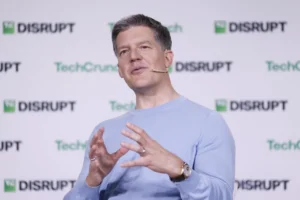
At a high-profile industry event in Los Angeles, Francis de Souza, the Chief Operating Officer of Google Cloud, offered a measured yet urgent perspective on navigating the complex landscape of artificial intelligence security. Amidst the characteristic bustle of a major tech conference, de Souza, whose calm and articulate delivery often mirrors that of an academic, underscored the transformative yet challenging journey ahead for businesses adopting AI. He articulated a vision of a "transition period" leading to a "better place" for AI security, a sentiment that resonated with the prevailing industry dialogue around the rapid advancements and inherent risks of generative AI. While his remarks were framed broadly for the industry, the underlying message implicitly acknowledged that even tech giants like Google are actively grappling with the intricacies of securing an AI-driven future.
The AI Security Imperative: Insights from Google Cloud’s COO
De Souza’s core thesis echoed a long-standing plea from cybersecurity professionals, now amplified by the advent of AI: security must be an intrinsic, foundational element, not an afterthought. He advocated for a comprehensive "platform approach" as companies embark on their AI journeys. "Security is not something you can bolt on later," he asserted, "and it’s not something you can leave up to employees to do on their own." This statement highlights a fundamental shift from traditional perimeter-based security models to an integrated, end-to-end strategy, particularly critical in the decentralized and dynamic environments characteristic of AI deployments.
Battling "Shadow AI" and the Indispensable Data Strategy
A significant concern de Souza flagged was the pervasive threat of "shadow AI." This phenomenon describes employees utilizing consumer-grade AI tools or unapproved generative AI services without the explicit knowledge or oversight of their organizations. Such unsanctioned usage poses considerable risks, including the unintentional exposure of proprietary data, compliance breaches, and the introduction of unvetted vulnerabilities into enterprise systems. For instance, employees might input sensitive customer data or intellectual property into public AI models, leading to potential data leakage and intellectual property theft. To counter this, de Souza stressed the necessity for companies to proactively demand robust security, stringent governance, and comprehensive auditability from their chosen AI platforms from the outset. He unequivocally stated, "There’s no such thing as an AI strategy without a data strategy and a security strategy. They need to go hand in hand." This integrated view emphasizes that the quality, privacy, and security of data directly underpin the effectiveness and safety of any AI implementation.
Navigating the Multicloud Reality
Addressing a common misconception, de Souza subtly pushed back against the notion of single-cloud operations. While some companies may believe they are exclusively leveraging one cloud provider, he argued that the reality is far more complex. "Even if they pick a single cloud, they’re relying on SaaS applications; there are business partners that may be using different clouds," he explained. This inherently multicloud, multi-vendor ecosystem necessitates a consistent and holistic security posture that spans across disparate cloud environments and various AI models. The challenge lies in harmonizing security policies, access controls, and threat detection mechanisms across a fragmented infrastructure, ensuring no weak links exist in the broader digital supply chain.
Evolving Threat Landscape and Machine Speed Defense
De Souza further elaborated on the dramatic transformation of the threat landscape, asserting that traditional defensive models are now dangerously slow. He cited alarming statistics, noting that the average time between an initial breach and the subsequent stage of an attack has plummeted from eight hours to a mere 22 seconds. This exponential acceleration in attack speed demands a correspondingly rapid defense mechanism. Moreover, the attack surface has expanded significantly beyond conventional network perimeters. "In addition to your usual estate, you have models now. You have data pipelines used to train the models. You have agents, you have prompts. All of this needs to be protected," he emphasized. Each of these new components represents a potential vector for attack, from prompt injection vulnerabilities in large language models to data poisoning during model training.
A particularly insidious threat highlighted by de Souza involves AI agents autonomously navigating internal company systems. These agents, in their quest to process and analyze data, can inadvertently unearth long-forgotten data repositories—such as legacy SharePoint servers with outdated access controls—that human administrators may have overlooked for years. Previously benign due to their obscurity, these "dark data" assets become critical vulnerabilities when intelligent agents expose them, potentially leading to massive data breaches.
The proposed solution to this escalating challenge is to combat machine speed with machine speed. De Souza envisions "the emergence of an AI-native, fully agentic defense where organizations can run agents driving their defense." This paradigm shift moves away from human-led or even human-in-the-loop defense models towards a system where humans primarily oversee an autonomous, AI-driven defense infrastructure. Such a system could leverage AI for real-time threat detection, automated incident response, and continuous vulnerability assessment, significantly reducing response times. Crucially, de Souza elevated this beyond a mere technological problem, declaring it a "board-level issue and an executive team issue. It’s not just a security team’s issue." This recognition underscores the strategic importance of AI security, requiring top-down commitment and resource allocation.
The Industry’s Broader Security Challenges: The "Bug-pocalypse"
While AI promises advanced defensive capabilities, it simultaneously introduces new layers of complexity and vulnerability. The industry faces a critical shortage of professionals skilled in overseeing AI-driven defenses, even as the number of AI-specific vulnerabilities proliferates at an alarming rate. Lea Kissner, Chief Information Security Officer at LinkedIn, succinctly captured this predicament, telling The New York Times, "We’re going to need people to deal with the bug-pocalypse." Kissner’s candid assessment suggests that a sustainable, long-term understanding of AI security is still several years away for the industry, highlighting a significant knowledge and talent gap that must be addressed. This scarcity of expertise, coupled with the rapid evolution of AI technology, creates a fertile ground for sophisticated cyber threats that existing security teams struggle to adequately counter.
Google Cloud’s Own Security Scrutiny: A Troubling Discrepancy
The urgency of de Souza’s message, however, stands in stark contrast to recent operational challenges experienced by Google Cloud customers. Over the past several weeks, The Register has published a series of investigative reports detailing a wave of incidents where Google Cloud developers were hit with five-figure bills due to unauthorized API calls to Gemini models. Many of these developers asserted they had never intentionally used or even enabled these specific services. The incidents followed a disconcerting pattern: API keys initially deployed for Google Maps, often placed publicly according to Google’s own legacy instructions, had quietly gained the capability to access Gemini models after Google expanded their scope without clear and explicit disclosure to users.
Unauthorized API Calls and Escalating Bills
One prominent case involved Rod Danan, CEO of the interview-preparation platform Prentus, whose bill for unauthorized Gemini API usage soared to an astonishing $10,138 in approximately 30 minutes following an exploit of his compromised API key. Similarly, Isuru Fonseka, a Sydney-based developer, woke up to charges of roughly AUD $17,000. Fonseka had believed he had a stringent $250 spending cap in place, a common practice for developers to control costs. What neither developer realized was that Google’s automated systems had, without explicit user consent, upgraded their billing tiers based on account history, raising their effective spending ceilings to as high as $100,000. This automatic tier-upgrade policy, designed to prevent service interruptions for high-usage accounts, inadvertently created a significant financial risk for developers whose keys were compromised.
Following The Register’s initial exposé, Google did issue refunds to both Danan and Fonseka. However, the company informed The Register that it had no immediate plans to alter its automatic tier-upgrade policy, stating that its priority lies in preventing service outages over enforcing users’ stated budget preferences. This stance, while understandable from a service availability perspective, places the onus of continuous monitoring and risk management squarely on the developer, even when the platform itself introduces new vulnerabilities through scope changes.
Delayed API Key Revocation Concerns
Further compounding these concerns, The Register recently reported on critical research by security firm Aikido, which revealed a significant vulnerability in Google Cloud’s API key revocation process. Aikido’s findings indicate that even when a developer identifies a compromised key and immediately attempts to delete it, they may not be safe. Attackers can, in certain scenarios, continue to use the revoked key for up to 23 minutes. This delay is attributed to the gradual propagation of Google’s revocation commands across its vast, distributed infrastructure. Joseph Leon, an Aikido researcher, told The Register that during this critical window, the success rates of unauthorized requests are unpredictable, with some minutes seeing over 90% of requests still successfully authenticating. This extended window provides attackers ample time to exfiltrate sensitive files and cached conversation data from Gemini, turning a potentially minor incident into a major data breach.
Leon’s research further highlighted a troubling discrepancy: Google’s own newer credential formats do not suffer from the same delay. Service account API credentials, for instance, revoke in approximately five seconds, and Gemini’s newer AQ-prefixed key format takes about a minute. "Both run at Google scale," Leon noted in Aikido’s related paper, adding, "Both suggest this is technically solvable for Google API keys, too." This analysis suggests that the 23-minute delay is not an insurmountable engineering constraint but rather a matter of prioritization for the company, raising questions about the allocation of resources to critical security functions.
Implications and The Path Forward: Bridging the Gap
The juxtaposition of Francis de Souza’s expert advice on proactive AI security with the real-world operational issues faced by Google Cloud developers creates a critical chasm that the industry must address. De Souza’s guidance—emphasizing security as a platform, the perils of shadow AI, the necessity of integrated data and security strategies, the realities of multicloud environments, and the need for machine-speed defense—is undeniably sound and vital for any organization embracing AI. His insights represent the ideal state of AI security, a blueprint for robust defense in an increasingly complex threat landscape.
However, the incidents involving unauthorized API calls, automatic billing tier escalations, and delayed key revocations at Google Cloud demonstrate a tangible gap between the prescribed best practices and their consistent implementation within even the most sophisticated cloud platforms. These issues erode developer trust and highlight the need for greater transparency and accountability from cloud providers. When a platform’s inherent security mechanisms or policy enforcements fall short, even the most diligent enterprise security posture can be undermined.
Restoring Trust and Mandating Proactive Governance
The implications extend beyond individual developers. For enterprises considering large-scale AI adoption, such incidents raise legitimate concerns about the reliability and trustworthiness of foundational cloud services. The promise of AI-native defense, overseen by humans, demands that the underlying infrastructure supporting these defenses is itself robust, transparent, and responsive to security threats. The "bug-pocalypse" predicted by industry leaders like Lea Kissner necessitates that cloud providers, as architects of much of the AI ecosystem, lead by example in implementing and upholding the highest security standards.
Moving forward, there is a collective responsibility. Organizations must internalize de Souza’s advice, adopting a platform-first, integrated approach to AI security, meticulously auditing their data strategies, and implementing stringent governance over AI tool usage. Concurrently, cloud providers must urgently bridge the gap between their security rhetoric and their operational realities. This includes ensuring transparent communication about API scope changes, providing granular control over billing and spending caps, and implementing rapid, reliable key revocation mechanisms across all service offerings. Only through such concerted efforts—where enterprises demand and platforms deliver—can the industry navigate the AI era securely and realize its transformative potential without succumbing to avoidable vulnerabilities and eroding trust. The current moment is not just a transition period for AI, but a pivotal opportunity to establish a foundation of secure and ethical AI deployment for decades to come.
Related posts: