Decoding the Campaign Trail: How 2026 Candidates Are Weaponizing the American Housing Crisis

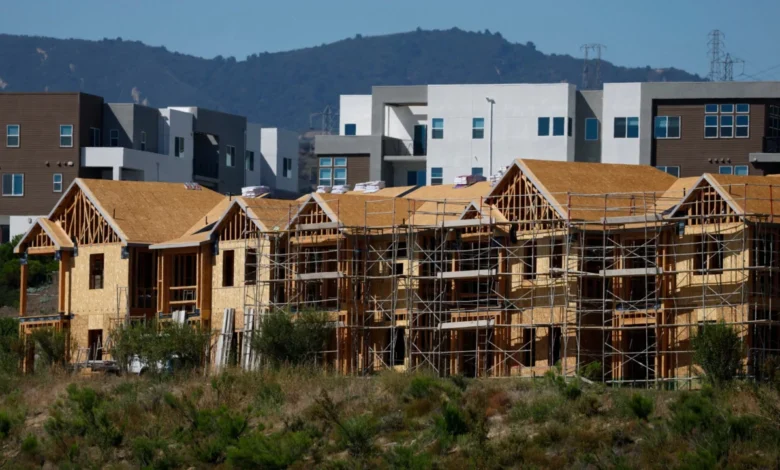
The American housing crisis has officially cemented itself as a cornerstone of the 2026 midterm election cycle, evolving from a localized urban headache into a cross-country economic emergency. As voters head to the polls, the phrase “affordable housing” appears on nearly every campaign flyer, town hall stage, and televised debate. However, beneath the shared rhetoric of relief lies a deeply fractured ideological battleground. While candidates across the political spectrum agree that Americans are spending too much of their hard-earned income on shelter, their proposed remedies expose profound disagreements over the role of government, free-market capitalism, zoning regulations, and corporate involvement in real estate.
To understand why this issue dominates contemporary political discourse, one must examine the compounding economic pressures that have pushed homeownership and stable renting out of reach for millions of middle- and low-income families.
The Anatomy of the 2026 U.S. Housing Crisis
The current crisis is not a sudden anomaly, but rather the culmination of years of macroeconomic stress. At its core, the United States is facing a severe structural housing deficit. According to data from the National Low Income Housing Coalition (NLIHC), the country currently faces a staggering deficit of 6.8 million available and affordable rental units for extremely low-income households.
This supply shortage has been exacerbated by a confluence of adverse economic factors. Following the disruptions of the early 2020s, ongoing inflationary pressures have eaten away at household budgets, leaving families with less disposable income to absorb rising costs. Simultaneously, persistent monetary policy adjustments have kept mortgage rates hovering above 7% for prolonged periods. This rate environment has effectively locked current homeowners—many of whom secured ultra-low rates during the pandemic—into their properties, creating a frozen resale market known as the "lock-in effect."
When would-be homebuyers find themselves priced out of the purchase market, they are forced to remain in the rental market for extended periods. This sustained high demand, intersecting with stagnant inventory, has driven rental prices to historic highs.
By economic definition, a household is considered "housing cost-burdened" if it spends more than 30% of its gross income on rent or mortgage payments and utilities. The NLIHC reports that roughly 70% of extremely low-income families currently shell out more than half of their total income just to keep a roof over their heads. This leaves a razor-thin margin for other essential living expenses, including healthcare, nutrition, transportation, and education. Consequently, voters are demanding structural intervention, prompting candidates to center their campaigns around housing policy.
Diverging Ideologies: How Candidates Define the Problem
While politicians across the aisle routinely invoke the need for "affordable housing," their definitions of the problem dictate widely disparate solutions. Generally speaking, progressive and Democratic candidates tend to lean toward government-backed interventions, tenant protections, supply subsidies, and restrictions on corporate landlords. Conversely, conservative and Republican candidates typically favor free-market approaches, sweeping deregulation, tax incentives for private builders, and policies aimed at reducing the cost of entry for first-time buyers.
This ideological divide is clearly visible across several high-profile races heading into the 2026 midterms.
State-Level Strategies: Minnesota’s Supply Push
At the state level, executive and legislative candidates are grappling with localized inventory crunches. In Minnesota, Democratic gubernatorial candidate Amy Klobuchar has made supply creation the centerpiece of her platform, pledging to put the state on a definitive path toward 100,000 new housing units.
Klobuchar’s strategy relies heavily on modernizing construction methods and reducing municipal friction. She has proposed supporting factory-built and modular housing to accelerate construction timelines, alongside standardizing the notoriously slow permitting process that often deters developers. To ensure growth reaches outside major metropolitan centers, her plan includes a low-interest revolving loan fund specifically targeted at rural developers. Additionally, Klobuchar aims to protect existing renters through rent price-fixing bans while making the state housing tax credit permanently available to spur ongoing development.
The Federal Debate: Public Developers vs. Market Deregulation
On the federal stage, candidates are proposing sweeping national overhauls. In New York’s 7th Congressional District, Democratic House candidate Claire Valdez has championed an aggressive platform under the banner of "Housing for All." Valdez’s proposal calls for the creation of a federal housing developer—a public entity tasked with directly financing and building millions of permanently affordable homes. Furthermore, she advocates for repealing historical restrictions on public housing construction, tying federal housing funds to local zoning reforms that permit multifamily units, enacting national rent-control standards, expanding housing vouchers, and implementing a federal "good-cause" eviction law.
In stark contrast, conservative candidates view government intervention and rent control as counterproductive measures that ultimately stifle supply. In Michigan’s U.S. Senate race, Republican candidate Mike Rogers has built his housing platform around a comprehensive plan simply titled "Builders."
Rogers’ approach focuses heavily on incentivizing private industry and reducing barriers to entry. His proposals include expanding tax-advantaged savings vehicles for first-time homebuyers, allowing renters to build credit histories through consistent, on-time rent payments, and permitting student loan borrowers to defer their loan payments temporarily while they actively save for a down payment. On the supply side, Rogers pledges to aggressively cut federal regulations and permitting bottlenecks, establish tax-free residential housing zones to jump-start new construction, and expand vocational training programs to grow the skilled trades workforce needed to physically build the homes.
Also competing in Michigan’s U.S. Senate race, Democratic candidate Abdul El-Sayed offers a contrasting vision via a platform he calls the "Building boom." El-Sayed advocates for massive federal investments in new housing stock, streamlined building regulations, and expanded allocations for the Low-Income Housing Tax Credit (LIHTC). However, his populist platform also includes heavy market regulations: a ban on large corporate entities purchasing single-family homes for speculative purposes, bans on rent price-fixing, dislocation fees for short-term rental platforms like Airbnb, and a federal renters’ bill of rights.
Focus on Homeownership and Reducing Red Tape
In New Hampshire, Democratic U.S. Senate candidate Chris Pappas emphasizes a hybrid approach focused on accelerating development while directly aiding buyers. Pappas centers his campaign on cutting bureaucratic red tape, speeding up municipal permitting processes, expanding the LIHTC program, and offering targeted tax credits to help first-time buyers manage down payments. Additionally, he supports raising loan limits for manufactured housing and property improvements while co-leading federal legislation designed to create grant programs that offset local impact fees for new developments.
Meanwhile, in Texas, Republican U.S. Senate candidate Ken Paxton approaches affordability through the tax code and anti-speculation measures. Paxton’s platform centers on making homeownership more accessible via a $50,000 tax deduction explicitly designated for first-time homebuyers, alongside a separate $50,000 tax deduction for existing homeowners transitioning to a new primary residence. Like several of his progressive counterparts across the country, Paxton also supports legislative restrictions to prevent large corporations from buying up single-family inventory and squeezing out individual buyers.
Economic Analysis: What the Data Tells Us
Economists and urban planning experts note that while political rhetoric often presents housing solutions as a simple binary choice between tenant protection and builder deregulation, the reality is far more complex.
Data from the Joint Center for Housing Studies of Harvard University indicates that America’s affordability crisis is fundamentally rooted in a decade-and-a-half-long underproduction of housing following the 2008 financial crash. Until new construction significantly outpaces household formation, basic supply-and-demand dynamics will continue to exert upward pressure on prices.
However, housing experts caution that building luxury apartments or single-family estates alone will not solve the crisis for low-income populations. Without targeted subsidies, inclusionary zoning requirements, or public housing initiatives, private developers naturally gravitate toward higher-margin projects to offset rising land, labor, and material costs. Consequently, analysts suggest that sustainable long-term solutions will likely require a dual-track approach: aggressive deregulation to encourage overall market supply, coupled with direct financial assistance, tax credits, and zoning reforms to protect vulnerable, low-income renters and first-time buyers.
Navigating Your Ballot
As voters evaluate these competing visions, understanding the direct impact of local and federal policies on regional housing markets remains essential. Voters seeking to research specific candidate platforms, ballot measures, and local initiatives can consult nonpartisan resources such as the U.S. Election Assistance Commission (eac.gov), the National Association of Secretaries of State directory (nass.org/can-I-vote), or the League of Women Voters’ VOTE411 platform (vote411.org). With the 2026 midtests shaping up to be a referendum on the cost of living, the future of the American dream of homeownership hangs firmly in the balance.