A Rare Glimpse into Lie-Flat Luxury: Securing Premium Business Class on Europe’s Short-Haul Flights

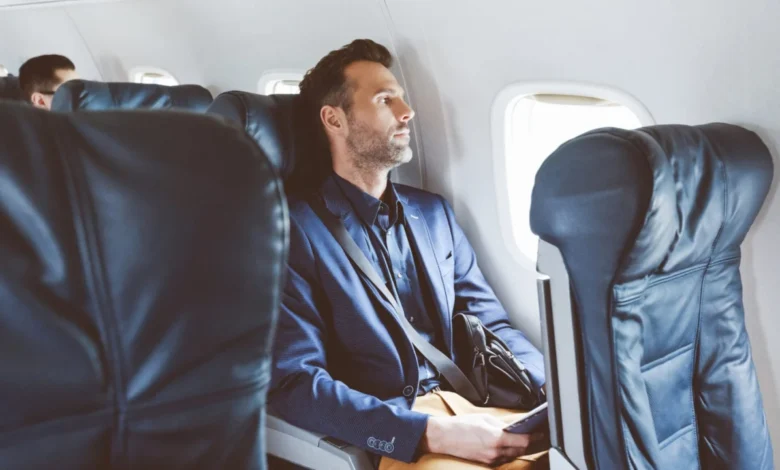
Flying within Europe typically presents a distinct paradox for business class passengers: despite the premium fare, the cabin experience on most major airlines for short-haul routes rarely extends beyond a standard economy seat with the adjacent middle seat blocked. This "Eurobusiness" model, characterized by limited recline and the absence of lie-flat beds or even significantly larger recliners, has become the industry norm. The rationale is largely economic, driven by the short duration of these flights, usually ranging from one to four hours, making the substantial investment in premium cabin infrastructure seem commercially unviable for carriers. Consequently, passengers in European business class primarily benefit from enhanced personal space (due to the blocked middle seat), improved catering, and often priority services like dedicated check-in, lounge access, and expedited boarding.
The Conventional Landscape of European Short-Haul Business Class
The "Eurobusiness" concept evolved from a need to differentiate service levels on short regional routes without incurring the high costs associated with wide-body, long-haul premium cabins. Historically, European carriers began blocking the middle seat in the late 20th century as a cost-effective way to offer a business class product. This configuration typically involves a 3-3 economy layout where the middle seat of each row is left empty, often featuring a small table or console placed over it, providing passengers with more elbow room and a greater sense of personal space. While this setup offers a tangible improvement over standard economy, it falls significantly short of the lie-flat or even substantial recliner seats found in business class on intercontinental or longer domestic flights in other regions like North America or Asia.
For airlines, this model offers several advantages. It allows for fleet commonality, as the same narrow-body aircraft (predominantly Airbus A320 family or Boeing 737 series) can be rapidly reconfigured between economy and business class by simply adjusting seat pitch and service offerings. This flexibility is crucial for maximizing aircraft utilization across diverse route networks. Furthermore, the lower operating costs associated with these standard cabins help airlines maintain competitive pricing in a highly contested market. According to a 2022 analysis by Eurocontrol, the average intra-European flight duration is approximately 1 hour and 45 minutes, reinforcing the industry’s belief that extensive premium seating is unnecessary for such brief journeys.
ITA Airways’ A321neo: A Notable Exception to the Rule
However, exceptions to this prevailing model do exist, offering savvy travelers an opportunity to experience a true premium product on routes where it is typically absent. Italy’s flag carrier, ITA Airways, provides one such notable instance with its Airbus A321neo fleet. In a move that distinguishes it from many European counterparts, ITA has opted to fit these jets with a full three-cabin setup, including a dedicated business class cabin featuring 12 lie-flat seats in a spacious 1-1 configuration. Each seat is designed to face the window, offering passengers direct aisle access and the ability to transform into a fully flat bed. This configuration stands in stark contrast to the standard "Eurobusiness" product, elevating the short-haul travel experience to an unprecedented level within the European context.
The A321neo, a modern narrow-body aircraft known for its fuel efficiency and extended range capabilities, represents a strategic investment for ITA Airways. The airline, which commenced operations in October 2021 as the successor to Alitalia, has been aggressively modernizing its fleet to enhance passenger comfort and operational efficiency. The A321neo deliveries began in late 2023, forming a crucial part of ITA’s medium-haul strategy.
Strategic Fleet Deployment: Why a Lie-Flat on Short Routes?
The presence of such a high-end business class product on a narrow-body aircraft primarily designed for medium-haul routes is the key to understanding this anomaly. ITA Airways’ A321neo aircraft are primarily deployed on longer routes stretching to the Middle East and Africa, encompassing destinations such as Dubai, Riyadh, Cairo, and Dakar. These flights typically range from five to seven hours, durations where a lie-flat bed is not merely a luxury but a significant enhancement to passenger comfort and aligns with global expectations for business class travel.
However, airline fleet scheduling is a complex logistical exercise aimed at maximizing aircraft utilization. When an A321neo is not required for its primary medium-haul assignment on a particular day, or if there’s a gap in its schedule between longer flights, ITA Airways strategically deploys it on shorter intra-European routes. This operational flexibility allows the airline to maintain high asset utilization while inadvertently offering an unexpected premium experience to passengers on these shorter hops. For instance, a flight between Rome and Paris, typically a two-hour journey, can occasionally be serviced by one of these medium-haul configured A321neos. This scenario creates a unique "sweet spot" for travelers, enabling them to enjoy a product designed for a six-hour flight while paying the fare or points equivalent of a two-hour journey.
Industry analysts suggest that such tactical deployment, while not the primary intent for the cabin design, serves multiple purposes. It allows ITA to showcase its premium product to a broader audience, potentially enticing passengers to consider the airline for longer journeys. It also generates positive word-of-mouth, enhancing the airline’s reputation for quality and innovation in cabin products, especially as it seeks to establish itself firmly in the competitive European market.
Navigating the Booking Landscape: Identifying the Premium Aircraft
Securing a lie-flat seat on one of these short-haul European flights requires diligence and a strategic approach. Given that ITA Airways operates multiple daily flights on popular routes like Rome to Paris, and only a subset of these will feature the A321neo with its premium configuration, identifying the correct aircraft is paramount. Most flights will still utilize standard narrow-body aircraft equipped with the conventional "Eurobusiness" blocked-middle-seat arrangement.
Travelers need to consult specialized tools or specific features on flight search engines to ascertain the assigned aircraft type. ExpertFlyer, a popular subscription-based service for frequent flyers, provides detailed information on aircraft assignments for specific flights. By entering the flight details, users can see the exact aircraft type, often denoted by specific IATA codes. For ITA Airways’ A321neo with the lie-flat configuration, the code to look for is "32Q." Conversely, a standard A321neo with a different, less premium configuration might be listed as "32N" or similar, indicating a cabin without the lie-flat product.
Google Flights, a widely accessible and free tool, also offers this information. When searching for flights, Google Flights often displays details about the aircraft type and, critically, may include a "lie-flat seat" note directly next to the flight listing if such a product is available. This feature provides a convenient visual confirmation for travelers. The key takeaway for passengers is to never assume a lie-flat seat simply because a flight is listed as "business class" on these specific routes. Verification of the aircraft type before booking is essential. It is also important to acknowledge that aircraft swaps, though uncommon for specific premium products, can occur due to operational necessities, which is a risk inherent in any airline booking.
Leveraging Loyalty Programs: Maximizing Value with Points
The opportunity to experience a lie-flat seat on a short European flight becomes even more compelling when booked using airline loyalty points, offering significant savings compared to cash fares. The example provided illustrates this perfectly: a business class seat valued at approximately $370 one-way if purchased with cash could be secured for 12,500 points plus around $67 in taxes and fees. This redemption effectively yields a value of approximately 2.4 cents per point, which is considered an excellent return in the world of loyalty programs, where typical valuations often hover around 1 to 1.5 cents per point.
This strategy relies on the availability of "award seats" – a limited number of seats that airlines release for booking with points. Premium cabin award seats are notoriously scarce and tend to be booked quickly, especially on popular routes or for highly desirable products. Therefore, flexibility with travel dates is a significant advantage for those seeking to capitalize on such opportunities. Travelers who can adjust their departure or arrival days by a few days are more likely to find the coveted award availability.
The Aeroplan Advantage: A Gateway to ITA’s Premium Cabins
For U.S.-based travelers, accessing ITA Airways’ premium product through points is facilitated by ITA’s membership in Star Alliance. ITA Airways joined the Star Alliance in October 2021, integrating its network with a global alliance that includes major carriers like Air Canada. This membership allows ITA flights to be booked using points from partner loyalty programs, most notably Air Canada’s Aeroplan program.
Aeroplan is particularly attractive due to its extensive network of transfer partners from major flexible points programs in the U.S. Four of the largest transferable points currencies – American Express Membership Rewards, Chase Ultimate Rewards, Capital One Miles, and Bilt Rewards – all transfer to Aeroplan at a 1:1 ratio. This broad accessibility means that many credit card holders already possess the means to accumulate Aeroplan points without having to fly directly with Air Canada. The transfer process from these programs to Aeroplan is typically instant, allowing travelers to confirm award availability and then immediately transfer the necessary points to complete their booking. This immediacy is critical for securing popular award seats before they are claimed by other passengers.
Step-by-Step Guide to Securing Your Lie-Flat Seat
For those looking to replicate this premium travel experience, a methodical approach is recommended:
- Identify the Lie-Flat Flight: Begin by using tools like ExpertFlyer or Google Flights. Search your desired route and dates, specifically looking for ITA Airways flights. Confirm that the assigned aircraft is the A321neo with the premium configuration, often denoted by "32Q" on ExpertFlyer or the explicit "lie flat seat" tag on Google Flights. Remember that this step is crucial, as not all ITA A321neos may have this specific cabin layout, and not all flights on a given route will use this aircraft.
- Search for Award Space on Aeroplan: Once you’ve identified a suitable flight, navigate to Air Canada’s Aeroplan website. Use their flight search engine to look for business class award seats on the exact ITA Airways flight you’ve found. Aeroplan’s search interface is generally user-friendly, allowing you to filter by cabin class and airline.
- Confirm Availability and Transfer Points: Before initiating any points transfer, ensure that the desired award seat is genuinely available for booking. Transfers of loyalty points are almost universally irreversible. Only after confirming the seat’s availability on Aeroplan should you proceed to transfer the required 12,500 points from your chosen flexible points program (e.g., American Express Membership Rewards) to your Aeroplan account. As noted, these transfers are often instantaneous.
- Complete the Booking: With the points now in your Aeroplan account, return to the Aeroplan website and finalize your booking. Pay the associated taxes and fees (approximately $67 USD in the example given) using a credit card.
A final, insider tip for those who successfully book the A321neo’s business class: aim for the first row. On this particular aircraft, the bulkhead row often comes with additional space and a large ottoman, enhancing an already exceptional cabin experience. It is generally considered the most desirable seat within this premium configuration.
Industry Context and Passenger Expectations
The availability of such a premium product on short-haul routes, even if intermittent, sparks broader discussions about passenger expectations and competitive dynamics in European aviation. While the "Eurobusiness" model has long been accepted as a necessary compromise, experiences like ITA’s A321neo demonstrate that there is a market for enhanced comfort, even on shorter flights. This could subtly begin to shift passenger perceptions, particularly among frequent business travelers who increasingly value comfort and efficiency.
From an industry perspective, ITA’s approach highlights the strategic flexibility afforded by modern narrow-body aircraft like the A321neo, especially its longer-range variant, the A321XLR, which is gaining popularity among airlines for "long and thin" routes. Other European carriers are also beginning to consider more premium configurations for their upcoming narrow-body deliveries, especially for flights that might cross into medium-haul territory or connect to longer international routes. For example, Lufthansa has announced plans for a more spacious business class on its A321XLRs. While a wholesale shift away from the blocked-middle-seat model on all short-haul routes remains unlikely due to cost pressures, these developments indicate a gradual evolution in premium cabin offerings.
The Future of European Short-Haul Premium Travel
The phenomenon of ITA Airways’ A321neo on short European flights serves as a compelling case study for maximizing value in air travel through strategic points redemption and careful flight selection. It underscores the importance of understanding airline fleet compositions and deployment strategies. For the astute traveler, it represents a rare opportunity to transcend the standard "Eurobusiness" experience and indulge in lie-flat luxury on journeys traditionally devoid of such amenities.
While such opportunities may remain exceptions rather than the rule, they highlight a potential future direction for European aviation, where discerning passengers, armed with knowledge and loyalty points, can unlock unexpected levels of comfort. As airlines continue to modernize their fleets and optimize operations, these "sweet spots" will likely evolve, but the principle of seeking out strategic anomalies will remain a cornerstone for maximizing the premium travel experience. The ongoing competition and the constant pursuit of operational efficiency by airlines ensure that unique propositions, like ITA’s lie-flat A321neo on a Rome-Paris hop, will continue to emerge, rewarding those who are prepared to look beyond the conventional.