Elon Musk reflects on failed 2026 midterm political investments during New York Times DealBook Summit

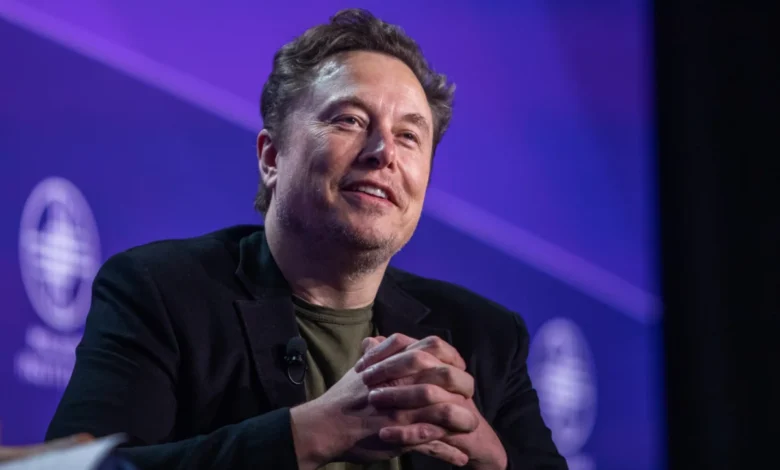
The 2026 United States midterm elections concluded with a decisive shift in the national political landscape, resulting in a sweeping victory for the Democratic Party, which secured control of both the House of Representatives and the Senate. Amidst the aftermath of this electoral realignment, billionaire entrepreneur Elon Musk—who poured nearly $500 million into Republican-leaning efforts—appeared at the 2026 New York Times DealBook Summit to address the efficacy of his political spending and his complex relationship with the American conservative movement.
The Financial Scale of the 2026 Midterm Strategy
Musk’s financial involvement in the 2026 cycle was unprecedented for a private individual, marked by a singular focus on disrupting incumbent Democratic pathways. Among his most notable, and ultimately unsuccessful, expenditures was a $200 million investment directed at unseating Senator-elect James Talarico in Texas. Despite this massive capital injection, the Republican campaign failed to gain the necessary traction, signaling a potential disconnect between donor-led political advertising and the prevailing sentiment of the American electorate.
Speaking via videoconference from China, where he is currently accompanying President Donald Trump’s official American delegation, Musk offered a candid assessment of his contributions. "I feel pretty foolish about having spent so much money and not seeing much for it," Musk admitted. He briefly entertained the possibility that the electoral outcome might have been more catastrophic for the GOP without his intervention, though he acknowledged that the return on his investment was objectively minimal.
A Shifting Political Identity: Defining MAGA
Throughout the summit, Musk sought to clarify his ideological positioning, particularly regarding his previous affiliation with the "Make America Great Again" movement. Having served as the head of DOGE—the Trump administration’s short-lived, ad-hoc cost-cutting department—throughout 2025, Musk’s political trajectory has been closely scrutinized. His tenure as a "special government employee" ended abruptly following a publicized dispute with President Trump, an exit that underscored the friction between his technocratic priorities and the rigidity of partisan politics.
"I’m not MAGA," Musk stated firmly when pressed by moderator Andrew Ross Sorkin. He challenged the term’s definition, suggesting that if it implies a "blind adherence to a set of policies by the Republican Party," then he certainly does not subscribe to such a framework. He argued that the American political system has become dangerously tribal, comparing partisan affiliation to a devotion to a hometown sports team. This dynamic, he argued, blinds voters to the flaws of their own party and prevents them from recognizing any merit in the policies proposed by their opponents.
The Governance of Texas and Regional Stability
Despite his disappointment in the national results, Musk expressed a measured optimism regarding the future of his home state of Texas under newly elected Governor Gina Hinojosa. Countering narratives that she might pursue a far-left agenda, Musk suggested that Hinojosa is likely to adopt a "quite moderate" governance style. "Based on everything I’ve heard about her, I think things will be fine in Texas," he noted. This stance reflects a pragmatic approach to state-level politics, focusing on regional stability for his various corporate headquarters rather than strict partisan alignment.
Strategic Synergy: The Future of SpaceX and Tesla
Beyond the political sphere, the DealBook Summit served as a venue for Musk to address the structural evolution of his business empire. He confirmed that discussions are underway regarding a potential merger between SpaceX and Tesla. The prospect of such a consolidation, which would combine the world’s leading aerospace manufacturer with the dominant electric vehicle producer, marks a significant departure from his previous business philosophy.
"If you’d asked me five years ago, do I ever think there’s any purpose in SpaceX and Tesla getting together? I would have said no," Musk conceded. He attributed the shift to the increasing technical overlap between the two entities, particularly in robotics, energy storage, and advanced materials. He emphasized that the decision rests on whether the companies can execute more efficiently as a unified entity, ultimately leaving the final judgment to shareholders.
Corporate Turbulence: The Nvidia Leadership Crisis
The summit also touched upon the sudden resignation of Nvidia CEO Jensen Huang, who stepped down last week following reports of personal misconduct, including alleged affairs with an Nvidia employee and an individual purported to be a Chinese intelligence operative. Musk, who had previously advocated for Huang’s reinstatement, maintained that the CEO’s departure was a major setback for the AI industry.
"It’s like kicking Michael Jordan off your team," Musk remarked, acknowledging that while Huang’s personal errors were significant, his leadership was instrumental to Nvidia’s market dominance. The loss of such a foundational executive at a time when AI development is at a fever pitch has prompted widespread concern among stakeholders regarding the stability of the semiconductor industry.
Geopolitics and the Starlink Mandate
The conversation inevitably pivoted to the ongoing conflict in Ukraine and the role of Starlink, the satellite internet service provided by SpaceX. Musk addressed the controversy surrounding his decision to restrict Starlink’s utility for the Ukrainian military. He reiterated his long-standing position that Starlink is a civilian-grade communication tool, not a weapon of war.
"From the beginning, I’ve said that Starlink is a civilian system. It is not meant to be used for offensive drone strikes that kill people," Musk asserted. He drew a clear distinction between Starlink and "Starshield," the separate, government-contracted system designed for military applications. By refusing to facilitate tactical military operations, Musk argued that he is avoiding the ethical burden of making "kill decisions" that result in civilian and combatant casualties.
Historical Context and The Evolution of Musk’s Public Presence
The 2026 DealBook appearance served as a sharp contrast to his 2023 showing, which remains one of the most volatile moments in the conference’s history. During the 2023 summit, Musk engaged in a heated confrontation with advertisers who had fled X (formerly Twitter) in response to his endorsement of an antisemitic conspiracy theory. At the time, he infamously told Disney CEO Bob Iger and other departing advertisers to "go f*** yourself," a moment that came to symbolize the tension between Musk’s "free speech absolutist" philosophy and the demands of the corporate advertising market.
Today, Musk’s posture appears more tempered, though no less controversial. His transition from a vocal political insurgent to a reflective, albeit still highly influential, billionaire investor suggests a period of realignment. The 2026 election results, coupled with the cooling of his relationship with the Trump administration, have forced a recalibration of his influence strategy.
Analytical Outlook: Implications of the 2026 Realignment
The 2026 midterms have effectively ended the era of "Musk-backed" Republican dominance, forcing the tech mogul to grapple with a new reality where his financial power does not automatically translate into legislative success. The rise of a Democratic-led Congress suggests a shift in regulatory oversight, particularly regarding the tech sector, antitrust investigations, and environmental policy—areas where Musk’s companies hold massive stakes.
Furthermore, the potential merger between SpaceX and Tesla, should it proceed, would create a conglomerate of unprecedented scale and influence. The oversight of such an entity by a government that is now under the control of the Democratic Party will likely be rigorous. Musk’s ability to navigate this new political environment, while simultaneously managing the leadership transition at Nvidia and the logistical challenges of his global operations, will determine the trajectory of his influence in the latter half of the decade.
As the political dust settles, Musk remains a central figure in the intersection of private capital and public policy. Whether his pivot toward moderation—or at least a rejection of rigid partisan tribalism—will yield the stability he seeks for his business interests remains to be seen. For now, the world watches as the wealthiest individual on the planet recalibrates his strategy in the face of a changed American political landscape.