MakeMyTrip Acquires Majority Stake in Ride-Pooling Platform Quick Ride to Expand Ground Mobility Ecosystem

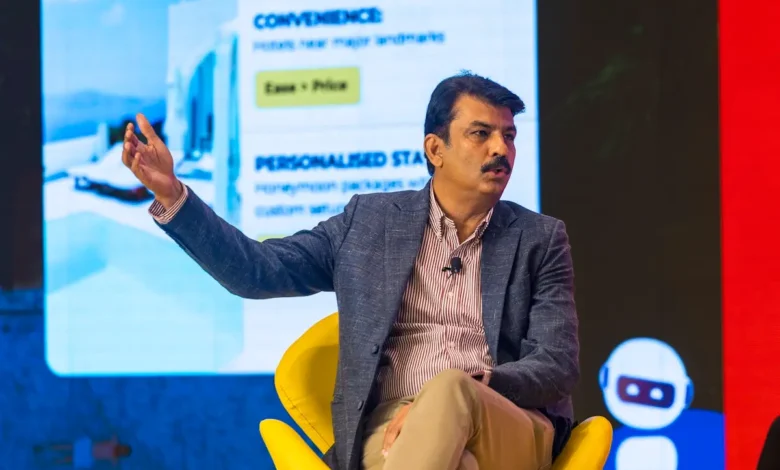
MakeMyTrip, India’s leading online travel company, announced on Friday that it has acquired a majority stake in Bengaluru-based ride-pooling and shared mobility platform Quick Ride. This strategic investment marks a significant milestone for the travel aggregator, signaling its formal entry into the urban and corporate shared commuting segment. While the exact financial terms of the transaction, including the precise valuation and exact equity stake acquired, were not publicly disclosed by the company, the deal significantly bolsters MakeMyTrip’s already robust ground transportation portfolio.
The acquisition serves as a strategic complement to MakeMyTrip’s existing suite of ground transport services, which notably includes intercity bus ticketing giant redBus and chauffeur-driven intercity car rental service Savaari Car Rentals. By integrating Quick Ride into its ecosystem, MakeMyTrip is bridging the gap between intercity travel and intra-city, daily commuter mobility, creating a comprehensive end-to-end transportation network for Indian consumers.
Chronology and Corporate Restructuring
Prior to finalizing the acquisition deal with MakeMyTrip, Quick Ride underwent a strategic internal restructuring process. As part of this corporate reorganization, the company segregated its core ride-pooling operations and associated brand assets, transitioning them into a newly formed corporate entity named Co Ride M. This preparatory step streamlined Quick Ride’s business verticals, making the ride-sharing asset cleaner and more attractive for a major corporate acquisition.
Quick Ride’s journey to this juncture reflects the evolution of India’s shared mobility sector. Founded to alleviate urban congestion and offer sustainable, cost-effective commuting alternatives, the startup steadily built a loyal user base across major metropolitan tech hubs. Over the years, it evolved from a peer-to-peer carpooling app into a structured mobility provider with deep institutional and corporate partnerships. The culmination of this growth trajectory is the recent majority buyout by MakeMyTrip, which provides Quick Ride with the financial backing, technological muscle, and expansive distribution network of a publicly traded travel titan.
Understanding Quick Ride and Its Business Model
Unlike traditional app-based cab aggregators that rely on commercial drivers and full-time fleet vehicles, Quick Ride operates on a community-driven, peer-to-peer ride-pooling model. The platform connects vehicle owners—primarily everyday office workers driving their own cars or motorcycles—with commuters traveling along similar or identical routes. By matching individuals heading in the same direction, Quick Ride enables users to share rides, significantly reducing fuel expenses, lowering carbon emissions, and mitigating urban traffic congestion.
A key differentiator for Quick Ride in the crowded Indian mobility market has been its heavy integration with the corporate sector. Rather than focusing solely on retail, business-to-consumer (B2C) advertising, Quick Ride established deep-rooted partnerships with major corporations, IT parks, and large business campuses across India’s primary tech corridors, such as Bengaluru, Hyderabad, Pune, and the National Capital Region (NCR).
Through these enterprise tie-ups, Quick Ride gained privileged access to a captive audience of working professionals—a demographic that aligns perfectly with MakeMyTrip’s high-value customer base. This enterprise-focused approach not only ensured steady demand but also established a higher degree of trust and safety compared to open peer-to-peer marketplaces.
Background Context of India’s Ground Mobility Market
The Indian ground transportation and mobility landscape has undergone a dramatic transformation over the past decade, driven by smartphone penetration, rapid urbanization, and a surging demand for flexible transportation solutions. While companies like Ola and Uber dominated the initial wave of app-based taxi aggregators, the market has rapidly diversified into specialized segments, including micro-mobility, electric vehicle (EV) fleets, intercity bus aggregation, and corporate employee transportation.
MakeMyTrip’s aggressive expansion into ground transport is rooted in a deliberate corporate strategy to transition from a pure-play flight and hotel booking engine into an all-encompassing "super app" for travel and mobility. The journey began in earnest with the 2013 acquisition of redBus, which cemented MakeMyTrip’s dominance in the country’s massive bus transportation market. Years later, the acquisition of Savaari Car Rentals added organized intercity cab rentals to the mix.
However, until now, MakeMyTrip’s offerings were largely confined to intercity and long-distance travel. The daily urban commute—a multi-billion-dollar market encompassing millions of white-collar workers—remained largely untapped by the platform. The acquisition of Quick Ride directly addresses this gap, allowing MakeMyTrip to capture the consumer relationship from the moment they step out of their office building to the moment they book a cross-continental vacation.
Strategic Implications and Market Analysis
Industry analysts and market observers have pointed out several strategic implications stemming from MakeMyTrip’s acquisition of Quick Ride.
First, the deal diversifies MakeMyTrip’s revenue streams by establishing a foothold in the high-frequency, low-ticket-size daily commuting segment. While holiday bookings and flights are often seasonal and cyclical, daily commuting is a year-round necessity. By inserting itself into the daily routine of office-goers, MakeMyTrip can dramatically increase app engagement and brand stickiness.
Second, the integration offers massive cross-selling and up-selling opportunities. A professional using Quick Ride to commute to an IT park in Bengaluru could easily be targeted with contextual offers for weekend holiday packages, hotel stays, or flight tickets via MakeMyTrip’s primary platform. This synergy creates a closed-loop ecosystem where urban mobility feeds into leisure travel demand.
Third, corporate partnerships are increasingly becoming the holy grail for customer acquisition in India. By inheriting Quick Ride’s existing B2B relationships with IT parks and corporate campuses, MakeMyTrip gains an institutional distribution channel that is difficult and expensive to build from scratch. This positions the company favorably against competitors trying to capture the urban workforce.
Finally, sustainability and environmental, social, and governance (ESG) factors are playing a growing role in corporate strategies. Ride-pooling inherently promotes shared resources and lower carbon footprints. By backing a platform dedicated to reducing single-occupancy vehicle usage, MakeMyTrip aligns its brand with broader environmental goals, appealing to modern, eco-conscious consumers and corporate clients striving to meet their net-zero targets.
Official Responses and Leadership Vision
While detailed financial figures were kept confidential, leadership commentary surrounding the broader trajectory of MakeMyTrip underscores a clear ambition to dominate India’s entire travel and mobility value chain. Rajesh Magow, co-founder and group CEO of MakeMyTrip, has consistently emphasized the importance of localized innovations and expanding into adjacent verticals to capture the next wave of Indian consumers.
Although direct statements from Quick Ride founders regarding the post-acquisition roadmap are still emerging, industry insiders suggest that the platform will retain a degree of operational independence while leveraging MakeMyTrip’s technological infrastructure, marketing muscle, and customer acquisition channels to scale across more Indian cities. The infusion of capital and strategic guidance is expected to help Quick Ride expand its technological edge, particularly in route-matching algorithms, security verifications, and corporate dashboard integrations.
Future Outlook for Shared Mobility in India
The success of this acquisition will ultimately depend on how seamlessly Quick Ride’s operations can be integrated into the broader MakeMyTrip app ecosystem without alienating its core user base. Shared mobility in India has historically faced regulatory hurdles, fluctuating fuel prices, and intense competition from two-wheeler and four-wheeler ride-hailing giants. However, rising fuel costs, chronic traffic congestion in metropolitan centers, and a renewed corporate focus on sustainable commuting create a favorable tailwind for ride-pooling platforms.
As urbanization accelerates and the demand for efficient, cost-effective urban mobility intensifies, MakeMyTrip’s latest maneuver positions it uniquely at the intersection of daily commuting and long-haul travel. By transforming from a ticketing portal into an integrated mobility provider, MakeMyTrip is setting a new benchmark for how digital travel platforms can capture the entirety of a consumer’s journey, from the local neighborhood to international destinations.