Life at Sea as the Kennel Master of the Queen Mary 2: Inside the World’s Only Floating Pet Sanctuary

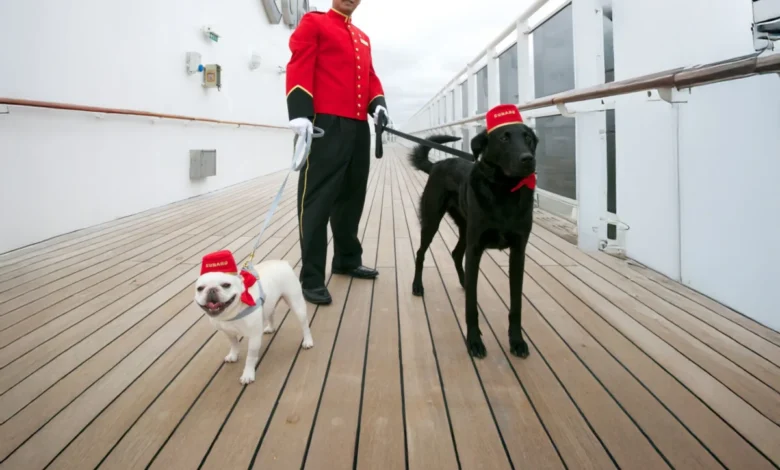
Operating as a self-contained floating city, modern luxury ocean liners are marvels of engineering and hospitality, featuring Michelin-starred dining, theatrical venues, medical centers, and sprawling retail complexes. Yet, nestled high atop the decks of one particular vessel lies an amenity entirely unique to the maritime industry. The Cunard Line’s flagship ocean liner, the Queen Mary 2, holds the exclusive distinction of being the only cruise ship in the world to maintain dedicated, full-service kennels at sea. For travelers unwilling to leave their four-legged companions behind during transatlantic crossings between Southampton and New York, this specialized facility provides a seamless, albeit complex, logistical bridge between continents. At the heart of this floating animal sanctuary is Oliver Cruz, a veteran animal handler whose journey from the Philippines to the middle of the Atlantic Ocean represents one of the most unusual employment trajectories in the global cruise sector.
Main Facts and Operational Overview
Commissioned in 2004 as a modern successor to Cunard’s legendary transatlantic liners, the Queen Mary 2 spans 1,132 feet and accommodates up to 2,759 guests. Amidst its myriad luxury offerings, the ship’s kennel facility offers 24 dedicated spaces capable of housing dogs and cats during the roughly seven-day ocean voyage. Maintaining this facility requires strict adherence to international animal transport regulations, stringent dietary preparation, and around-the-clock supervision.
At the helm of this operation is Cruz, who serves as the ship’s resident kennel master. The facility itself is designed to mirror both British and American sensibilities to accommodate an international clientele. It features an outdoor exercise zone colloquially known by crew members as the "poop deck," complete with an American fire hydrant and a British lamppost. Pets are provided with specialized housing units where owners can leave familiar items such as toys, blankets, and worn garments to alleviate the stress of unfamiliar surroundings.
Dietary management is another critical component of the daily routine. Meals are prepared in the same kitchens that service the ship’s human passengers, utilizing fresh ingredients ranging from boiled chicken breast and grilled steak to steamed salmon, Cumberland sausage, and organic vegetables. Cruz enforces strict preparation protocols, notably barring the use of salt and pepper to protect the animals’ digestive health.
Chronology and Professional Evolution
Cruz’s path to becoming the world’s most prominent maritime kennel master began far from the deck of a luxury liner. Born and raised in the Philippines, he spent eight years working as a professional zoo guide and animal handler, gaining extensive experience managing diverse and potentially dangerous fauna, including snakes and crocodiles. This background fostered a deep affinity for animals, reinforced by his personal ownership of 15 dogs and his active involvement with the Philippine Animal Welfare Society.
In 2011, Cruz joined the staff of the Queen Mary 2, initially working as a spa attendant within the ship’s wellness division. However, when housekeeping management discovered his extensive professional background in animal husbandry, his career trajectory shifted dramatically. Reassigned to the ship’s newly highlighted kennel operations, Cruz assumed full responsibility for the daily care of the liner’s animal passengers. Over more than a decade at sea, he has managed hundreds of animals, ranging in size from miniature Yorkshire Terriers to large Bernese Mountain Dogs requiring multi-pound daily portions of specialized protein. His institutional memory spans repeat travelers, including one canine passenger who has completed 32 transatlantic crossings under his watchful eye.
Supporting Data and Logistics of Transatlantic Pet Travel
Transporting domestic pets across international waters involves a complex web of veterinary compliance, documentation, and quarantine regulations. This is particularly true for voyages entering the United Kingdom, where biosecurity laws are notoriously rigorous. On embarkation day, Cruz’s duties begin hours before departure at the cruise terminal, where he meticulously cross-checks microchip records, vaccination timelines, and health certificates to ensure absolute compliance with destination entry requirements.
The logistical framework of the kennel operation must also account for behavioral management in a confined, maritime environment. Space constraints and the acoustic profile of a moving ship can induce anxiety in domestic animals. To mitigate this, Cruz implements structured socialization periods, individual behavioral assessments, and flexible housing arrangements—such as removing partitions between enclosures for bonded pairs.
Despite these precautions, working in close quarters with stressed animals carries inherent occupational risks. Cruz estimates he has sustained over 50 minor bites throughout his tenure, almost exclusively incurred while intervening to prevent conflicts between unfamiliar dogs. His operational philosophy relies heavily on behavioral differentiation: recognizing that the handling techniques effective for a resilient working breed like a Siberian Husky are entirely distinct from those required for a sensitive companion breed like a Shih Tzu.
Official Responses, Protocols, and Passenger Management
While caring for the animals themselves forms the core of Cruz’s responsibilities, managing their human owners often proves to be the most demanding aspect of the operation. Passenger anxiety frequently manifests as over-attentiveness, leading to breaches of facility rules. Owners occasionally attempt to bypass visiting hour restrictions or secretly feed their pets restricted items, such as high-fat table scraps or heavily seasoned galley provisions, which can trigger severe gastrointestinal distress.
To maintain order and safety, the kennel master must balance diplomatic communication with strict enforcement of safety protocols. Incidents, such as unauthorized owners attempting to relocate pets back to passenger cabins during severe weather events, underscore the necessity of rigorous headcount verifications and clear communication channels between the kennel staff, shipboard security, and hotel operations.
Furthermore, access to the kennel area is heavily restricted. Cruz enforces a strict policy barring curious passengers from entering the facility simply to view the animals. This measure is designed to protect the resident pets from sensory overload and environmental fatigue as they adapt to the motion of the ship and the presence of unfamiliar conspecifics.
Broader Impact and the Human Element of Shipboard Life
Beyond his duties in the kennels, Cruz is an integral part of the Queen Mary 2’s vibrant crew community. He is an active musician, playing drums and guitar in the shipboard Filipino crew band. His musical pursuits have even intersected with mainstream entertainment history; during a commercial filming project aboard the vessel, Cruz performed alongside blink-182 drummer Travis Barker, playing classic pop-punk anthems in the crew lounge. On land, his travels are heavily influenced by his personal interests, frequently taking him to Liverpool to explore Beatles historical sites such as Mendips, Strawberry Field, and the Cavern Club, a passion permanently commemorated by tattoos of John Lennon.
The broader implications of maintaining a floating kennel service reflect a shifting paradigm in luxury travel. As consumer expectations evolve to treat pets as full family members, high-end travel providers are increasingly pressured to offer inclusive accommodations that eliminate the friction of separation. Cunard’s continued investment in the Queen Mary 2’s kennel infrastructure demonstrates the commercial viability and customer loyalty generated by catering to this demographic.
For Cruz, the emotional rewards of the role transcend the logistical hurdles. He points to rehabilitation success stories, such as Paisley—a shelter dog with a history of trauma and aggression who eventually transformed into a compliant, affectionate companion under his structured authority—as proof of the profound impact of dedicated animal husbandry at sea. Ultimately, his advice to first-time pet cruisers distills his entire professional ethos: because animals act as psychological mirrors to their human companions, maintaining a calm, reassuring demeanor is the ultimate prerequisite for a successful voyage across the Atlantic.
Related posts: