Brand USA Faces Fiscal Pressure as Pandemic-Era Reserves Dwindle and Federal Funding Cuts Loom

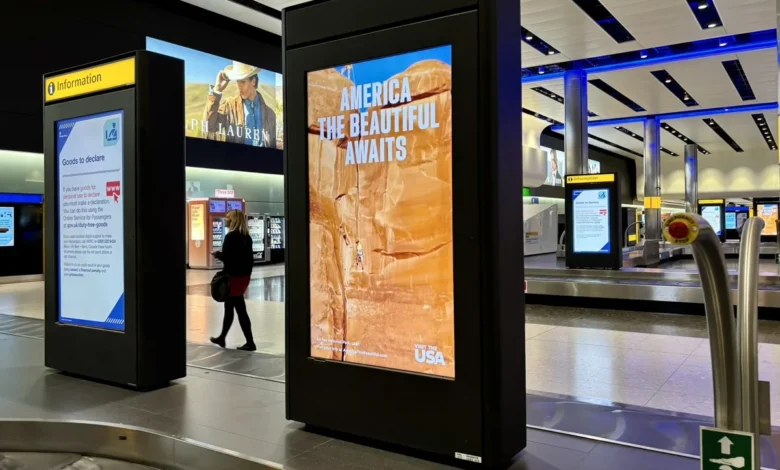
The United States destination marketing organization, Brand USA, is bracing for a challenging financial horizon as a temporary infusion of federal relief funds nears exhaustion. The organization, tasked with promoting international visitation to the United States, has relied heavily on a $250 million one-time funding boost secured in the wake of the COVID-19 pandemic. However, as this financial buffer winds down, Brand USA is preparing to absorb the full operational impact of preceding federal funding reductions that previously stripped up to $80 million from its annual budget.
While leadership has mapped out stable expenditure plans for the immediate future—projecting budgets of $158 million for fiscal 2026 and $165 million for fiscal 2027—the long-term outlook beyond September 2027 reveals severe fiscal constriction. With dwindling cash reserves and diminished incoming revenue streams from both federal allocations and private-sector partnerships, the agency faces difficult decisions regarding its global marketing footprint at a time when international tourism competition is fiercer than ever.
Financial Trajectory and Near-Term Budgets
Despite reductions in core federal funding streams over recent years, Brand USA has managed to maintain an operational posture comparable to its pre-pandemic baseline. According to financial disclosures and organizational planning, the agency intends to spend $158 million in fiscal 2026. This figure will see a slight uptick to $165 million in fiscal 2027, which officially commences next month. These spending levels align closely with the annual expenditures recorded in the organization’s pre-pandemic tax filings, creating an illusion of financial normalcy.
This stability, however, has been artificially sustained by the 2022 emergency funding injection. The $250 million allocation acted as a financial bridge, cushioning the blow of structural funding cuts and allowing the organization to execute robust international marketing campaigns even as underlying revenue channels contracted.
The illusion of stability is projected to shatter by fiscal 2028. Financial projections indicate that after executing a cumulative $114.1 million drawdown from its reserve funds, Brand USA anticipates closing out September 2027 with remaining cash reserves of approximately $51 million. Crucially, the vast majority of this remaining capital is earmarked as an emergency fund, meaning it is legally or operationally restricted and cannot be deployed for day-to-day marketing initiatives.
Consequently, the organization will enter fiscal 2028 with virtually no financial cushion to absorb further market shocks, relying entirely on its diminished baseline revenue. This incoming revenue relies on a matching model tied to international traveler visa fees and private-sector contributions, both of which have faced structural headwinds in recent years.
Chronology of Funding and Pandemic Recovery
To understand Brand USA’s current predicament, it is necessary to examine the historical timeline of its funding mechanism and the compounding crises brought on by the global health emergency.
Established by the Travel Promotion Act of 2009 and launched in 2011, Brand USA operates under a unique public-private partnership model. Its funding is derived primarily from a combination of private-sector contributions and matching funds collected from international visitors through the Electronic System for Travel Authorization (ESTA) fee, up to a statutory cap of $100 million annually.
- 2011–2019 (The Growth Era): Brand USA established itself as a premier destination marketing organization, systematically increasing international visitation and spending in the United States. Annual budgets hovered between $150 million and $180 million, supported by robust ESTA fee collections and strong corporate partnerships within the hospitality, aviation, and tourism sectors.
- 2020–2021 (The Pandemic Collapse): Global international travel ground to a near-total halt due to COVID-19 restrictions. ESTA fee collections plummeted by more than 80%, starving the organization of its primary operational revenue. Staffing was reduced, and marketing campaigns were suspended or pivoted entirely to domestic inspiration and crisis communications.
- 2022 (The Emergency Infusion): Recognizing the existential threat to the nation’s tourism economy, the federal government provided a one-time $250 million relief injection to Brand USA. This capital infusion was designed to jump-start international travel promotion as borders reopened and global mobility resumed.
- 2023–2024 (The Silent Cuts): As the emergency funds were gradually integrated into operating budgets, underlying federal funding allocations faced downward political pressure. Legislative adjustments and static caps effectively erased up to $80 million from Brand USA’s anticipated annual operational capacity, masked temporarily by the 2022 cash surplus.
- 2025–2027 (The Plateau): Brand USA maintains projected spending at $158 million for fiscal 2026 and $165 million for fiscal 2027 by aggressively drawing down its remaining relief reserves.
- 2028 and Beyond (The Fiscal Cliff): With reserves dropping to an emergency-only threshold of roughly $51 million by September 2027, the organization faces a stark reality: operating solely on diminished baseline revenues without the safety net of pandemic-era reserves.
The Public-Private Funding Architecture
The structural vulnerability facing Brand USA highlights inherent flaws in its funding model during prolonged economic downturns or periods of federal budgetary friction. Unlike national tourism boards in competitor nations—such as Australia, Canada, or various European states—which often receive direct, guaranteed annual appropriations from central treasuries, Brand USA’s funding is contingent on traveler volume and corporate matching.
Under the Travel Promotion Act, the federal government matches private-sector contributions dollar-for-dollar, up to the statutory maximum funded by ESTA fees. When international travel drops—whether due to pandemics, macroeconomic recessions, or geopolitical tensions—ESTA fee revenue declines. Simultaneously, private sector partners, themselves reeling from downturns, reduce their financial contributions. This creates a double-negative feedback loop: just when the tourism sector needs marketing promotion the most, funding mechanisms contract automatically.
The $250 million injection in 2022 was an ad-hoc acknowledgment of this structural vulnerability. However, because it was structured as a one-time relief measure rather than a permanent recalibration of the funding cap, it merely delayed the reckoning. As those funds are exhausted, Brand USA is returning to a baseline that has effectively shrunk in real terms due to inflation, rising media costs, and intensified global competition.
Stakeholder Reactions and Industry Implications
Leaders across the American travel, tourism, and hospitality sectors have expressed growing concern over the impending financial squeeze. Industry associations, including the U.S. Travel Association, have historically championed robust funding for Brand USA, citing high return on investment (ROI). Economic impact studies commissioned by the organization have consistently argued that every dollar invested in Brand USA generates significant economic output, supporting hundreds of thousands of American jobs across aviation, lodging, dining, retail, and entertainment.
Aviation executives and hotel operators have pointed out that international travelers spend significantly more per trip than domestic tourists, making them vital drivers of urban economies and regional employment. The prospect of a diminished Brand USA comes at a delicate time for the U.S. inbound travel market. While European and Asian markets have largely rebounded from pandemic lows, the United States has faced documented friction points in regaining its pre-pandemic market share of global long-haul travel.
Factors complicating the U.S. competitive position include persistent processing delays for visitor visas in key emerging markets like India and parts of Latin America, the relative strength of the U.S. dollar—which makes travel to the United States comparatively expensive—and aggressive, well-funded marketing campaigns launched by rival destination countries eager to capture outbound travelers.
Without a robust marketing budget, industry stakeholders warn that Brand USA will find it increasingly difficult to cut through the noise in critical international source markets. While digital marketing and data-driven targeting have improved efficiency, large-scale brand awareness campaigns require sustained capital investment to maintain visibility against competitors whose governments view tourism promotion as critical national infrastructure.
Fact-Based Analysis of Strategic Alternatives
As Brand USA navigates toward the fiscal reality of 2028, policy analysts and tourism experts suggest several potential pathways for the organization to mitigate the impact of reduced federal support, though each comes with distinct challenges.
1. Legislative Reform of the ESTA Cap
One primary avenue involves lobbying Congress to raise or index the statutory cap on matching funds derived from the ESTA fee. When the fee was originally established, the $100 million federal matching cap reflected a different economic environment. Adjusting this cap upward to account for inflation and modern marketing costs would provide a sustainable, non-taxpayer-funded revenue stream tied directly to the volume of incoming travelers. However, legislative changes require bipartisan consensus in Washington, a prospect complicated by ongoing debates over federal spending and appropriations.
2. Deepening Private Sector Partnerships
With federal contributions facing downward pressure, Brand USA may be forced to pivot toward an even heavier reliance on private-sector stakeholders. This could involve tiered partnership models, cooperative marketing programs where major airlines and hotel chains co-fund specific regional campaigns, and expanded commercial sponsorships. The limitation of this approach, however, is that private partners are also sensitive to macroeconomic conditions and may pull back their marketing spend during broader economic slowdowns.
3. Operational Realignment and Digital Efficiency
Internally, the organization will likely be forced to streamline operations, prioritize high-yield markets, and shift a greater proportion of its marketing budget toward performance-based digital channels rather than broad-reach traditional media. While data-driven digital marketing offers higher accountability and measurable ROI, it lacks the broad, top-of-funnel brand-building power of traditional global campaigns—a trade-off that could impact long-term destination awareness.
Conclusion
The impending depletion of Brand USA’s pandemic-era financial reserves marks the end of an era of artificial budgetary stability for the nation’s primary international tourism marketing agency. With baseline funding reduced, cash reserves dwindling to emergency-only levels by late 2027, and annual spending capped well below the heights of recent years, the organization faces a critical juncture.
The choices made by policymakers, industry partners, and agency leadership over the next twenty-four months will determine whether the United States can maintain its competitive edge in the global tourism marketplace. As international travel continues to evolve in a complex geopolitical and economic landscape, the financial health of Brand USA remains a key barometer for the broader economic vitality of the American hospitality and travel sectors.