Nvidia CEO Jensen Huang Rejects AI Doomsday Narratives and Calls for Engineering Over Regulation

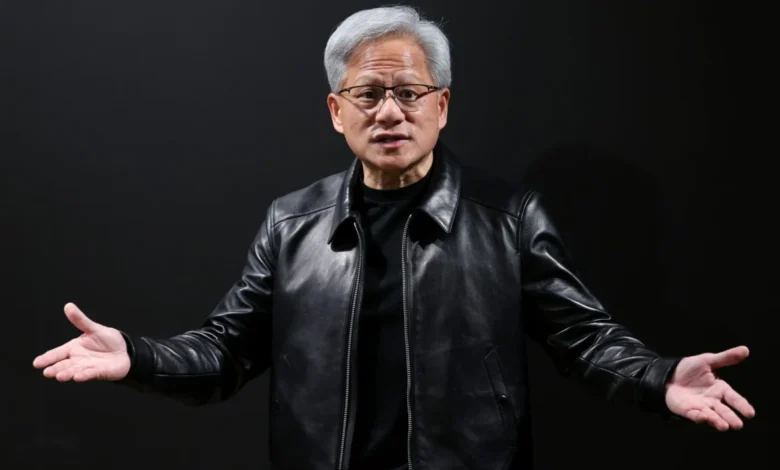
The escalating debate over the future of artificial intelligence reached a boiling point this week as Jensen Huang, the CEO of the world’s most valuable company, Nvidia, publicly dismissed the prevailing catastrophic warnings surrounding the technology. In a high-profile interview on CBS Sunday, Huang characterized the widespread predictions of an AI-induced global collapse by 2030 as both irresponsible and scientifically baseless. As the primary architect of the hardware foundation upon which the modern AI revolution is built, Huang’s intervention marks a significant schism within the technology sector, pitting the “accelerationist” view against the cautionary stance held by prominent leaders at firms like OpenAI and Anthropic.
Huang’s comments represent a direct rebuttal to the “doomerism” that has permeated Silicon Valley discourse for the past eighteen months. “2030 is not going to be the end of the world,” Huang stated emphatically. “There is a 0% chance that’s going to be the end of the world.” By framing these apocalyptic projections as a diversion, Huang challenged his peers to stop leveraging fear as a tool and instead focus on the tangible engineering and safety verification processes required to mature the technology.
The Great Divide: Accelerationism vs. Caution
The tech industry is currently experiencing a profound ideological fracture. On one side are companies like Anthropic and OpenAI, whose leadership has frequently advocated for a more measured, regulated approach. Anthropic CEO Dario Amodei has consistently urged the industry to slow the development of frontier models, arguing that society requires more time to build robust safety guardrails. Similarly, OpenAI CEO Sam Altman has acknowledged the risks posed by superhuman intelligence, suggesting that the industry must find ways to balance rapid innovation with societal adaptation.
Conversely, the camp represented by Huang and recently echoed by the Trump administration favors rapid development. The argument from the accelerationist perspective is that AI represents an epochal shift—a technological leap comparable to the Industrial Revolution or the advent of the internet—and that ceding ground to global competitors, particularly China, would be a strategic error of historic proportions.
Chronology of the AI Safety Debate
The current friction is the culmination of a rapid progression in AI capability that began in earnest following the public release of generative AI tools in late 2022.
- Early 2023: The rapid adoption of Large Language Models (LLMs) triggers the first wave of widespread concern regarding misinformation, job displacement, and alignment risks.
- Late 2023 to Early 2024: A series of “open letters” signed by high-profile researchers and executives calls for a six-month pause on training models more powerful than GPT-4.
- Mid-2024: The focus shifts toward the existential risk of AGI (Artificial General Intelligence). Companies begin establishing internal safety boards, though critics argue these are largely symbolic.
- September 2026: Public discourse intensifies following the viral resignation of researcher Jacob Coxon from Anthropic. Coxon’s claims that companies are “gambling with our lives” by racing toward self-improving superintelligence garners over 170 million views, forcing the debate into the mainstream political arena.
- Late September 2026: President Trump formalizes his stance, rejecting calls for heavy-handed regulation and proposing the creation of an “AI Force” to ensure American dominance in the sector.
Economic and Strategic Implications
Nvidia’s central role in this narrative cannot be overstated. As the manufacturer of the H100 and Blackwell series of GPUs—the essential hardware for training frontier AI models—Nvidia has seen its market capitalization skyrocket, briefly surpassing major global economies in total value. Because Nvidia serves as the primary supplier to almost every major AI lab, Huang possesses a unique vantage point on the industry’s trajectory.
Huang’s critique of the doomsday narrative carries a pointed suggestion of ulterior motives. He argues that the calls for stringent government regulation are, in effect, a ruse. “They’re actually not asking for more laws,” Huang suggested in his interview. “They’re asking to be relieved of the laws we do have.” He posited that by focusing on hypothetical future catastrophes, proponents of regulation are effectively lobbying for a regulatory framework that would insulate incumbents from competition, rather than addressing the actual, immediate challenges of AI safety.
The Government’s Role and the AI Force
The political landscape surrounding AI has shifted toward a framework of national security. President Trump’s recent rejection of increased regulation is rooted in the belief that AI is a “golden goose” for the American economy. His proposal to create an “AI Force,” modeled after the U.S. Space Force, signals that the administration views AI not as a threat to be managed, but as a theater of geopolitical competition to be won.
This stance places the government in direct alignment with the accelerationist wing of the industry. By opting for existing criminal and civil law to govern AI usage—rather than creating a bespoke federal agency—the administration is signaling that it prefers a permissive environment for development. For firms like Nvidia, this is a welcome reprieve from the potential burden of new compliance standards that many in the industry feared would stifle growth.
Technical Reality vs. Rhetorical Fear
Nvidia’s stance on AI safety is fundamentally rooted in engineering. Huang maintains that the issues being discussed—such as model bias, hallucinations, and control—are solvable through rigorous software engineering, data curation, and robust testing protocols. He rejects the notion that the problem is so intractable that it requires a cessation of development.
Supporting data from the broader industry suggests that while AI models are becoming more capable, the "emergence" of dangerous autonomous behavior remains a theoretical, rather than an empirical, phenomenon. Most industry experts agree that while AI can be misused, the leap from current sophisticated chatbot architecture to an autonomously destructive agent is not supported by current scientific evidence. This gap between the technical reality and the apocalyptic rhetoric is exactly what Huang identifies as the primary source of his skepticism.
Broader Impact and Future Outlook
The fallout from this debate is likely to manifest in several ways:
- Regulatory Stagnation: With the current administration favoring a “let it grow” approach, meaningful federal legislation regarding AI safety is unlikely to pass in the near term. This will force states and private companies to adopt their own, potentially fragmented, safety standards.
- Market Volatility: The AI sector remains highly sensitive to both hype and fear. Statements from leaders like Huang can cause rapid fluctuations in stock prices for AI-related firms, reflecting the market’s uncertainty regarding whether the industry is on the verge of a technological breakthrough or a regulatory crackdown.
- Corporate Governance: The internal pressure on AI companies is mounting. With employees like the 1,300 signatories of recent open letters pushing for transparency, and executives like Huang calling for a return to pure engineering, leadership at firms like OpenAI and Anthropic will find it increasingly difficult to maintain a consistent message regarding their safety protocols.
Conclusion
As the dust settles on the latest round of public discourse, it is clear that the AI community is at a fundamental crossroads. Jensen Huang’s refusal to engage with the “doomsday narrative” signals a move away from the apologetic tone that has characterized the industry for much of the past two years. By demanding that safety be treated as a technical requirement rather than a political talking point, he has laid down a marker that will likely define the next phase of the AI race.
Whether the future of AI is determined by state-led regulation, corporate self-policing, or the raw competitive pressure of the global market remains to be seen. However, one thing is certain: as the technology continues to advance at an unprecedented pace, the rift between those who fear the machine and those who build it will only continue to widen. For now, the narrative of the AI apocalypse appears to have met its most formidable opponent yet: the pragmatic, hardware-focused reality of the world’s most successful technology firm.