Cypress Hill Drops "Dios Bendiga," First Original Spanish-Language Album, Reaffirming Deep Latino Roots


Cypress Hill, a group that has indelibly shaped the landscape of hip-hop, has unveiled "Dios Bendiga," their groundbreaking first album entirely in Spanish. This release marks a significant milestone in their illustrious career, nearly three decades after their initial foray into Spanish with the cult classic "Los Grandes Éxitos en Español." The album arrives at a pivotal moment, coinciding with an unprecedented global surge in Latin rap, and serves as a powerful reclamation of the cultural heritage that has been central to Cypress Hill’s identity since their inception in the early 1990s.
A Legacy Forged in California’s Melting Pot
Formed in Los Angeles, Cypress Hill—initially B-Real and Sen Dog, later joined by DJ Muggs and eventually Eric Bobo—emerged from a scene grappling with the harsh social realities of California. Their innovative sound, a potent blend of West Coast beats, psychedelic influences, and a distinct Latino identity, resonated deeply with audiences. This fusion wasn’t merely an aesthetic choice; it was an authentic reflection of their heritage, a narrative woven into the fabric of their music.
The group’s commitment to their roots was powerfully demonstrated in 1999 with the release of "Los Grandes Éxitos en Español." This project saw some of their most iconic tracks re-recorded in Spanish, quickly becoming a beloved album among Latino fans. Songs like "Yo Quiero Fumar" and "Loco en el Coco" underscored that the Mexican and Cuban heritage of several members was not a secondary element but a foundational pillar of the band’s artistic expression. This album, though a compilation of re-recorded hits, laid the groundwork for what would eventually become a fully original Spanish-language offering.
"Dios Bendiga": A Divine Prayer for Culture and Resilience
"Dios Bendiga," meaning "God Bless," is more than just a collection of songs; it’s an explicit invocation for their culture. B-Real articulated this sentiment in an interview with Billboard Argentina, stating, "This album serves as a powerful reminder that our heritage isn’t a trend, but a divine legacy and a global future. We’re living through a historic era for Latin rap, and with this project we wanted to bring a sound that honors our history and resilience." The title itself suggests a spiritual and communal blessing, an acknowledgment of the divine providence guiding their artistic journey and the broader Latin music movement.

The album’s creation process, as described by Eric Bobo, was remarkably organic and swift. "I think it all came from the way things started coming together in the studio—how everything flowed and ultimately clicked into place," he explained. "At first, we didn’t really know exactly how we were going to approach the process. But as we moved forward, it felt like everything was happening in a very natural way. It was as if the music wasn’t just flowing through us, but coming from something bigger. We felt a presence, something positive. For us, it was like saying, ‘God is with us.’ From that feeling, we started developing that whole theme." This sense of divine inspiration and positive energy fueled the project, which was largely completed within a month, a surprisingly efficient turnaround for a fully original Spanish-language album.
Collaborations Reflecting a Globalized Hip-Hop Landscape
Cypress Hill’s strategic collaborations on "Dios Bendiga" highlight their engagement with the contemporary Latin hip-hop scene. The inclusion of Argentine artist Trueno on "Saca la Bolsita" is a testament to this. The group had previously collaborated with Trueno on "F*ck El Police Remix" in 2023, and their reunion on this new track adds a distinct local flavor, reinforcing the album’s connection to specific regional hip-hop scenes. Sen Dog praised Trueno, calling him "a student of hip-hop—he’s someone who’s great to work with," emphasizing the deep respect and understanding between generations of artists.
The choice of preview singles, "Wacha Trucha" and "Campeones," was a deliberate move to showcase the album’s multifaceted nature. B-Real explained the significance of "Wacha Trucha": "We felt that ‘Wacha Trucha’ was a very important song for the moment we’re living in—especially because of everything that was happening with ICE and the different situations unfolding in the United States. It was kind of an alert song, a message to stay aware. But it also had a very signature Cypress Hill vibe. It reminded us of the energy of ‘We Ain’t Goin’ Out Like That.’ We thought it was the perfect introduction to the album because that’s exactly the kind of sound a lot of people expect from us. We’ve always been a band that takes risks. We like stepping outside the box and trying different things."
Sen Dog elaborated on "Campeones," noting its role in demonstrating their versatility: "With ‘Campeones,’ we wanted to show our versatility. We wanted to prove that we could also bring a festive vibe, something closer to the Latin spirit. That’s why we chose those songs: first to show the strength, and then to show that we also know how to make music to celebrate and have a good time—not just aggressive or confrontational songs." This dual approach ensures that "Dios Bendiga" offers a comprehensive sonic and thematic experience, resonating with diverse moods and sentiments within Latin culture.
Other collaborators include Alemán, a prominent figure in Mexican hip-hop, and La Santa Grifa. B-Real noted the pre-existing relationships that informed these choices: "I had already worked with several of them before. I’d collaborated with Alemán a couple of times, and Bobo and I had also worked with Trueno. With La Santa Grifa, it was the first time we shared a song, but I’d been listening to their music for a long time and we already knew each other." This selective approach emphasizes genuine connection and artistic synergy over mere feature inclusion, ensuring each collaboration adds authentic value to the project.
Navigating the Nuances of Spanish Rap
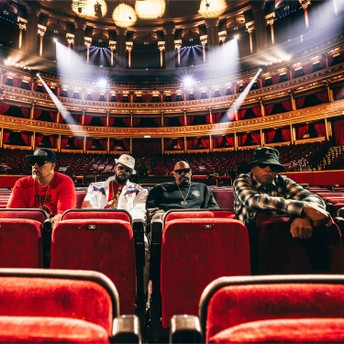
For B-Real, who grew up absorbing Spanish from his parents but primarily communicated in English, rapping in Spanish on "Dios Bendiga" presented a unique challenge. "It’s a constant challenge," he admitted. "I can’t speak for Sen because Spanish was his first language, but in my case I grew up like a lot of Latinos in the U.S., especially in Southern California. Chicanos learn Spanish at home, from our parents. They speak to us in Spanish and we absorb that knowledge. Some people develop the language more, while others mostly understand it without speaking it as much. In school, we weren’t really taught Spanish beyond maybe a basic class. So it’s always going to be a challenge to compete with rappers who are native speakers and have a very advanced command of the language. That pushes us to work much harder."
Sen Dog, whose first language is Spanish, echoed this sentiment, highlighting the precision required when working with native speakers: "I think B-Real explained it perfectly. We grew up speaking Spanish, but at the same time we were also influenced by English through school and our friends. We know the language, of course, but when you’re working with artists from Mexico or South America, you’re dealing with people who have total command of Spanish. When I have to perform in Spanish, I really have to focus. There are words I know perfectly well, but sometimes they slip away from me. That’s why it was incredible to hear these guys doing what they do." This candidness underscores the dedication and linguistic dexterity required for such a project.
A Deep Dive into Cypress Hill’s Evolution and Influence
The release of "Dios Bendiga" is not an isolated event but a culmination of Cypress Hill’s enduring impact and their continuous reinvention. Over their career, they have placed seven songs on the Billboard Hot 100, with "Insane in the Brain" achieving a peak of No. 19 in 1993, becoming one of the decade’s most recognizable anthems. That same year, their seminal album "Black Sunday" debuted at No. 1 on the Billboard 200, solidifying their status as innovators and commercial successes.
Their influence extends beyond chart performance. Cypress Hill played a crucial role in paving the way for Latino artists within the U.S. hip-hop scene. Their unique blend of West Coast sonic aesthetics, psychedelic undertones, and a proudly embraced cultural identity has served as a touchstone for a new generation of artists now spearheading the global expansion of Spanish-language rap.
The group’s commitment to staying fresh and relevant is a key factor in their longevity. B-Real explained their approach to reinvention: "It helps you explore places you might not have reached on your own. As an artist, you have to be willing to keep learning no matter how long you’ve been doing this. When you collaborate with younger artists, they’re going to learn something from you, but you can also learn from them. We’ve always been competitive people. We want to do things the right way, and we’re never going to stop showing our strength. So we adapt, take what we can learn from these artists, and keep moving forward trying to make the best songs possible."
The burgeoning hip-hop scene in Latin America has undoubtedly fueled this ongoing reinvention. Sen Dog observed, "Without a doubt. The hip-hop scene in South America and Mexico has grown tremendously since the days when we released ‘Los Grandes Éxitos’ and started traveling to those countries. Even back then, we could see that people were really connecting with hip-hop, but watching how everything has evolved since then has been impressive. These artists take their craft very seriously, and they show it all the time. Year after year, they’ve kept developing the style, the writing, and the culture of hip-hop, while also giving it its own identity." He further emphasized the richness of the Spanish language and the importance of exploring music beyond national borders, noting, "I think people should pay more attention to the music being made outside their own country and try to understand what the new generations are doing."

Witnessing Hip-Hop’s Global Ascent
Cypress Hill has been a front-row witness to hip-hop’s transformation from a niche genre to a global phenomenon. B-Real reflected on their role in this expansion: "That’s exactly the power of hip-hop. We had the chance to witness its growth from a very early stage. When we started traveling through Mexico, South America, and Europe, we saw how people celebrated the arrival of American artists and absorbed that culture with so much passion that they eventually decided to build their own scenes. I remember that around 1992 and 1993, we started touring Europe and seeing that phenomenon. Over the years, it wasn’t just that people started making rap in their own countries—those regions also began producing their own stars."
From Counterculture Icon to Mainstream Advocate: The Cannabis Narrative
Beyond their musical contributions, Cypress Hill has also been vocal advocates for cannabis legalization, weaving themes of marijuana use into their music from early hits like "Light Another," "Something for the Blunted," and "Stoned Is the Way of the Walk." The shift towards normalization and eventual legalization in many regions represents a profound change for the group. B-Real expressed his satisfaction: "I’m glad to see that everything has become more normalized. People no longer have the same prejudices or labels they used to. Now they understand it much better for what it is. Even people who used to criticize it or speak out against it are now allies and speak in its favor. The amount of information out there has allowed a lot of people to really understand what it is. Normalization is a positive thing because it means you’re not going to have as many problems over it."
He also highlighted the ongoing need for comprehensive legalization: "In some places, it’s even possible to make a living from this industry. But beyond normalization, it still needs to be legalized. There are countries where it already has been legalized, and that’s extraordinary, but there’s still a lot of work to do, both in the United States and in other parts of the world. When I think about where we were 30 years ago and compare that reality to where things are now, it’s honestly pretty incredible."
A New Chapter, Rooted in Identity
"Dios Bendiga" is far more than a retrospective nod to their heritage; it is a bold, forward-looking statement. It signifies Cypress Hill embracing their linguistic and cultural roots with an intensity and authenticity that resonates deeply in today’s globalized music landscape. The album is a testament to their enduring legacy and their continued relevance, demonstrating that their journey is far from over, with new chapters being written in the language that has always been at the heart of their identity. The group is set to present the album live in Buenos Aires on November 8 at Estadio Malvinas Argentinas, a performance that will undoubtedly further solidify their deep connection with South America, a region they have been visiting since 1996. This concert will serve as a powerful celebration of their new Spanish-language work and their lifelong dedication to their Latin heritage.