The digital landscape is currently undergoing its most significant structural transformation since the transition from desktop to mobile browsing. AI agents are no longer a speculative concept or a limited laboratory demonstration; they are actively shipping inside browsers used by billions of people globally. Major technology conglomerates, including Google and Anthropic, have integrated agentic capabilities directly into their software ecosystems, signaling a shift from a web designed for human eyes to a web that must be primarily legible to machines.
The emergence of tools such as Anthropic’s Claude for Chrome, which can navigate complex websites, fill out forms, and execute multi-step operations, represents the first wave of this shift. Simultaneously, Google has introduced Gemini-powered agentic browsing in Chrome, featuring "auto-browse" functions that act on a user’s behalf within a webpage. Open-source initiatives like OpenClaw are further accelerating this trend by connecting large language models (LLMs) directly to browsers, messaging platforms, and system tools, allowing for the autonomous execution of tasks that previously required manual human intervention.
The Structural Crisis of Modern Web Design
Despite the rapid deployment of these technologies, the vast majority of the modern web remains structurally ill-equipped for this transition. According to Slobodan Manic, a prominent voice in technical web performance and the author of a comprehensive series on Agentic AI Optimization (AAIO), the current state of web architecture is fundamentally "broken" for the agentic era. Manic notes that while the initial phase of the AI revolution involved humans going to AI platforms to ask questions, the current phase involves AI meeting humans where they already reside—within the browser and on individual websites.
The core of the problem lies in the fact that websites have spent decades optimizing for human visual consumption and search engine algorithms that prioritize keywords and backlinks. However, AI agents do not "see" a website in the same way a human does. They rely on clean, semantic code and structured data to understand the intent and functionality of a page. When these elements are missing or buried under layers of non-semantic JavaScript, an agent cannot effectively perform tasks like booking a flight, purchasing a product, or summarizing a complex service agreement.
A Chronology of the Shift Toward Agentic Interaction
To understand the urgency of this shift, it is necessary to examine the timeline of AI’s integration into the browsing experience:
- November 2022 – Early 2023: The launch of ChatGPT marks the "Query Era." Users interact with AI primarily through a chat interface to generate text or summarize information.
- Late 2023: Introduction of browser extensions and plugins. AI begins to "read" the active tab, providing summaries but lacking the ability to interact with the site’s interface.
- January 2024: Google is granted a pivotal patent (US12536233B1) that allows the use of AI to dynamically rewrite landing pages if the original content is deemed insufficient for the user’s intent.
- Late 2024: The "Agentic Era" begins. Anthropic and Google release tools that can click buttons, navigate menus, and complete transactions autonomously.
- 2025–2027 (Projected): Industry analysts expect a "Machine-First" standard to take hold. By 2027, it is predicted that a significant percentage of web traffic will be generated by autonomous agents performing tasks rather than humans browsing for leisure.
From Storefront to Warehouse: The New Website Paradigm
The traditional metaphor for a website has long been the "storefront"—a visual experience designed to entice and guide a human customer. Manic argues that in the age of AI agents, this metaphor must evolve. A website must now function as both a storefront and a "warehouse."
In the warehouse model, the primary objective is the efficient retrieval of data and the execution of protocols by machines. This mirrors the evolution of retail in the 1990s; while local bookstores focused on the browsing experience, Amazon built a massive, machine-readable infrastructure that prioritized inventory and logistics. For a modern brand to survive, its website must be as easily "crawlable" and "actionable" for an AI agent as it is "shoppable" for a human.
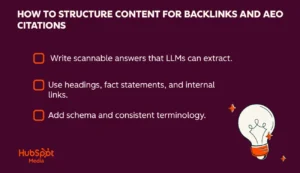
This shift necessitates a "Machine-First Architecture." Under this philosophy, developers do not start with visual designs in tools like Figma. Instead, they begin with Schema.org markup and metadata. By defining the "meaning" of a page through structured data first, developers ensure that AI agents can identify products, prices, availability, and action triggers without ambiguity. The human-centric design is then built on top of this foundational machine-readable layer.
The Protocolization of Commerce and Trust
One of the most radical implications of the agentic web is the transformation of the checkout process. Manic suggests that "checkout is becoming a protocol, not a page." In a future where an AI agent handles a purchase on behalf of a user, the agent may never load the brand’s actual checkout page. Instead, it will interact with the site’s backend via standardized protocols to complete the transaction.
This raises significant questions regarding brand trust and differentiation. If a consumer never sees a company’s carefully designed website, how does that company build brand equity? The answer lies in "upstream engineering"—a concept popularized by technical SEO expert Jono Alderson. Trust must be established across the entire digital ecosystem—on social media, in third-party reviews, and within the LLMs’ training data—long before the user (or their agent) reaches the point of purchase.
The standardization of the web, exemplified by platforms like Shopify where checkout pages are nearly identical across millions of stores, has already prepared the market for this. Consumers have become accustomed to standardized interfaces; the AI agent simply takes this a step further by removing the interface requirement entirely for the end user.
Supporting Data and Market Realities
The push toward agentic browsing is backed by significant market incentives. Google Chrome currently holds approximately 65% of the global browser market share. By integrating Gemini directly into the browser, Google is effectively forcing a new standard for how websites must be built.
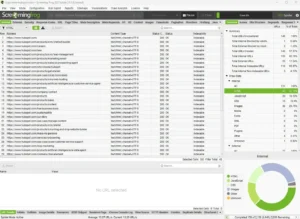
Furthermore, data from various technical SEO audits suggests that nearly 40% of enterprise-level websites suffer from "JavaScript bloat" that prevents basic AI crawlers from accurately rendering content. As agents become more sophisticated, the "consequence gap" between a technically sound website and a poorly constructed one will widen. In the previous era of SEO, a broken technical foundation might result in lower search rankings over several months. In the agentic era, a broken foundation means an AI agent simply cannot complete a transaction, resulting in an immediate and total loss of revenue.
The Trap of "Vibe Coding"
As AI tools become more integrated into the development process, a new trend known as "vibe coding" has emerged. This refers to developers or non-technical users using AI to generate code based on general "vibes" or prompts without understanding the underlying architecture.
Manic warns that vibe coding is a "trap." While AI can produce a functional-looking draft of a website or a script, it often lacks the structural integrity required for long-term stability and machine readability. "You need to know what ‘good’ looks like," Manic asserts. Deep work and foundational knowledge remain the only sustainable "moats" for professionals in the SEO and web development industries. Relying on AI to do the work faster is only beneficial if the person directing the AI understands the fundamental requirements of machine-first architecture.
Broader Impact and Future Implications
The transition to an agent-led web will likely result in a bifurcation of digital experiences. There will remain a "human lane" where people browse for inspiration, entertainment, and complex decision-making. However, a "machine lane" will handle the administrative and transactional burdens of digital life—scheduling, price comparison, and routine purchasing.
For businesses, the implications are clear:
- Technical SEO is No Longer Optional: Foundational elements like Schema markup, site speed, and semantic HTML are now the primary requirements for visibility.
- Brand is Everything: Since agents will summarize and act on information found across the web, a brand’s reputation must be consistent across all platforms, not just its own website.
- Data Integrity is the New Currency: Accurate, machine-readable data will determine whether a product is "seen" by an agent.
The rise of AI agents does not signify the death of the website, but it does signify the end of the website as a standalone destination. The website is now just one node in a vast, interconnected web of data. To survive the next three years, brands must stop building for the eyes of the consumer and start building for the brain of the agent. By prioritizing the machine layer, they inadvertently create a more efficient, accessible, and high-performing experience for humans as well. The era of the "Machine-First" web has arrived, and for those who fail to adapt, the consequences will be both swift and absolute.