TED-Ed Unveils Public Speaking 101 A Comprehensive New Video Series Designed to Empower the Next Generation of Communicators

In an era where digital communication and global connectivity define the professional and social landscape, TED-Ed has officially launched its newest educational initiative, Public Speaking 101. This 11-episode video course is specifically engineered to demystify the art of rhetoric and presentation, providing a structured pathway for young people, educators, and independent learners to master the skills necessary to share transformative ideas. By leveraging the globally recognized "TED-style" talk format, the series aims to bridge the gap between having a significant insight and possessing the technical ability to communicate it effectively to a diverse audience.
The initiative arrives at a critical juncture in global education, as soft skills—specifically communication, empathy, and storytelling—are increasingly cited by employers and academic institutions as essential competencies for the 21st-century workforce. Public Speaking 101 does not merely focus on the mechanics of speech; it delves into the psychology of connection, the architecture of an argument, and the physiological aspects of confidence. As of August 2025, the first six episodes have been released, with the remaining five installments scheduled for rollout by the conclusion of the calendar year.
The Evolution of the TED-Ed Pedagogical Framework
TED-Ed, the youth and education arm of the non-profit TED, has spent over a decade refining its approach to digital learning. Since its inception in 2012, the platform has reached millions of students and teachers through its signature animated shorts and lesson plans. The launch of Public Speaking 101 represents a strategic expansion of this mission, moving from the dissemination of knowledge to the cultivation of expressive capability in the learners themselves.
The curriculum is built on the foundational belief that "ideas change everything." However, the organization acknowledges that the potency of an idea is often limited by the speaker’s ability to articulate it. By providing a free, high-quality roadmap for public speaking, TED-Ed is democratizing access to elite-level communication training that was historically reserved for corporate executives or specialized collegiate debate teams.
A Chronology of Curriculum Deployment
The rollout of Public Speaking 101 follows a logical progression designed to take a learner from the conceptual stage of an idea to the physical execution of a presentation. The timeline for the series release is structured to allow for deep engagement with each topic.
The first phase, released in mid-2025, consists of six foundational modules:
- Identifying the Core Concept: Episode 1 focuses on the criteria for an "idea worth spreading," teaching students how to distinguish between general information and a unique, actionable insight.
- Personal Narrative Integration: Episode 2 encourages learners to mine their own experiences and perspectives, grounding their talks in authenticity.
- Structural Integrity: Episode 3 introduces the "throughline," a conceptual thread that connects every element of a presentation, ensuring clarity and cohesion.
- Strategic Planning: Episode 4 examines various delivery styles—from memorized scripts to bulleted outlines—helping speakers choose the method that best suits their personality and the venue.
- Vocal and Physical Presence: Episode 5 addresses the "how" of speaking, focusing on tone, pace, and body language as tools for conveying confidence and sincerity.
- Audience Connection: Episode 6 explores five specific techniques for building rapport and trust with listeners, ensuring the audience remains receptive to the message.
The second phase of the series, comprising episodes 7 through 11, is slated for release in late 2025. These upcoming installments are expected to cover advanced topics such as visual aids, handling stage fright, and navigating Q&A sessions.
Supporting Data: The Rising Value of Communication Skills
The necessity for a program like Public Speaking 101 is supported by significant labor market data and psychological research. According to the National Association of Colleges and Employers (NACE) Job Outlook 2024 survey, nearly 80% of employers seek evidence of strong communication skills on student resumes, often ranking it higher than technical proficiency in specific software or hardware.
Furthermore, studies on "glossophobia"—the fear of public speaking—suggest that up to 75% of the population experiences some degree of anxiety when speaking in front of a group. By providing a structured, step-by-step guide, TED-Ed’s series aims to reduce this anxiety through preparation and skill acquisition. Data from educational psychology indicates that breaking down complex tasks into smaller, manageable episodes—a method known as "chunking"—significantly improves retention and self-efficacy in learners.
Integration with the TED-Ed Student Talks Program
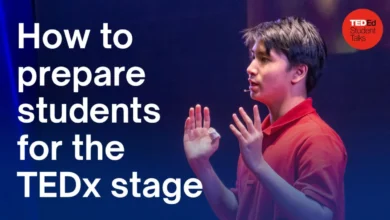
While Public Speaking 101 serves as a standalone resource for independent learners and parents, it is also designed to integrate seamlessly with the existing TED-Ed Student Talks program. This broader ecosystem provides educators with a customizable framework to facilitate public speaking within the classroom.
The Student Talks program offers a suite of free activities that allow teachers to guide students through the same process used by world-class TED speakers. By combining the instructional videos of Public Speaking 101 with the hands-on curriculum of Student Talks, schools can create a comprehensive "idea incubator" environment. This holistic approach addresses a common critique of modern education: that students are often taught what to think, but rarely taught how to formulate and present their own original thoughts to the world.
Inferred Reactions and Industry Impact
While official statements from the global education community are still emerging, the initial reception of the series suggests a high demand for high-production-value instructional content. Educators have noted that the use of excerpts from past TED talks within the episodes provides a "gold standard" for students to emulate. By analyzing successful speakers, students can see the theoretical concepts of the course—such as body language or the throughline—applied in real-world scenarios.
Communications experts suggest that the series could have a long-term impact on the "democratization of influence." In a social media-driven world where "going viral" is often confused with having a meaningful impact, Public Speaking 101 refocuses the conversation on substance and structural clarity. It provides a counter-narrative to the trend of short-form, low-context communication, instead championing the "long-form" idea.
Detailed Analysis of Instructional Methodology
The pedagogical strength of Public Speaking 101 lies in its multifaceted approach to learning. Each episode is not merely a lecture but a package of educational tools. The inclusion of multiple-choice questions allows for immediate assessment of content mastery, while the writing and brainstorming exercises move the student from passive consumption to active creation.
The "throughline" concept, emphasized in Episode 3, is a particularly noteworthy instructional element. In the context of TED, a throughline is the "connecting thread" that ties every part of a talk together. By teaching students to identify this early, the course prevents the common pitfall of "information dumping," where a speaker shares everything they know about a topic without a clear purpose. This focus on "less is more" is a hallmark of effective modern communication.
Furthermore, the focus on "authenticity" in Episode 5 addresses a common misconception among young speakers: that public speaking requires a "performance persona." By encouraging students to speak with meaning and comfort, the course helps them find their natural voice, which research suggests is more persuasive and relatable to audiences than a highly polished but artificial delivery.
Broader Implications for Global Literacy
As TED-Ed continues to roll out the remaining episodes of Public Speaking 101, the broader implications for global literacy become clear. Literacy in the 21st century is no longer confined to reading and writing; it encompasses "oracy"—the ability to express oneself fluently and grammatically in speech.
In many developing educational systems, oral communication is often overlooked in favor of standardized testing in math and science. The availability of a world-class, free-to-access public speaking course allows students in under-resourced areas to develop the same "leadership language" as their peers in elite institutions. This has the potential to level the playing field in international scholarship applications, job interviews, and civic participation.
Conclusion and Future Outlook
The launch of Public Speaking 101 by TED-Ed marks a significant milestone in the organization’s efforts to amplify the voices of the next generation. By providing a clear, evidence-based, and engaging pathway to mastery, the series empowers young people to turn their personal observations into public contributions.
As the world awaits the final five episodes in late 2025, the existing curriculum already provides a robust foundation for anyone looking to improve their communication skills. In a world increasingly cluttered with noise, the ability to deliver a clear, meaningful, and well-structured idea is perhaps the most valuable tool a person can possess. Through this initiative, TED-Ed is ensuring that the "ideas worth spreading" of tomorrow will be delivered with the clarity and passion they deserve. Learners and educators are encouraged to subscribe to the TED-Ed platforms to remain updated as the course nears its full completion, marking a new chapter in digital rhetorical education.
Related posts: