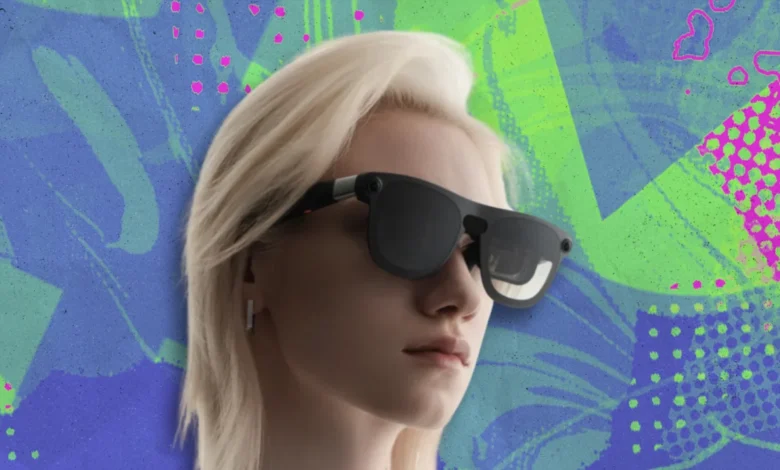
The landscape of consumer technology is undergoing a profound paradigm shift as spatial computing transitions from bulky, isolated headsets to lightweight, everyday eyewear. Spearheading this evolution, augmented reality pioneer Xreal has officially opened preorders for the Xreal Aura—a groundbreaking pair of smart glasses developed in close partnership with Google and powered by the cutting-edge Android XR platform. First teased earlier this year at Google I/O 2026, the device bridges the gap between digital immersion and physical awareness, offering a glimpse into the future of wearable computing.

The Dawn of Android XR in Lightweight Eyewear
The introduction of the Xreal Aura marks a historic milestone as the very first wired smart glasses to operate on Google’s dedicated Android XR operating system. While previous iterations of smart glasses have largely functioned as basic heads-up displays or external monitor extensions for smartphones, the Aura introduces true spatial computing capabilities to a form factor that retains transparent lenses and a sleek, unobtrusive design.
Under the hood, the device is driven by Qualcomm’s advanced Snapdragon Reality Elite Platform, ensuring high-performance processing capable of handling complex graphic rendering, multi-tasking interfaces, and real-time sensor tracking. Unlike self-contained headsets that can feel cumbersome and isolating, the Aura adopts a hybrid approach: the glasses themselves remain remarkably lightweight, while a companion "puck"—a pocket-sized compute module—houses the battery and primary processing hardware necessary to run demanding spatial applications.

According to Xreal co-founder and CEO Chi Xu, the motivation behind the hardware was to deliver uncompromised spatial computing without cutting users off from their immediate physical environments. By integrating transparent lenses, a lightweight profile, and immediate access to the expansive Android software ecosystem, Xreal aims to make augmented reality more approachable and functionally versatile than ever before.
Pricing, Availability, and Launch Timeline
Consumers eager to experience the next generation of wearable technology can now place preorders directly through the official Xreal website. While the standard retail price for the Xreal Aura is set at $1,279, early adopters taking advantage of the initial preorder window can secure the device at a discounted rate of $1,099, resulting in a savings of $180.

Shipments for the initial batch of preorders are scheduled to commence in mid-November, putting the hardware into the hands of developers and tech enthusiasts just ahead of the late-year holiday shopping season. This aggressive rollout positions Xreal ahead of several major competitors in the rapidly heating-up spatial smart glasses market.
Competitive Landscape: The Battle for the Smart Glasses Market
The launch of the Xreal Aura does not occur in a vacuum; rather, it arrives amid an intense race among tech giants to define the post-smartphone era. The spatial computing market has expanded rapidly since the public popularization of devices like the Apple Vision Pro, which demonstrated the immense potential of 360-degree digital canvases but suffered from high weight and prohibitive physical isolation.

Xreal’s new hardware directly challenges alternative offerings from major industry players. Snap recently introduced its proprietary Specs AR glasses, which boast a fully wireless design but come with a steep price tag of $2,195 and a comparatively bulky structural profile. Meanwhile, Meta has continued to tease its own upcoming line of virtual reality and AR glasses, slated for a spring 2027 release with an anticipated retail price of $1,299. By landing at a lower introductory price point during its preorder phase and shipping significantly ahead of Meta’s hardware timeline, Xreal has carved out a distinct strategic advantage for the holiday 2026 season.
Core Features and Immersive Capabilities
The Xreal Aura is engineered to cater to three primary pillars of modern computing: productivity, immersive entertainment, and next-generation mixed-reality experiences. Visual fidelity is driven by dual Sony Micro-OLED displays capable of generating a virtual workspace boasting a 70-degree field of view. The panels support a peak brightness of 1,050 nits, ensuring legibility even in well-lit environments, alongside a smooth 120Hz refresh rate designed to minimize motion blur and reduce user fatigue during extended use.

Interaction with the digital environment extends far beyond traditional touch or button inputs. Equipped with advanced onboard sensors and tracking cameras, the Aura supports intuitive gesture controls and precise voice commands. Furthermore, the integration of Gemini, Google’s advanced artificial intelligence assistant, enables users to seamlessly interact with their surroundings. Gemini can answer contextual questions about the physical environment, summarize visual data, and execute cross-app tasks entirely hands-free.
Transforming Media Consumption and Productivity
The synergy between Android XR and Google’s established software suite unlocks novel ways to interact with digital media. Through Google Photos, users can view traditional 2D images and videos transformed into immersive 3D formats, while panoramic shots expand into full 360-degree spherical memories. Google Maps integration takes spatial navigation to new dimensions, allowing users to explore international destinations in detailed 3D via aerial perspectives or ground-level Street View overlays.

Entertainment enthusiasts are similarly well-catered to, with native support for 360-degree and VR180 video streaming through platforms like YouTube. At launch, the device will support a robust library of more than 150 dedicated XR experiences, with a growing catalog slated for rollout over the subsequent months to continually expand the software ecosystem.
Broader Implications and Industry Impact
The commercial debut of the Xreal Aura signals a maturation phase for augmented reality. For years, the industry has wrestled with a fundamental compromise: manufacturers could either build powerful, immersive headsets that completely block out the real world, or sleek, lightweight glasses with severely limited functionality. By successfully packaging heavy-duty spatial processing, dual Micro-OLED optics, and AI assistance into a tethered eyewear form factor, Xreal and Google have established a viable blueprint for the future of personal computing.

As preorders flow in and the mid-November shipping date approaches, the technology sector will be watching closely to see how consumers respond to Android XR in the wild. If the Xreal Aura proves successful, it could accelerate the broader consumer transition away from flat screens and toward ambient, spatial interfaces—fundamentally altering how humanity interacts with information, media, and the physical world.