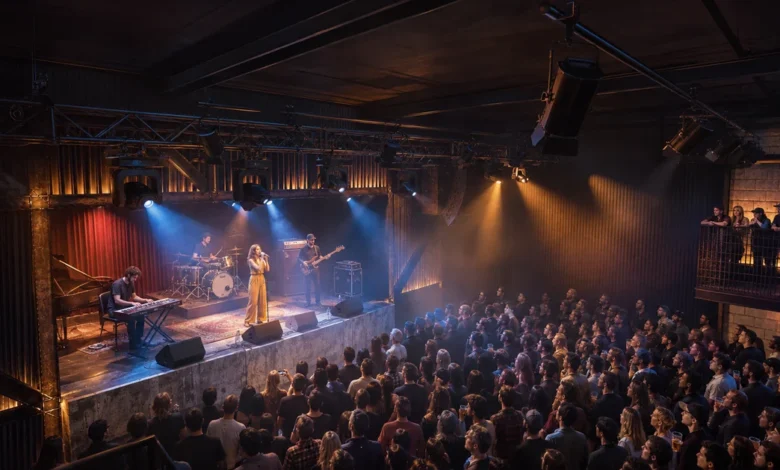
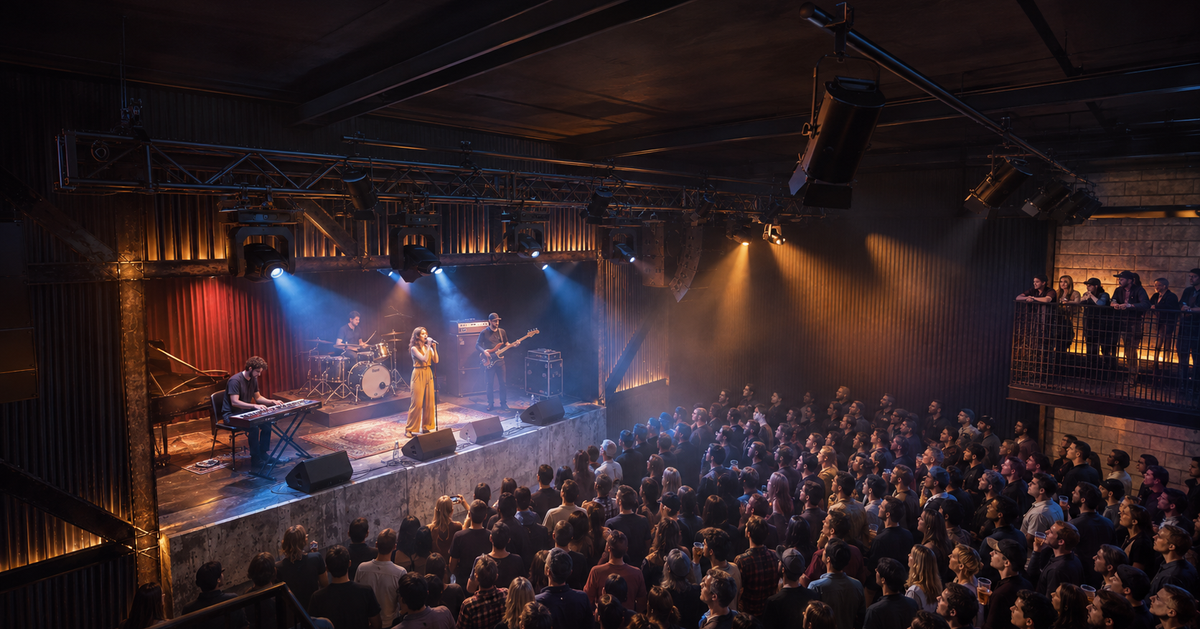
The storied waterfront of Williamsburg, Brooklyn, is set to undergo a significant cultural transformation as the historic Domino Sugar Refinery welcomes a new, 750-capacity music venue simply titled "Domino." Slated to open in April 2026, the project marks a strategic evolution for the former industrial site, shifting from its origins as a sugar-processing plant to a modern nexus of corporate office space, high-end retail, and, now, live entertainment. Managed by TVG Hospitality—the international group founded by Ben Lovett of Mumford & Sons—the venue represents a rare infusion of dedicated cultural infrastructure into a neighborhood that has spent the last decade watching its independent music scene steadily vanish.
The introduction of Domino into the Refinery complex is the latest installment in what urban planners often describe as the "amenity wars" of New York City real estate. Developers, led by Two Trees Management, have sought to differentiate the Domino waterfront development by layering in experiences that cater to a demographic of tech-adjacent workers and affluent residents. Situated adjacent to a new Equinox gym and featuring a prominent entrance on the riverfront, the venue is clearly positioned as a premium cultural anchor for the larger Domino master plan.
A Landscape of Departures: Contextualizing the New Venue
To understand the significance of this opening, one must look at the recent, rapid erosion of Williamsburg’s live music ecosystem. The neighborhood once served as the epicenter of New York’s DIY and indie rock scene, characterized by venues such as Death by Audio, 285 Kent, and Glasslands. These spaces were pillars of the local creative economy, fostering the careers of countless artists before their collective closure by 2015, largely pushed out by rising rents and the relentless pace of rezoning.
The subsequent era brought more stable, yet ultimately transient, institutions. The Knitting Factory, a longtime staple of the Brooklyn scene, shuttered its doors in 2022. The Music Hall of Williamsburg, perhaps the most prominent remaining mid-sized rock club in the area, is scheduled to close in December 2025. With the departure of these venues, the arrival of a new, well-funded space like Domino arrives at a precarious moment. Industry analysts note that operating a live music venue in a neighborhood where real estate prices are among the highest in the borough is a fiscal challenge. As one industry broker famously noted, "live music does not work at 400 bucks a foot," highlighting the tension between the thin margins of the concert industry and the skyrocketing overhead of commercial real estate in North Brooklyn.
The Two Trees Philosophy and Cultural Subsidy
The involvement of Two Trees Management suggests a departure from the "market-only" approach that characterized the demise of previous venues. Led by David and Jed Walentas, the firm has historically employed a strategy of "cultural incubation" to stabilize their developments. By providing space to arts institutions and subsidizing studios—most notably hosting artist Kara Walker’s massive A Subtlety installation within the factory a decade before office tenants moved in—Two Trees has effectively used the arts to build brand equity for their properties.
In the case of the new Domino venue, the developer has attempted to distance itself from the day-to-day programming to maintain a sense of organic credibility. According to the project’s press materials, the venue will operate under the guidance of a "cultural board," a group described as being composed of New Yorkers from diverse industries and backgrounds. This board is intended to ensure that the programming remains varied and culturally relevant, encompassing not just music, but also comedy, film screenings, live podcasts, and fashion events.
Operational Logistics and Constraints
While the venue promises to be a hub for artistic expression, it is operating under specific constraints that reflect its integration into a mixed-use development. The venue has explicitly stated that sound levels in the performance space will be capped at 100 decibels. For context, 100 dB is roughly equivalent to a chainsaw or a loud motorcycle at close range; while sufficient for most amplified concerts, it is a significant limitation for genres that rely on extreme sonic volume, such as hardcore punk or heavy metal. This reflects the reality of building a performance hall in a complex that also houses office suites and residential proximity.
The management by TVG Hospitality provides a level of operational assurance that the venue will be run with high professional standards. TVG has already successfully navigated the intersection of hospitality and live performance with venues like Mitsi in Los Angeles and the Orion Amphitheater in Alabama. By leveraging a hospitality-first approach, the group intends to ensure that the venue remains sustainable through high-end service, diversified revenue streams—such as private event rentals for weddings and corporate gatherings—and a robust schedule of non-musical programming.
The Broader Impact on the North Brooklyn Creative Economy
The implications of the Domino venue for the wider Williamsburg community are twofold. On one hand, it provides a much-needed venue for mid-sized touring acts who have seen their options in the neighborhood shrink to near zero. On the other hand, it represents the "institutionalization" of a scene that was once defined by its raw, chaotic, and unmanaged nature.
Critics argue that the replacement of independent venues with corporate-backed, amenity-driven spaces risks sanitizing the neighborhood’s artistic identity. However, supporters point to the reality of the current economic climate: without the backing of a major developer and a professional hospitality group, it is increasingly difficult to secure the real estate required to host live music in a major city.
The opening of Domino in 2026 will serve as a bellwether for the future of Brooklyn’s nightlife. If it succeeds, it could set a template for how major real estate developments can integrate cultural venues as essential components rather than afterthoughts. If it struggles, it may serve as further evidence that the commercialization of the waterfront has fundamentally outpaced the ability of the creative class to sustain its traditional venues.
Timeline of the Domino Refinery Transformation
- 2014: The iconic Domino Sugar Refinery shuts down, and the site is acquired by Two Trees Management for a massive, multi-phase development project.
- 2014: Kara Walker’s A Subtlety exhibition takes place in the derelict factory, signaling the start of the developer’s use of art to define the site’s prestige.
- 2018: Domino Park opens to the public, marking the first major step in the site’s public-facing revitalization.
- 2023: The landmarked refinery building completes its multi-year conversion into a high-tech office space, officially branded as "The Refinery."
- 2025 (December): The Music Hall of Williamsburg is slated to close, creating a significant void in the local music circuit.
- 2026 (April): "Domino," the new 750-capacity venue, is scheduled to open its doors under the management of TVG Hospitality.
As the date approaches, the eyes of the music industry will be fixed on the Williamsburg waterfront. The success of the venue will not be measured solely by ticket sales, but by its ability to foster a community that feels authentic to the neighborhood’s long history of musical innovation, even as it operates within the walls of a modern, corporate-managed landmark. The transition from the smoke and grit of sugar refining to the calibrated acoustics of a modern music hall is a microcosm of the evolution of the Williamsburg waterfront itself—a testament to the city’s capacity for constant, if often contentious, reinvention.
Related posts: