The British Academy of Film and Television Arts 22nd BAFTA Student Awards Unveils Global Emerging Talent in Los Angeles

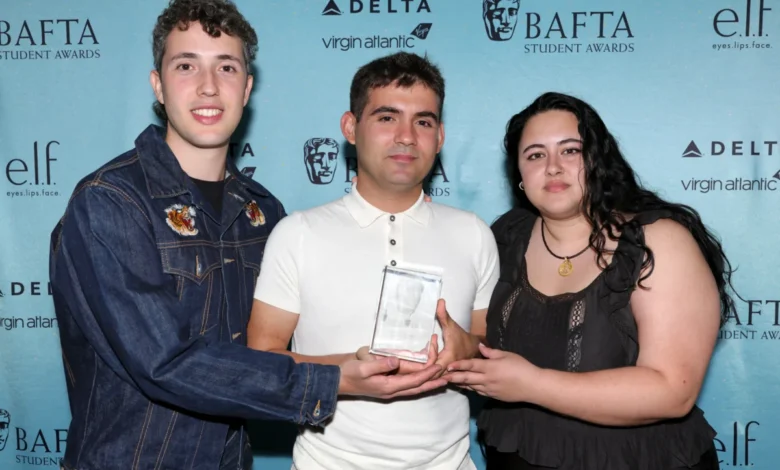
Los Angeles, CA – The British Academy of Film and Television Arts (BAFTA) celebrated a constellation of rising stars on Friday night at its 22nd annual BAFTA Student Awards ceremony, held in the heart of Los Angeles. This prestigious event, a beacon for emerging creative minds, recognized outstanding achievements in film, games, and immersive storytelling from a diverse international cohort. Young filmmakers and creators from Spain, France, China, and the United States emerged victorious, showcasing the global reach and impact of this vital initiative.
The evening, hosted with poise and wit by television personality Elle Osili Wood, was graced by a distinguished lineup of presenters. Esteemed figures from the entertainment industry, including actor and producer Asif Ali, actor and writer Wil Wheaton, immersive artist Gina Kim, and film executives Kathryn Busby and Niels Swinkels, took to the stage to honor the next generation of storytellers. Their presence underscored the significance of the BAFTA Student Awards in nurturing and championing nascent talent.
A Global Showcase of Innovation and Ambition
The BAFTA Student Awards serve as a crucial platform for identifying and celebrating the freshest voices in the arts and technology. Each year, the awards receive an overwhelming volume of submissions, with this year’s competition seeing over 600 entries from universities across the globe. This robust participation highlights the growing international interest in film, gaming, and immersive experiences as significant artistic mediums and career paths for young creatives.
The rigorous selection process involved a discerning jury composed of industry luminaries. This year’s panel included the sharp wit of actor and writer Joel Kim Booster, the acclaimed musicality of composer Laura Karpman, the insightful perspective of documentarian Smriti Mundhra, the comedic brilliance of actor and comedian Nico Santos, and the strategic vision of executive Heather Callow. Their collective expertise ensured that the awarded projects represent the pinnacle of innovation, technical skill, and narrative power.
BAFTA’s Commitment to Future Storytellers
Courtney LaBarge Bell, Executive Director of BAFTA North America, articulated the organization’s profound admiration for the caliber of work submitted. "We continue to be inspired by the originality and ambition of student work from across the globe," Bell stated in a press release. "Each year, these projects raise the bar for storytelling across film, games, and immersive media, and reflect the creative energy driving the future. We’re proud to provide a platform that recognizes this talent and helps support the next stage of their careers."
This statement from BAFTA North America leadership encapsulates the core mission of the Student Awards: to not only recognize excellence but also to actively foster the professional development of these emerging artists. By providing a global stage and connecting them with industry professionals, BAFTA aims to equip these students with the visibility and encouragement necessary to launch successful careers. The awards ceremony itself is a testament to this commitment, bringing together aspiring creators with established figures in a supportive and celebratory environment.
The 2026 BAFTA Student Award Winners: A Glimpse into the Future
The culmination of the evening was the announcement of the winners across several key categories, each representing a distinct facet of the creative landscape. The diversity of the winning countries – Spain, France, China, and the United States – underscores the truly international scope of the awards and the varied cultural influences shaping contemporary storytelling.
The Albert R. "Cubby" Broccoli Special Jury Prize
The most coveted accolade, the Albert R. "Cubby" Broccoli Special Jury Prize, was awarded to Rage, a powerful project from Spain. The film, created by Fran Moreno Blanco and Santi Pujol Amat from the Escola Superior de Cinema i Audiovisuals de Catalunya, was singled out for its exceptional artistic merit and compelling narrative. This prize, named in honor of the legendary producer known for his impactful contributions to cinema, signifies a project that has transcended its student origins to demonstrate exceptional filmmaking prowess and potential. The jury’s decision likely reflects a work that not only exhibits technical mastery but also a profound emotional resonance and a bold artistic vision.
Animation: Presented by Crunchyroll
In the Animation category, presented in partnership with Crunchyroll, the award went to Gauze. This visually stunning project was brought to life by a collaborative team from Gobelins in France, including Noran Fikri Alezabi, Nicholas Arujah, Xinyue Ma, Yulin Yue, and Xiaonan Zhou. The recognition by Crunchyroll, a leading platform for anime and related content, suggests that "Gauze" likely pushes the boundaries of traditional animation techniques, perhaps exploring innovative visual styles, compelling character design, or sophisticated storytelling that resonates with a global audience. Gobelins is renowned for its animation program, further validating the high standard of this winning entry.
Documentary: Presented by ESPN Bold
The Documentary award, presented by ESPN Bold, celebrated Strangers on Our Land. This insightful film from the University of California, Berkeley, was created by Zane Karram and Kelsey Oliver. The collaboration with ESPN Bold, a brand often associated with compelling sports and human-interest narratives, hints that "Strangers on Our Land" might delve into themes of identity, belonging, or social commentary through a documentary lens. The University of California, Berkeley, has a strong reputation for its journalism and film programs, making this a significant achievement for the students and the institution.
Live Action
The Live Action category recognized the talent behind Whispers of the Waves. This film, a product of the Beijing Film Academy and the vision of Patricia Xu, hails from China. The Beijing Film Academy is one of the most prestigious film schools in Asia, and a win in this category from its student body is a testament to the rigorous training and creative environment fostered there. "Whispers of the Waves" likely demonstrates a sophisticated understanding of cinematic language, character development, and visual storytelling within the live-action medium.
Games
In the rapidly evolving field of interactive entertainment, the Games award was presented to Candellum. This innovative project from Isart Digital, France, was developed by Eva Martinello and Mattéo Gomez. The recognition of "Candellum" signifies its potential to innovate within game design, narrative structure, or player experience. Isart Digital is a specialized institution for game development and digital arts, indicating that the winning game likely showcases exceptional creativity, technical execution, and a unique approach to interactive storytelling.
Background and Chronology of the BAFTA Student Awards
The BAFTA Student Awards have a rich history, evolving from BAFTA’s broader commitment to supporting emerging talent in the UK to a global initiative. The first iteration of the awards can be traced back to the late 20th century, with a focus initially on film. Over the decades, as the media landscape has transformed, BAFTA has strategically expanded the scope of the awards to encompass interactive and immersive storytelling, reflecting the changing nature of creative industries.
The establishment of BAFTA North America played a pivotal role in the international expansion and prominence of the Student Awards. By hosting the ceremony in Los Angeles, the global epicenter of the film and television industry, BAFTA significantly amplifies the reach and impact for the winning students. This strategic decision not only provides a prestigious platform but also facilitates invaluable networking opportunities with industry professionals who attend the event.
The selection process itself is a multi-stage operation. Universities worldwide are invited to submit their best student productions. These submissions are then reviewed by industry professionals and BAFTA members who form initial shortlists. A final jury, comprised of prominent figures from various sectors of the industry, then deliberates to select the winners in each category. This thorough and competitive process ensures that the awards recognize truly exceptional work. The expansion to include games and immersive storytelling in recent years reflects BAFTA’s forward-thinking approach and its dedication to supporting all forms of contemporary creative expression.
Supporting Data and Industry Trends
The success of the BAFTA Student Awards is further contextualized by broader industry trends. The global market for film and television content continues to expand, with a growing demand for diverse narratives and innovative storytelling approaches. Similarly, the video games industry is experiencing unprecedented growth, becoming a dominant force in entertainment, with a projected market value reaching hundreds of billions of dollars annually. Immersive technologies, including virtual and augmented reality, are also rapidly maturing, presenting new frontiers for creative exploration.
The fact that winners hail from Spain, France, China, and the United States demonstrates a global diffusion of creative talent and accessible high-quality film education. This decentralization of creative hubs challenges the traditional dominance of a few key regions, suggesting that groundbreaking work can emerge from anywhere. The BAFTA Student Awards play a crucial role in highlighting these emerging centers of creativity. For instance, the continued success of French animation schools like Gobelins and Spanish film institutions like ESCAC underscores their ongoing influence and the quality of their graduates. Similarly, the recognition of a project from the Beijing Film Academy signifies China’s growing prowess in cinematic arts.
Analysis of Implications and Future Prospects
The recognition gained through the BAFTA Student Awards offers significant advantages for the winning students. Beyond the prestige of the award itself, it provides invaluable exposure to a global audience of industry professionals, including producers, directors, studio executives, and talent agents. This exposure can translate into tangible career opportunities, such as internships, development deals, or direct entry into the professional workforce.
Furthermore, the awards foster a sense of community among emerging filmmakers. The networking opportunities at the ceremony, and the broader BAFTA network, can lead to collaborations and mentorships that are critical for navigating the early stages of a creative career. The validation of their work by a respected international body like BAFTA can also provide a crucial boost to the confidence and artistic drive of these young creators.
The inclusion of games and immersive storytelling in the awards is a strategic move that aligns BAFTA with the future trajectory of the entertainment industry. As these mediums become increasingly sophisticated and integrated into mainstream culture, the talent nurtured through these categories will be essential for driving innovation and defining the next generation of entertainment experiences. The success of projects like "Candellum" signals the growing importance of interactive narratives and the potential for students to lead the charge in this dynamic field.
Official Responses and Industry Reactions
While specific individual reactions from the presenters or jury members were not detailed in the initial report, the presence and engagement of such prominent figures at the ceremony speak volumes. Their willingness to lend their time and credibility to the event underscores a shared industry commitment to supporting new talent. Industry executives like Kathryn Busby and Niels Swinkels attending the event likely signals their keen interest in scouting potential future collaborators and identifying emerging trends and talent pools.
The ongoing partnership with organizations like Crunchyroll and ESPN Bold further solidifies the awards’ relevance and reach. These collaborations allow BAFTA to tap into specialized audiences and leverage the expertise of established brands within specific media sectors, thereby enhancing the impact and visibility of the student work. The selection of these partners indicates a strategic approach to ensuring that the awards resonate with both traditional and emerging entertainment platforms.
The BAFTA Student Awards continue to be a vital barometer of global creative potential. By consistently identifying and celebrating the most promising young talent across diverse disciplines, BAFTA not only honors individual achievements but also actively shapes the future landscape of film, games, and immersive storytelling, ensuring a vibrant and innovative pipeline of creators for years to come.