U.S. Passport Maintains 10th Place in Henley Passport Index Amid Shifting Global Mobility Power

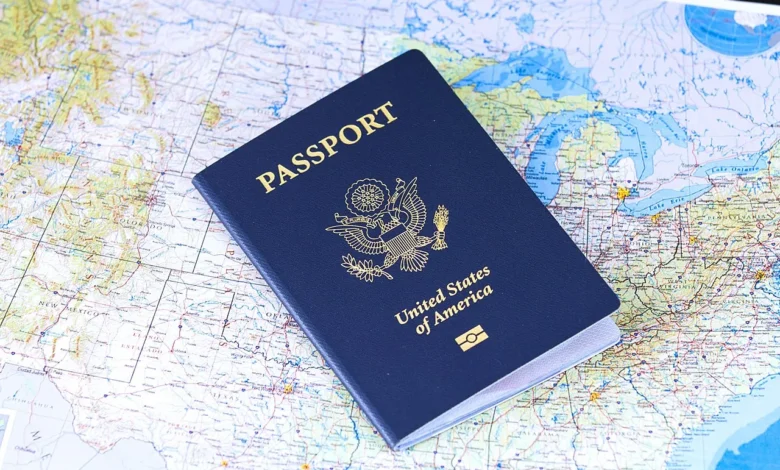
The United States passport has solidified its position at 10th place in the latest iteration of the Henley Passport Index, a widely recognized global ranking that assesses the travel freedom afforded to passport holders based on the number of destinations accessible without a visa. This latest assessment reveals a complex and evolving landscape of international mobility, with the U.S. passport offering visa-free or visa-on-arrival access to 180 destinations, a marginal increase of one destination since the January rankings. While this represents a slight improvement in the number of accessible locations, the U.S. passport continues to trail behind a significant number of other nations, as multiple countries often share a single rank in the index.
This ranking is particularly noteworthy given the U.S. passport’s recent history. Last October, the United States experienced an unprecedented fall to 12th place, marking its lowest position in the index’s 20-year history. This dip, while now partially recovered to the 10th spot, underscores a broader trend identified by Henley & Partners, the global citizenship and residency advisory firm behind the index. The firm describes the U.S.’s current standing as indicative of "a longer-term shift in mobility power away from the traditional transatlantic leaders."
A Shifting Global Order in Travel Freedom
The Henley Passport Index, released quarterly, is a crucial barometer for understanding the relative diplomatic influence and international relations of nations. Its methodology meticulously charts the visa policies of nearly all countries and territories worldwide, assigning a score based on the number of destinations where passport holders can enter without requiring a prior visa. The index is not merely an academic exercise; it holds significant implications for global business, tourism, and individual opportunity.
The observation that mobility power is shifting away from traditional leaders, such as the United States and the United Kingdom, is a recurring theme in recent Henley Passport Index reports. Over the past two decades, the United Kingdom’s passport, once a consistent top contender, has seen its standing decline from third place to sixth. This gradual erosion of dominance for established global powers highlights the increasing influence of emerging economies and nations that have strategically cultivated stronger diplomatic ties and reciprocal visa agreements.
Understanding the Henley Passport Index Methodology
The Henley Passport Index is based on exclusive data from the International Air Transport Association (IATA), the world’s largest and most authoritative database of travel information. The index is updated throughout the year as visa policies change, ensuring its relevance and accuracy. The rankings are determined by the number of destinations a passport holder can access visa-free. This includes destinations where a visa is not required, as well as those where a visa can be obtained upon arrival, a visitor’s permit, or through electronic travel authorization (eTA).
The complexity of the ranking system means that a single numerical position can encompass multiple countries. For instance, if several countries offer visa-free access to the same number of destinations, they will share the same rank. This is why the U.S. passport, despite being at 10th place, is noted to "trail 36 countries," reflecting the cumulative number of nations that have achieved higher rankings or are positioned at the same level with a greater number of visa-free destinations.
The Economic and Social Significance of Visa-Free Travel
The implications of visa-free travel extend far beyond mere convenience. As Henley & Partners articulates, "The ability to travel visa-free to a wide array of destinations is no longer merely a convenience – it’s a powerful economic tool that can drive growth, foster international cooperation, and attract foreign investment." This statement underscores the multifaceted benefits of unrestricted mobility.
Economically, visa-free access facilitates international business. It allows for spontaneous meetings, quicker deal closures, and easier participation in global trade fairs and conferences. For the tourism sector, it significantly boosts visitor numbers, leading to increased revenue for hotels, restaurants, airlines, and other related industries. Countries that offer greater visa-free access to their citizens often find themselves more attractive to foreign tourists and business travelers, creating a positive feedback loop for their economies.
On a social and cultural level, visa-free travel promotes greater understanding and exchange between peoples. It enables individuals to explore new cultures, pursue educational opportunities abroad, and reconnect with family and friends across borders with greater ease. This fosters a more interconnected and tolerant global community.
A Chronology of U.S. Passport Rankings
To fully appreciate the current standing of the U.S. passport, a brief look at its historical trajectory within the Henley Passport Index is instructive. For many years, the U.S. passport consistently ranked among the top five, reflecting its status as a global superpower with extensive diplomatic relations.
- Early Years (Pre-2020s): The U.S. passport frequently occupied a top-tier position, often within the top three, signifying robust international partnerships and widespread visa waiver agreements.
- Mid-2020s: Subtle shifts began to emerge as other nations, particularly in Asia, started to forge stronger regional alliances and expand their visa-free access.
- October 2023: The U.S. passport experienced a significant drop to 12th place, a moment that triggered considerable discussion about the changing dynamics of global mobility and the effectiveness of U.S. foreign policy in maintaining travel privileges. This marked the first time the U.S. had fallen so low in the index’s two-decade history.
- January 2024: The U.S. passport recovered slightly, moving to 10th place, a position it has maintained in the latest rankings.
This chronology highlights that while the U.S. passport has regained some ground, its prolonged presence outside the top echelon signals a persistent trend of evolving global dynamics rather than a temporary anomaly.
Global Leaders in Travel Freedom
The top ranks of the Henley Passport Index are currently dominated by nations in Asia and Europe. Countries like Japan, Singapore, South Korea, and various European Union member states frequently vie for the top positions. For instance, in recent iterations of the index, passports from countries such as Japan and Singapore have offered visa-free access to over 190 destinations, placing them significantly ahead of the U.S. in terms of travel freedom.
The success of these nations can be attributed to several factors:
- Strategic Diplomatic Engagements: Proactive efforts to establish and strengthen bilateral visa waiver agreements.
- Regional Integration: The European Union, for example, allows its member states to benefit from the Schengen Area agreement, granting its citizens extensive visa-free travel within the zone.
- Economic Partnerships: Strong trade and economic ties often translate into reciprocal visa facilitation agreements.
- Focus on Reciprocity: Many nations prioritize ensuring their citizens can travel as freely as they grant access to others.
Supporting Data and Analysis
The Henley Passport Index’s data provides a quantitative measure of global interconnectedness. The number of visa-free destinations directly correlates with a nation’s diplomatic reach and its ability to foster open channels for its citizens to engage with the rest of the world.
- U.S. Passport: Visa-free access to 180 destinations. This places it in a strong position globally but behind the leading nations.
- Leading Nations (e.g., Japan, Singapore): Typically offer visa-free access to over 190 destinations.
- United Kingdom: Now ranks 6th, a significant decline from its historical position.
- Broader Trend: The index consistently shows a rise in the travel freedom offered by Asian and some Eastern European nations, while traditional Western powers, while still strong, are experiencing relative declines.
The analysis from Henley & Partners suggests that the U.S.’s current position is not necessarily a reflection of declining international relations per se, but rather a consequence of other nations rapidly expanding their visa-free networks. The U.S. has robust diplomatic ties, but the pace of expansion in visa-free access has been outstripped by other global players.
Potential Reactions and Implications
While the article does not quote specific reactions from U.S. officials or the public, the implications of this ranking are clear and are likely to be a subject of discussion within foreign policy and economic circles.
- Governmental Review: Such rankings often prompt governmental bodies responsible for foreign affairs and immigration to review their visa policies and diplomatic strategies. The U.S. Department of State, for instance, is continuously involved in negotiating visa agreements with other countries.
- Economic Competitiveness: Businesses and industry leaders who rely on international travel may express concerns about any perceived disadvantages faced by U.S. citizens in conducting global business.
- Individual Travelers: U.S. citizens planning international travel may need to be more mindful of visa requirements compared to holders of passports from higher-ranked countries.
- Geopolitical Signaling: The Henley Passport Index can be seen as a subtle indicator of a nation’s diplomatic standing and its ability to project influence through soft power. A declining rank might be interpreted as a signal of shifting global influence.
The assertion that visa-free travel is a "powerful economic tool" suggests that countries striving for greater global economic integration and influence may prioritize expanding their visa-free access networks. The U.S., as a major global economic power, has a vested interest in ensuring its citizens and businesses can operate with maximum fluidity on the international stage. The current ranking indicates that while the U.S. passport remains a highly valuable travel document, there is room for strategic diplomatic engagement to further enhance its global mobility score.
Conclusion: A Dynamic Global Landscape
The U.S. passport’s steady hold at 10th place in the latest Henley Passport Index is a snapshot in time within a continuously evolving global landscape of international mobility. While the U.S. passport offers substantial travel freedom, the index’s findings underscore a significant trend: a redistribution of mobility power away from traditional Western leaders. The increasing prominence of Asian and other emerging economies in the upper echelons of the ranking highlights the dynamic nature of international relations and the strategic importance of visa facilitation in fostering economic growth, cultural exchange, and global interconnectedness. As nations continue to forge new partnerships and adapt their foreign policies, the Henley Passport Index will remain a critical indicator of global travel freedom and the shifting dynamics of international influence.