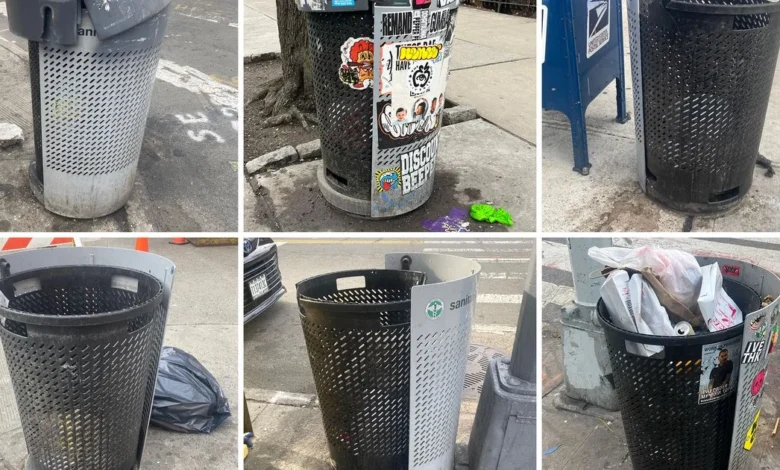
The Better Bin was born out of a 2018 design competition aimed at modernizing a sanitation infrastructure that had remained largely unchanged for decades. For nearly a century, the city relied on heavy, open-top wire-mesh baskets—a design that, while rugged and inexpensive, was criticized for allowing "trash juice" to leak onto sidewalks and providing easy access for the city’s resilient rat population. The new design, manufactured by Roy Metal Products in Ontario, Canada, was intended to fix these flaws through a modular, multi-part construction. Yet, reports from across the five boroughs suggest that the very complexity of the Better Bin’s design may be its greatest weakness.
A Comparative Analysis: Design and Functionality
To understand the current failure points, one must look at the fundamental shift in engineering between the legacy mesh bins and the Better Bin. The traditional wire-mesh basket is a "unibody" construction—stoutly welded steel that, while prone to rusting over many years, possesses very few failure points. Its primary drawback was the physical toll it took on sanitation workers, who had to lift the entire heavy steel frame to empty it into the truck.
In contrast, the Better Bin is a sophisticated assembly of several components:
- The Concrete Base: A heavy, stationary foundation designed to prevent the bins from being moved, tipped over, or repurposed by residents to "save" parking spaces.
- The Plastic Liner: A lightweight internal container that sanitation workers can easily pull out, significantly reducing the risk of back injuries.
- The Steel Collar and Flip-Top Lid: A two-part upper mechanism designed to contain odors and prevent the illegal dumping of large household garbage bags.
While the Better Bin excels in ergonomics and rat mitigation—the solid plastic liner prevents leaks and blocks entry points for rodents—the "flip-top" mechanism has emerged as a primary point of failure. Unlike the old bins, which had no moving parts, the Better Bin relies on hinges, plastic brackets, and rubber bumpers.
Chronology of the Better Bin Rollout
The transition to the new bins has been a multi-year endeavor, integrated into the broader "trash revolution" championed by the current mayoral administration.
- 2018–2019: The Department of Sanitation, in partnership with the Van Alen Institute and the Industrial Designers Society of America, holds the "Better Bin" competition. The winning design is selected for its modularity and worker-friendly features.
- 2020–2021: Prototype testing occurs in select neighborhoods. Initial feedback leads to minor adjustments in the locking mechanisms.
- Late 2021: The first mass-produced units begin appearing on Manhattan street corners.
- 2023–2024: The rollout accelerates. By early 2024, approximately one-quarter of the city’s 23,000 litter baskets are Better Bins.
- 2025–2026: Residents and journalists begin documenting a surge in broken units, particularly those with missing or detached lids.
Observations from the Field: The "Headless" Bins of New York
An informal survey of various neighborhoods reveals a recurring pattern of mechanical failure. On the Bowery at East 3rd Street, a Better Bin stands with its flip lid entirely missing, leaving the plastic liner exposed. A similar scene plays out on Seventh Avenue near 30th Street, where a unit installed less than two years ago has been "beheaded."
In Jackson Heights, Queens, the problem appears even more concentrated. Along a six-block stretch of 37th Avenue, at least four bins were spotted with broken hinges or missing tops. In the East Village, specifically on Avenue C and Avenue B, several units have lost the flip-up section of their lids, while others show signs of the hinge losing its grip, teetering on the edge of total detachment.
These failures are not merely aesthetic. When the lid of a Better Bin breaks, it negates several of the design’s primary benefits. Without the lid, the bin is no longer rat-proof, and the aperture is large enough to once again accommodate the bulky household trash bags that the DSNY has spent years trying to keep out of public litter baskets.
The Economic Implications: $1,000 vs. $175
The financial disparity between the old and new bins has become a focal point of the debate over their durability. The legacy wire-mesh bins are manufactured by Corcraft, the brand name for the New York State Department of Corrections and Community Supervision’s Division of Industries. Produced using convict labor, these bins retail for approximately $175 each.
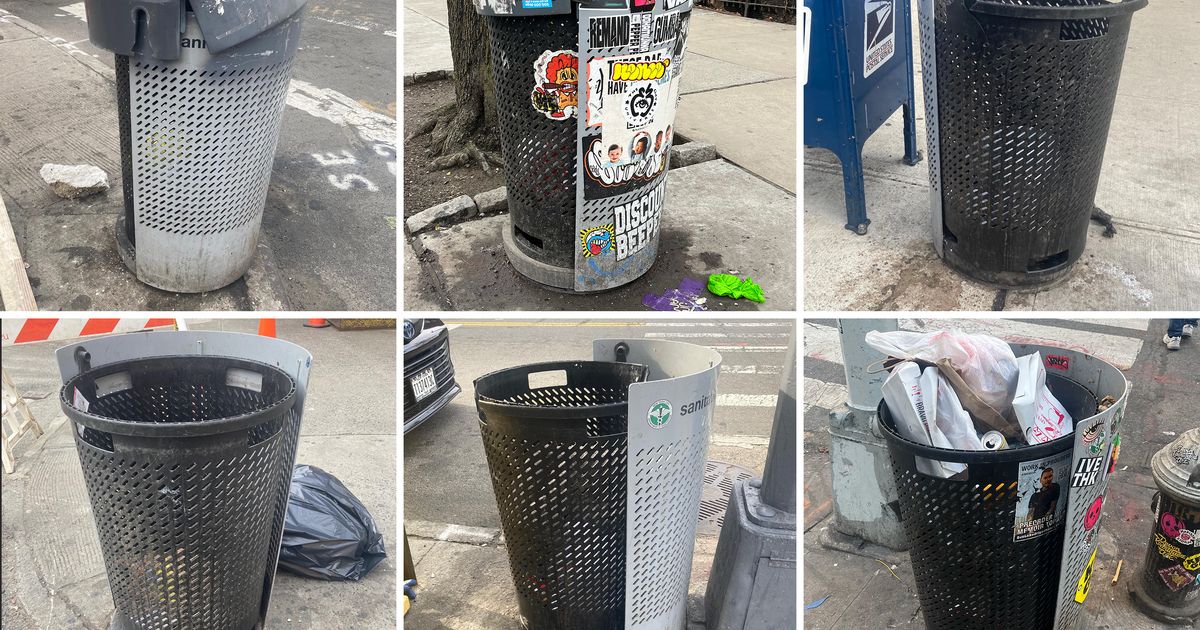
The Better Bin, by comparison, is a premium product. As of 2023, each unit costs the city roughly $1,000. Critics argue that for a 470 percent increase in price, the public should expect a product that can withstand the rigors of New York City street life for more than two years. However, the DSNY maintains that the higher upfront cost is offset by long-term savings in worker compensation claims—due to the lighter liners—and the intangible benefits of cleaner, more rodent-free streets.
Official Response and the "Gen 2" Solution
Joshua Goodman, a representative for the Department of Sanitation, has defended the Better Bin, characterizing the breakage as a manageable aspect of a modular system. "That’s part of the point of the modular design," Goodman stated. "Parts can be replaced instead of the whole thing."
According to the DSNY, repairs are triggered by reports from collection crews who empty the bins daily or by citizens filing reports via the 311 system. Goodman argues that the public must decide what kind of infrastructure it values: a "go-kart" (the old mesh bin) that is simple but messy, or a "Porsche" (the Better Bin) that is high-performing but requires more maintenance. "Is it doing a better job of keeping the trash out of sight, out of nose, in addition to making them easier for sanitation workers to service? You have to think: What do you want?" he added.
Crucially, the DSNY acknowledges that the earliest versions of the Better Bin—the "first gen" prototypes—had durability issues. The bins currently failing on Avenue B and other locations were among the first installed. Goodman noted that the design has since been upgraded several times. The "Gen 2" bins feature:
- Upgraded plastic brackets.
- Reinforced rubber bumpers.
- An increased number of bolts securing the hinge mechanism.
The department plans to phase out the original models as they break, replacing them with the more robust current version.
Logistical Hurdles and Geopolitical Factors
The speed of repairs has also been hampered by unexpected international factors. Because the Better Bins are manufactured in Canada, the procurement of replacement parts is subject to the fluctuations of cross-border trade policy. Goodman noted that recent delays in repairing broken lids can be attributed to "a tariff issue," suggesting that national trade tensions have reached all the way down to the hinges of New York City’s trash cans. This reliance on a foreign supply chain for essential street furniture marks a significant shift from the city’s previous reliance on locally-produced, albeit prison-made, steel baskets.
Broader Impact and Implications for Urban Policy
The struggle with the Better Bin reflects a larger tension in modern urban management: the trade-off between "smart" or "optimized" design and the sheer physical brutality of a city with 8.5 million residents. As New York moves toward the full containerization of waste—an initiative aimed at removing all trash bags from the sidewalks—the reliability of its receptacles is paramount.
If the Better Bin continues to show a high rate of failure, it may force a reckoning regarding the city’s procurement strategies. While the "Porsche" of trash cans offers undeniable benefits in terms of hygiene and worker safety, the "go-kart" durability of the old wire bins provided a level of reliability that is difficult to replicate with complex moving parts.
For now, the DSNY remains committed to the Better Bin, banking on the "Gen 2" reinforcements to solve the fragility problem. As the city continues its "war on rats," the sight of a broken, lidless $1,000 trash can serves as a reminder that in the environment of New York City, even the most sophisticated designs must eventually answer to the wear and tear of the street. Whether the Better Bin becomes a permanent success or an expensive lesson in over-engineering will likely depend on how quickly the "Gen 1" units are retired and how well their reinforced successors hold up under the weight of the city’s garbage.