Brand protection in the contemporary digital landscape has evolved far beyond simple trademark monitoring and standard search engine optimization. Today, it encompasses the proactive identification and mitigation of risks where a personal brand, corporate entity, or product is misrepresented, confused with unauthorized alternatives, impersonated, or exploited to intercept traffic. As search engines integrate generative AI, the challenge has shifted from merely ranking well to ensuring that both human users and AI-driven algorithmic systems can accurately identify legitimate brand assets and distinguish official channels from malicious or unauthorized intermediaries.
Distinguishing Reputation Management from Brand Protection
While frequently conflated with online reputation management (ORM), brand protection occupies a distinct strategic niche. ORM is primarily concerned with the subjective perception and sentiment surrounding a brand—how the public feels about a company’s actions or products. Conversely, brand protection is a structural and technical discipline. It focuses on the mechanics of discoverability: ensuring that the "real" brand is the primary point of contact and that official information is verifiable. In an era where large language models (LLMs) synthesize information from across the web, the primary goal of brand protection is to prevent the "hallucination" of false identities or the injection of fraudulent data into the authoritative knowledge bases that power AI responses.
The Rise of Infrastructure-Level Threats: Slopsquatting
The threat landscape has expanded significantly with the advent of AI-assisted development tools. A primary concern for SaaS providers is "slopsquatting"—a form of cyber-squatting where malicious software packages are registered using names that AI coding assistants are statistically likely to hallucinate or suggest to developers.

A documented case involved the legitimate npm package "eslint-plugin-unused-imports." Attackers registered the package name "unused-imports" as a malicious entity, capitalizing on the tendency of LLMs to generate truncated or imprecise commands. In another incident, an LLM invented a package name by combining two disparate, legitimate tools. This hallucinated command was subsequently propagated across 237 GitHub repositories containing AI-generated agent skills. While this specific instance did not result in a widespread breach, it highlighted a critical vulnerability: product names are now being intercepted within the very infrastructure that developers and autonomous AI agents trust.
Establishing the Framework for Brand Sovereignty
To defend a brand effectively, organizations must first codify their digital footprint. This requires a centralized "knowledge graph" or comprehensive registry of brand-associated assets. For corporations, this includes legal names, historical aliases, official domain registries, mobile application IDs, social media handles, and the identities of key executives. For personal brands, this extends to professional name variants, past roles, and official verified profiles.
Each data point within this registry must be backed by "provenance"—a record of where the information originated and when it was last verified. By maintaining this structured data, organizations create a "source of truth" that simplifies the identification of anomalies during routine audits.
Auditing Across Global Search Surfaces
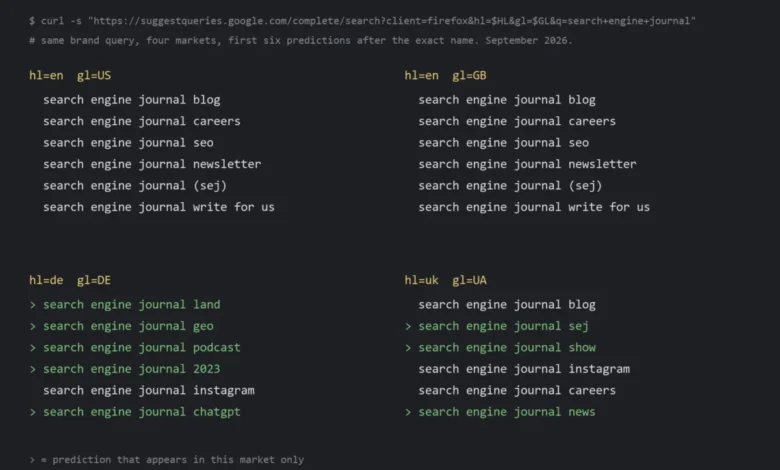
Effective brand protection requires a granular approach to auditing, as search results are rarely uniform. A brand’s search presence fluctuates based on the user’s location, language, and device. A single audit is insufficient; instead, organizations must conduct distinct audits for each country-language pair in which they operate.

The audit process must be performed from "clean," logged-out environments. Relying on an internal, logged-in browser risks skewed results due to personalization algorithms. Furthermore, the reliance on desktop audits is increasingly obsolete; for the vast majority of consumer-facing brands, the majority of branded traffic originates on mobile devices, where layout and result priority differ significantly.
Auditors should utilize a broad query set that includes:
- Identity Queries: "Who owns [Brand]?" or "What is [Brand]?"
- Support Queries: "[Brand] contact" or "[Brand] login."
- Trust Queries: "[Brand] reviews," "is [Brand] safe," or "[Brand] complaints."
- Comparison Queries: "[Brand] alternatives" or "[Brand] vs [Competitor]."
Beyond traditional search engines like Google and Bing, auditors must monitor specialized platforms such as YouTube, LinkedIn, and regional search engines. Autocomplete predictions are particularly critical, as they frame user intent before a search is even completed. Manipulation of autocomplete—a black-hat tactic—can steer potential customers toward competitors or phishing sites.
AI System Audits and Retrieval Failures
The integration of AI into search (e.g., Google AI Overviews, ChatGPT, Perplexity, and Brave Ask) requires a specialized testing protocol. AI systems function differently than standard search engines; they synthesize content rather than simply listing links.

Organizations must conduct "direct" and "decision" prompt testing. Direct prompts ask for factual information about the brand, while decision prompts ask the AI to recommend whether to use the brand or compare it to others. These tests must be run in fresh sessions with "memory" features disabled to ensure results are not being biased by previous interactions.
Crucially, organizations must monitor for "retrieval failures." In a notable 2026 evaluation of six leading chatbots, over 70% of factual inaccuracies were attributed to the AI’s inability to retrieve the correct information from the web, rather than a failure of the model’s reasoning. If an AI cannot crawl or parse an organization’s official site—perhaps due to overly restrictive robots.txt files or technical errors—it may default to outdated or third-party sources that present incorrect contact information.
A Tiered Defense Strategy
When brand misuse or inaccuracy is identified, the response must be calibrated to the severity of the issue:
- Correction: For outdated directory entries or incorrect associations, submit corrections to the platform with primary source evidence.
- Containment: If a fake support page or malicious domain is active, prioritize containment. Issue clear, public statements on official channels identifying the legitimate domains, apps, and support contact methods.
- Reporting: For malicious assets, such as phishing sites or unauthorized impersonations, file formal reports with domain registrars, hosting providers, and relevant regulatory bodies.
- Legal Recourse: In instances of trademark infringement or bad-faith domain registration, pursue legal mechanisms like the Uniform Domain-Name Dispute-Resolution Policy (UDRP) or formal copyright removal requests under the Digital Millennium Copyright Act (DMCA).
The Role of Proactive Monitoring and Alerts
Passive auditing is insufficient for a modern enterprise. Organizations must implement automated alert systems to monitor for new domain registrations, SSL certificate issuance, and unauthorized use of brand terms in advertising. Tools like the Google Ads Transparency Center allow brands to see every advertisement currently being run by a competitor, providing an early warning system for trademark bidding strategies.

Furthermore, monitoring Certificate Transparency (CT) logs—which record all issued TLS certificates—can alert a brand to the creation of "lookalike" domains used for phishing. By integrating these alerts with internal support desk data, companies can often identify the existence of a fraudulent site before it gains significant traction, as customers will frequently report confusion to the company’s official support channels first.
Structural Integrity as the Ultimate Defense
Ultimately, the most effective brand protection is structural. By claiming all relevant domains, social handles, and namespaces across various registries, brands reduce the "attack surface" available to bad actors. Maintaining a clear, consolidated "official presence" page—where all authorized channels are listed—acts as a point of reference for both customers and AI crawlers.
The digital landscape is inherently adversarial. As AI systems become more autonomous, the gap between a brand’s reality and its digital representation will continue to be a primary vector for exploitation. Organizations that treat brand protection as a continuous, technical, and data-driven process will be better positioned to preserve their integrity, maintain customer trust, and navigate the complexities of the evolving search ecosystem.
Related posts: