The Evolution of Digital Authority: How Backlinks and Answer Engine Optimization are Redefining the Search Landscape in 2025

The digital marketing landscape is currently undergoing its most significant transformation since the advent of the mobile-first index, as roughly 58% of consumers now utilize artificial intelligence (AI) answer engines for product research on a weekly basis. This rapid shift in consumer behavior has forced a reevaluation of traditional Search Engine Optimization (SEO) strategies, leading to the rise of Answer Engine Optimization (AEO). As platforms like ChatGPT, Perplexity, and Google’s AI Overviews become the primary interfaces for information discovery, the relationship between backlinks—the long-standing currency of the web—and digital authority is being fundamentally rewritten. While backlinks remain a foundational element of visibility, the emerging consensus among industry analysts is that the "authority playbook" now requires a sophisticated blend of semantic relevance, entity clarity, and unlinked brand mentions.
The Strategic Shift from Ranking to Answering
For over two decades, the primary objective of SEO was to secure a high-ranking position on a Search Engine Results Page (SERP) to drive organic traffic. However, the objective of AEO is fundamentally different: the goal is to become the trusted source that an AI system extracts, paraphrases, and cites when responding to a user’s query. This transition represents a shift from a "click-based" economy to a "citation-based" economy.
Data indicates that while traditional search engines use backlinks as a primary signal of confidence, AI answer engines layer additional evaluative criteria on top of link profiles. These systems do not merely count the number of referring domains; they identify sources that can reliably "ground" an answer in fact. This grounding requires content that is not only authoritative but also structured in a way that large language models (LLMs) can easily parse. Consequently, content and SEO teams are finding that high-volume, low-relevance link-building strategies are yielding diminishing returns in the age of AI.
A Chronology of Search Evolution: From Keywords to Entities
To understand the current state of AEO, it is necessary to examine the chronological progression of search technology over the last decade.
- The Keyword Era (Pre-2013): Search was largely based on exact-match keywords and the quantity of backlinks.
- The Semantic Era (2013–2022): With the introduction of Google’s Hummingbird and later BERT, search engines began to understand intent and context. Authority started shifting toward topical clusters.
- The Generative Era (2023–Present): The public launch of ChatGPT in late 2022 served as a catalyst for the current "Answer Engine" environment. By 2024, Google had integrated AI Overviews into its core search experience, and Perplexity AI emerged as a major competitor in the discovery space.
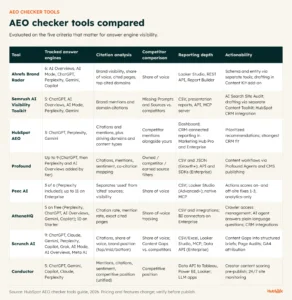
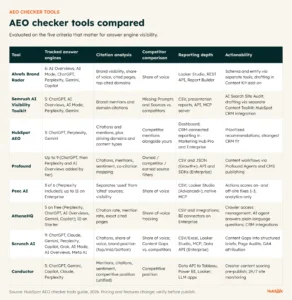
As of early 2025, the integration of LLMs into search has reached a critical mass. The industry has moved beyond testing phases into a period of strategic implementation, where brands are now deploying specialized tools, such as HubSpot AEO, to monitor their "share of voice" within AI-generated responses.
The New Hierarchy of Backlinks in AEO
In the traditional SEO framework, a link from a high-Domain Authority (DA) site was considered a universal win. In the AEO framework, the value of a link is weighted by its "semantic adjacency." This means that a link from a niche, industry-specific publication often carries more weight for AI visibility than a link from a massive, general-interest news site.
Recent analysis of AI citation patterns reveals a distinct hierarchy of influence:
- High-DA, High-Relevance Links: These remain the gold standard, providing both structural authority and semantic signals.
- Industry Publication Links: These are highly valued by AI engines because these publications often serve as the primary "grounding sources" for specialized topics.
- Niche Blog Links: These reinforce "entity authority" by signaling to the AI that the brand is recognized within a specific topical community.
- Co-citations and Expert Roundups: Even without a direct hyperlink, being mentioned alongside other recognized experts tells an AI system that a brand belongs in an authoritative "entity cluster."
Nathaniel Miller, Head of Marketing at Ashbrook Technologies, noted in a recent industry forum that the real value in the current environment is relevance over size. Miller emphasized that if a link does not drive qualified traffic or provide a clear topical connection, it serves as little more than a "logo slap," offering minimal benefit to a brand’s AI visibility.
Supporting Data: The Citation Gap
One of the most startling statistics in the current research is the "citation gap." Charlie Graham, founder of RivalSee, shared data indicating that approximately 85% of brands mentioned in ChatGPT responses receive no direct citation link. Instead, the AI provides the brand name as part of its narrative answer.
This creates a "downstream effect" where users see a brand name in an AI response, remember it, and then conduct a separate search for that brand later. While this builds long-term brand equity, it does not show up in traditional attribution models or click-through rate (CTR) analytics. This reality has necessitated a shift in Key Performance Indicators (KPIs), moving away from organic traffic alone and toward "brand mention share" and "AI citation frequency."
Beyond the Link: The Importance of Entity Clarity
In the context of AI, an "entity" is a clearly defined, uniquely identifiable object or concept—such as a specific company, person, or product. Answer engines are essentially mapping the relationships between these entities. If an AI system cannot confidently identify who a brand is or what it stands for, it will not risk citing it as a source.
"Entity confusion" has been identified as a silent killer of AEO performance. This occurs when a brand uses inconsistent terminology across its website, social media, and third-party mentions. To combat this, marketing teams are increasingly focusing on:
- Consistent Naming Conventions: Using the same brand and product names across all digital footprints.
- Structured Data (Schema): Implementing "Organization," "Person," and "sameAs" schema to provide machine-readable metadata that clarifies the brand’s identity.
- Topic Authority: Consistently publishing deep-dive content on a specific area of expertise to reinforce the brand’s association with that topic.
Content Engineering for AI Extraction
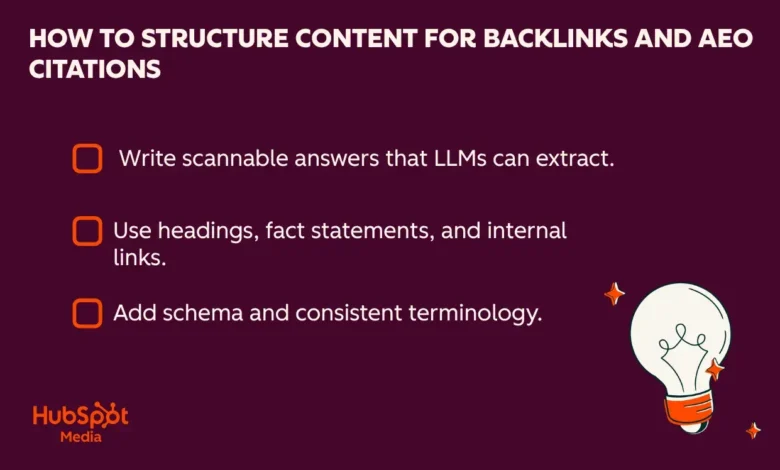
The structure of content has become just as important as its quality. AI systems prioritize content that is easy to parse and extract. The industry is moving toward a "scannable answer" format, where every major section of a page leads with a direct, self-contained statement.

Experts recommend an "Answer First, Evidence Second" structure. This involves providing a concise response to a potential user query in the first paragraph or under a clear heading, followed by supporting data and context. This pattern significantly increases the likelihood that an LLM will select that specific block of text for a citation or a featured snippet. Furthermore, the use of FAQ blocks and clear fact statements helps AI engines verify the information, which is a prerequisite for being used as a grounding source.
Official Responses and Strategic Implications
Major marketing technology providers have responded to these shifts by launching specialized AEO suites. For instance, HubSpot’s introduction of AEO-specific tracking tools highlights the growing demand for data that traditional Google Search Console reports cannot provide. These tools allow marketing teams to see which of their pages are earning citations and which content formats are most effective at driving AI visibility.
The broader implications for the industry are profound. Marketing budgets are being reallocated from generic content production to original research and digital PR. Because original data is highly "extractable" and frequently cited by other publishers, it serves as a dual-purpose asset: it earns high-quality backlinks for traditional SEO while simultaneously generating the co-citations and mentions necessary for AEO.
Broader Impact: The Future of Digital Discovery
As we look toward 2026, the distinction between SEO and AEO will likely continue to blur. AEO is not a replacement for SEO; rather, it is an evolution that requires more precision. The organizations seeing the most success are those that maintain their foundational SEO health—site speed, mobile responsiveness, and a clean link profile—while layering on sophisticated entity and mention strategies.
The impact of this shift extends beyond marketing departments. It influences brand safety, as companies must now monitor how AI systems interpret their brand identity. It also changes the competitive landscape; smaller, more specialized brands now have the opportunity to out-influence larger competitors by establishing superior topical authority and entity clarity within niche AI "answer loops."
In conclusion, the era of relying solely on backlink volume to drive digital authority has ended. The future of search belongs to brands that can successfully navigate the intersection of structural credibility and semantic relevance. By focusing on quality content, consistent entity signals, and strategic mentions, businesses can ensure they remain visible in a world where the "answer" is the ultimate destination.
Related posts: