Taylor Swift to receive inaugural MTV VMA Artist Director Honors at 2026 Video Music Awards

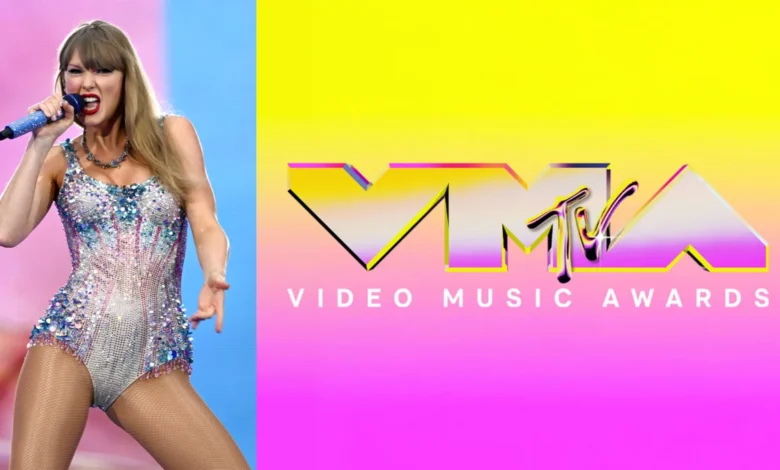
Taylor Swift is set to add yet another historic accolade to her expansive trophy cabinet as MTV officially announced on Monday that the global superstar will be the first-ever recipient of the MTV VMA Artist Director Honors. This prestigious new recognition, slated to be presented during the 2026 MTV Video Music Awards this coming Sunday, marks a significant shift in how the network acknowledges the multi-hyphenate nature of modern musical celebrity. By establishing this award, MTV seeks to codify the role of the musical artist as a visual auteur, a transition that Swift has spearheaded throughout her two-decade career.
The MTV VMA Artist Director Honors is designed to celebrate a sustained, influential body of work from artists who have not only achieved commercial success but have fundamentally shifted the creative boundaries of the music video medium. According to the network, the award recognizes those who have developed a distinct, recognizable directorial voice, crafting interconnected narratives and cinematic worlds that extend far beyond the traditional constraints of a three-minute music video.
A Career Defined by Visual Storytelling
Swift’s selection as the inaugural recipient is rooted in her long-standing commitment to the visual representation of her discography. Her journey into directing has been marked by a transition from traditional music videos to self-directed short films and complex, multi-layered visual projects. Having already secured the VMA for Best Director four times, Swift has consistently demonstrated an ability to synthesize lyrical themes with visual metaphors.
Her work on projects like the "All Too Well: The Short Film" and the cohesive visual storytelling found in the "Midnights" and "The Tortured Poets Department" eras have solidified her reputation as a director in her own right. MTV’s statement regarding the award underscores the growing influence of artists in the production process, noting that Swift’s approach invites audiences into a participatory experience where recurring motifs, "Easter eggs," and cinematic world-building are just as vital as the melodies themselves.
Chronology of a Record-Breaking Trajectory
To understand the weight of this new honor, one must look at the trajectory of Swift’s career, which has been defined by unprecedented milestones. Swift’s evolution from a country music prodigy to a global cultural phenomenon has been punctuated by critical and commercial achievements that remain unrivaled in the modern era.
- 2006–2008: Swift emerges as a country-pop crossover, earning her first major industry recognition.
- 2010: She becomes the youngest artist to win the Grammy for Album of the Year for "Fearless."
- 2014–2016: A pivot toward pure pop with "1989" marks a shift in her visual branding, leaning into high-concept music videos.
- 2020: The "Folklore" and "Evermore" era introduces a more subdued, indie-folk aesthetic that focuses on intimate, character-driven storytelling.
- 2023–2024: The Eras Tour becomes a global economic and cultural juggernaut, grossing over $2.07 billion. Simultaneously, the concert film adaptation, "Taylor Swift: The Eras Tour," shatters records as the highest-grossing concert movie of all time, earning $180.8 million worldwide.
- 2024: Swift cements her place in history by winning the Grammy for Album of the Year for the fourth time, an achievement that stands alone in the history of the Recording Academy.
- 2026: MTV inaugurates the Artist Director Honors, selecting Swift as the first recipient to acknowledge her contribution to the evolution of music-based media.
Data and Industry Impact
The impact of Swift’s work extends far beyond the awards stage, influencing the business models of touring, film distribution, and fan engagement. Her influence is measurable both in fiscal terms and in terms of cultural penetration. With 14 Grammy Awards and 58 nominations, her longevity is bolstered by a fan base that engages with her visual content as a form of intellectual property.
The success of "Taylor Swift: The Eras Tour" film demonstrated that the gap between a concert experience and a theatrical cinematic event could be bridged successfully. By bypassing traditional studio distribution models for the concert film, Swift proved that an artist’s direct relationship with their audience is a powerful market force. This strategic decision-making—both in front of and behind the camera—is precisely what the MTV VMA Artist Director Honors aims to highlight.
The Evolution of the MTV VMAs
The decision to introduce a category focused on "Artist Direction" reflects a broader trend in the entertainment industry. For decades, the Video Music Awards focused primarily on the music video as a promotional tool for the song. However, as artists have taken greater creative control—often assuming roles as screenwriters, producers, and directors—the award shows have struggled to categorize these contributions.

By creating this specific honor, MTV is acknowledging that the "Artist" is no longer just the face of the brand; they are the primary architects of the visual universe. This shift is particularly relevant in an age of social media, where visual content is consumed in short-form, high-intensity bursts. Swift’s ability to maintain a narrative thread across disparate media formats has set a benchmark for the current generation of performers.
Implications for Future Artists
The introduction of this award sets a high bar for future recipients. It implies that in the coming years, MTV will be looking for artists who can demonstrate a consistent directorial vision. This likely signals a shift in the VMA nomination criteria, where "Directing" will no longer be viewed as a technical craft alone, but as a critical component of an artist’s legacy.
Industry analysts suggest that this move by MTV will encourage more artists to invest in the visual production of their music, potentially leading to a renaissance in high-concept, narrative-driven music videos. As streaming platforms and social media continue to dominate the consumption of music, the ability to "direct" an audience’s visual experience becomes a core competency for any artist aiming for long-term relevance.
Official Logistics and The 2026 Ceremony
The 2026 MTV Video Music Awards are scheduled to take place on September 27 at the Peacock Theater in Los Angeles. The ceremony will be a major media event, with a live simulcast across CBS and MTV starting at 7:30 p.m. ET (4:30 p.m. PT). Additionally, the event will be available for global audiences via Paramount+, reflecting the shift toward a hybrid television-streaming distribution model.
While the focus remains on the music, the announcement of the Artist Director Honors has added a layer of prestige to the evening. Other highlights for the show include the presentation of the Video Vanguard Award to Nirvana, signaling a balance between acknowledging the foundational history of the medium and celebrating the contemporary innovators who are currently defining it.
A Legacy of Constant Reinvention
As Taylor Swift prepares to accept this inaugural honor, the music industry continues to debate the extent of her influence on the intersection of film and music. Critics have noted that while her transition to director was initially met with skepticism, the sheer volume and quality of her visual output have silenced those who viewed her directorial efforts as mere vanity projects.
Her work is characterized by a high degree of technical precision, from color grading and cinematography to the meticulous casting of her projects. By weaving together the themes of her songwriting with the visual language of her videos, she has created a body of work that is self-referential and deeply engaging for her audience.
In the final analysis, the MTV VMA Artist Director Honors is more than just a trophy; it is a recognition of the total artist. Whether it is through the record-breaking success of her tours, the dominance of her discography on the charts, or the critical acclaim of her visual narratives, Taylor Swift has fundamentally altered the landscape of modern pop culture. As the industry looks toward the future, her role as a director—and as a pioneer of this new category—will likely serve as a blueprint for how artists define their own creative sovereignty in the decades to come. With this latest award, Swift continues to demonstrate that for the modern icon, the boundaries between the ear and the eye are increasingly non-existent.