The World’s Most Beautiful Airports for 2026: A Global Celebration of Architectural Innovation and Regional Identity

The prestigious Prix Versailles, a renowned international architecture award, has once again illuminated the world’s most stunning airports, celebrating designs that transcend mere functionality to become captivating destinations in their own right. The unveiling of the 2026 list in Paris on Monday, June 15, showcased a diverse array of seven terminals across China, Germany, India, Cambodia, and the United States, each a testament to the evolving role of airports as cultural and economic emblems. These selections underscore a growing trend: airports are no longer just transit hubs but are increasingly designed to reflect the unique spirit and heritage of their locales, while simultaneously embracing cutting-edge technology and sustainable practices.
A New Era of Airport Design
The Prix Versailles, an annual awards program that recognizes outstanding contemporary architecture and design, has consistently championed structures that blend aesthetic brilliance with practical application. For 2026, the jury selected a cohort of airports that masterfully balance the logistical demands of high-volume, rapid travel with the imperative to create spaces that resonate with a profound sense of place. This year’s announcement, made in Paris, highlighted a significant shift in airport architecture, where innovation is paramount not only in engineering and sustainability but also in fostering passenger experience and celebrating regional identity.

Jérôme Gouadain, Secretary General of the Prix Versailles, articulated the jury’s vision, stating, "Contemporary airports have become innovative, inescapable hallmarks of their regions and their eras." He further elaborated on this transformative perspective: "They are innovative, because they resolve the apparent conflict between the increasing frequency of travel and the need for speed – both central to an airport’s purpose – on the one hand and, on the other, the singularity of a form of tourism that aims to be accessible and that values people’s time in places that, in this day and age, can no longer be described as mere ‘transfer’ spaces."
Gouadain also emphasized the lasting impact of these monumental structures: "And they are inescapable, in that this infrastructure leaves a lasting environmental footprint on the land but also on the history of humanity: in the amalgamation of architecture that they display, airports are becoming attractive settings, emblems of economic, cultural, and social dynamics that will continue to shape the societies of tomorrow, draw them together and unify them."
A Global Showcase of Architectural Excellence
The seven selected airports represent a cross-section of architectural styles and conceptual approaches, each offering a unique journey for travelers. From intricate, nature-inspired interiors to grand, city-like expansions, these terminals are setting new benchmarks for airport design worldwide.
.jpg)
Guangzhou Baiyun International Airport, Terminal 3, China
Often dubbed China’s "City of Flowers," Guangzhou’s Terminal 3 is a breathtaking embodiment of this moniker. Designed by Artelia in collaboration with the Guangdong Architectural Design and Research Institute, the terminal masterfully weaves together elements of clouds, water, and blossoms into a fluid architectural narrative. Its expansive design features a sequence of curves, terraces, gardens, and light-filled atriums, making it one of the world’s largest transport buildings. Drawing heavily from Lingnan culture—a tradition shaped by Guangzhou’s subtropical climate and its historical role as a vibrant trading port—the terminal’s organic forms serve as intuitive guides for passengers. Lush gardens and open spaces are strategically placed to mitigate the monumental scale of the building. A standout feature is its open-air observation deck, reputedly the highest at any Chinese airport, offering travelers an unparalleled vantage point to witness the ballet of aircraft on the runways below. This integration of natural elements and cultural heritage transforms the transit experience into an immersive encounter with Guangzhou’s identity.
Frankfurt Airport, Terminal 3, Germany
Frankfurt’s Terminal 3, envisioned by architect Christoph Mäckler, redefines the concept of an airport terminal by structuring its vast spaces around elements reminiscent of urban landscapes: streets, plazas, and neighborhood squares. This approach provides passengers with familiar and intuitive points of orientation within one of Europe’s most significant infrastructure projects. Dominating the overhead space are three colossal rings, crafted from rotating, colored aluminum discs, which continuously shift in appearance as passengers move beneath them, creating a dynamic and captivating visual spectacle. A key aspect of the terminal’s design is its modularity, a forward-thinking strategy that allows for adaptable evolution of spaces in response to changing passenger volumes, technological advancements, and evolving aviation habits. This commitment to flexibility ensures the terminal’s long-term relevance and efficiency, embodying a design philosophy that anticipates future needs.
Lokapriya Gopinath Bardoloi International Airport, Terminal 2, Guwahati, India
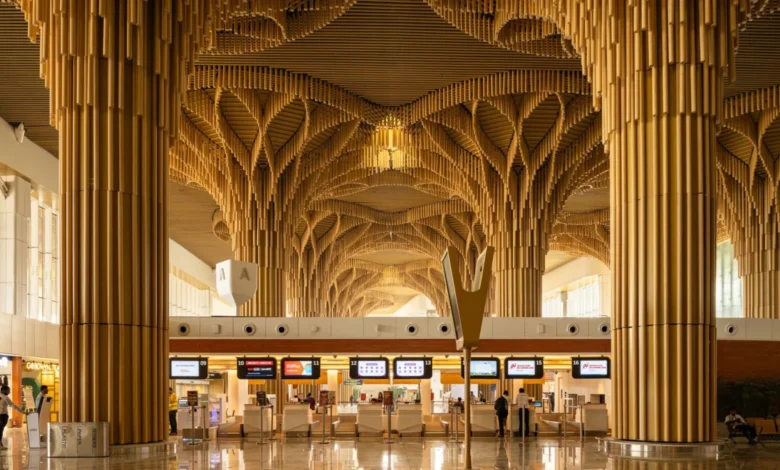
Guwahati’s Terminal 2 is a remarkable tribute to the natural beauty of northeast India. Its design is inspired by the delicate pink hues of the bamboo orchid, a flower native to the region. However, the terminal’s most striking feature is the expansive indoor landscape that unfolds beneath its vaulted ceilings. This "sky forest," characterized by its bamboo-inspired architecture, incorporates curving forms and branching structures that evoke the dense, verdant vegetation of the surrounding area. The intricate patterns overhead are a visual homage to the Brahmaputra River and its tributaries, subtly guiding passengers through the building as if navigating a natural waterway. Architect Nuru Karim has thoughtfully integrated indigenous art, tribal narratives, and local craft traditions into the interior design, transforming waiting areas and lounges into informal galleries that celebrate the rich cultural tapestry of the region. This approach not only enhances the aesthetic appeal but also fosters a deep connection between travelers and the local heritage.

Navi Mumbai International Airport, Terminal 1, India
The Navi Mumbai International Airport’s Terminal 1, designed by the acclaimed Zaha Hadid Architects, presents a breathtaking architectural statement inspired by the lotus flower. The terminal’s immense canopy is conceived to unfurl like the petals of a lotus blossom with the morning light, appearing to float serenely above the structure before cascading down into sweeping overhangs and sculptural columns. The opening of Terminal 1 in 2025 marked the culmination of an extraordinary engineering feat, involving the redirection of rivers, relocation of high-voltage power lines, reshaping of hills, and reclamation of marshland from the sea. The lotus motif is elegantly echoed within the terminal, where geometric entrance portals extend seamlessly into the ceiling, resolving into fluted, flower-like columns. Interactive digital artworks are strategically placed throughout the building, adding dynamic movement and vibrant color to the transition spaces, further enhancing the passenger experience with a blend of natural inspiration and modern technology.
Techo International Airport, Cambodia
Designed by Foster + Partners, Techo International Airport in Cambodia features a vast, undulating canopy that rises towards the terminal’s center, reminiscent of the majestic roofline of a traditional Cambodian palace or temple. Inside, ceilings inspired by ancient basketry techniques create an illusion of stretched bamboo and rattan across the building. This innovative design not only filters daylight, reducing the reliance on artificial lighting, but also minimizes the need for mechanical ventilation, contributing to the terminal’s sustainability. Towering structural columns branch out beneath the roof like ancient trees, and native Rumdul trees—Cambodia’s national flower—grace the soaring central space. Greenery is thoughtfully integrated throughout the passenger journey, from check-in to the gates. The terminal’s deliberately simple layout, characterized by short walking distances and clear sight lines, ensures an efficient and pleasant experience for travelers, embodying a harmonious fusion of architectural grandeur and environmental consciousness.
Pittsburgh International Airport, United States
The newly designed roof of Pittsburgh International Airport artfully rolls and folds, echoing the majestic contours of the Allegheny Mountains that frame the city. Beneath this striking canopy, 38 steel columns diverge into branching forms, creating a man-made forest that spans the terminal. The project, a collaboration between Gensler and HDR in association with Luis Vidal + Architects, draws inspiration from western Pennsylvania’s rich, wooded landscape while aiming to alleviate the often-arduous distances associated with large American airports. Abundant daylight streams into the terminal through expansive glass walls, and four outdoor terraces offer passengers opportunities to enjoy fresh air. Local artwork is thoughtfully incorporated throughout the space, including a captivating "Petal Tunnel" that pays homage to the Fort Pitt Tunnel. Upon exiting this tunnel, travelers are greeted with a sudden, cinematic vista of Pittsburgh’s iconic skyline, a design element that aims to capture the spirit of arrival and the city’s unique identity.

San Diego International Airport, Terminal 1, United States
At San Diego International Airport, Terminal 1’s defining architectural feature is an 800-foot-long wall of curved glass that stretches across its facade. This innovative design element floods the departure hall with San Diego’s characteristic sunlight without causing excessive heat buildup, creating a bright and airy interior. Developed by Gensler in collaboration with artist and architect James Carpenter, the facade effectively filters glare and heat while evoking the city’s vibrant waterfront promenades and gardens. An advanced structural system has allowed for the significant reduction of columns that often clutter airport ticketing halls, thereby opening up the space and contributing to a 30% reduction in the building’s carbon footprint. Beyond the terminal itself, the project has also transformed the surrounding infrastructure, including roads, car parks, and public transport connections, enhancing the overall accessibility and efficiency of the airport, which notably handles the highest volume of traffic for any single-runway airport in the United States.
The Prix Versailles: A Legacy of Architectural Recognition
The Prix Versailles, established in 2015 by UNESCO and the International Union of Architects (UIA), aims to promote excellence in architecture and urban design globally. The awards are presented annually across several categories, including buildings, interior design, and landscapes. The "Most Beautiful Airports" list is a significant component of this initiative, focusing on transportation infrastructure that demonstrates exceptional aesthetic qualities, functional innovation, and cultural resonance.
The judging process for the Prix Versailles involves a rigorous evaluation by an international panel of architects, urban planners, and cultural experts. They assess projects based on criteria such as originality, creativity, sustainability, environmental integration, and the ability to enhance the quality of life for users and surrounding communities. The selection of the seven airports for 2026 reflects a collective commitment to pushing the boundaries of what an airport can be, moving beyond utilitarian design to embrace artistry, sustainability, and a deep connection to place.

Broader Implications and the Future of Air Travel
The recognition by the Prix Versailles signifies more than just aesthetic achievement; it underscores a broader shift in how we perceive and experience air travel. As airports become increasingly integrated into the fabric of their cities and regions, they play a crucial role in shaping first impressions and fostering a sense of national or local pride. The trend towards creating "destinations in their own right" has several implications:
- Enhanced Passenger Experience: Airports that prioritize design and passenger comfort can transform the often-stressful experience of travel into a more enjoyable and memorable one. This can lead to increased passenger satisfaction and loyalty.
- Economic and Cultural Catalysts: Beautiful and well-designed airports can become powerful symbols of economic prosperity and cultural vibrancy, attracting tourism, investment, and talent to their respective regions. They serve as gateways that reflect the aspirations and achievements of a nation or city.
- Sustainability as a Design Imperative: Many of the award-winning airports incorporate significant sustainable design features, such as natural ventilation, light-filtering materials, and integrated green spaces. This reflects a growing awareness of the environmental impact of large-scale infrastructure projects and a commitment to developing more eco-conscious travel hubs.
- Technological Integration: The designs often seamlessly integrate advanced technology, from interactive art installations to intelligent systems for managing passenger flow, demonstrating how innovation can enhance both aesthetics and efficiency.
The ongoing evolution of airport architecture, as highlighted by the Prix Versailles, suggests a future where air travel is not only efficient and convenient but also an aesthetically enriching and culturally resonant experience. These seven airports stand as inspiring examples of how visionary design can shape our perception of global connectivity and redefine the very essence of travel. The continuing recognition of these architectural marvels by prestigious awards like the Prix Versailles will undoubtedly inspire further innovation and elevate the standard for airport design worldwide.