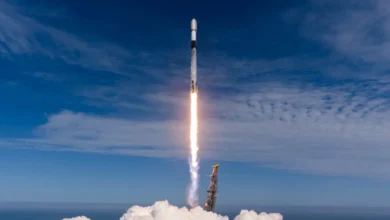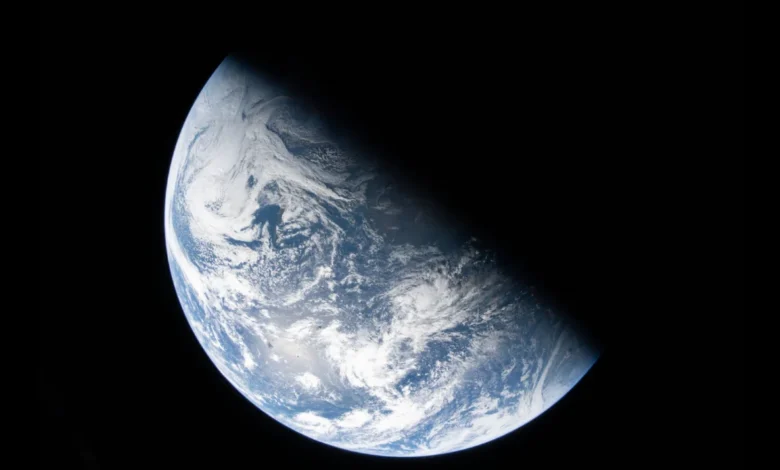
The prospect of a sky perpetually illuminated by a "Saturn’s ring" of satellites, outshining every star and planet, looms large as private companies and nations accelerate plans for vast orbital constellations. This unprecedented expansion into near-Earth orbit, driven by ambitious data center projects and innovative solar power concepts, has ignited alarm among astronomers worldwide, who warn of catastrophic consequences for ground-based observation and humanity’s connection to the cosmos.
The Dawn of an Orbital Data Deluge
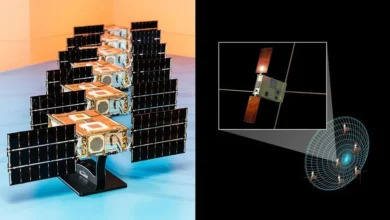
The core of the concern lies in the burgeoning number of proposed "data center constellations" – networks of satellites designed to provide internet connectivity, cloud computing, and advanced AI processing capabilities from orbit. Companies like SpaceX, Starcloud, Cowboy Space, Orbital, and Blue Origin have collectively filed applications with the U.S. Federal Communications Commission (FCC) for licenses to launch over a million such satellites. This global trend is mirrored by China, which has announced its own five-year plan to develop a comprehensive orbital data center network.
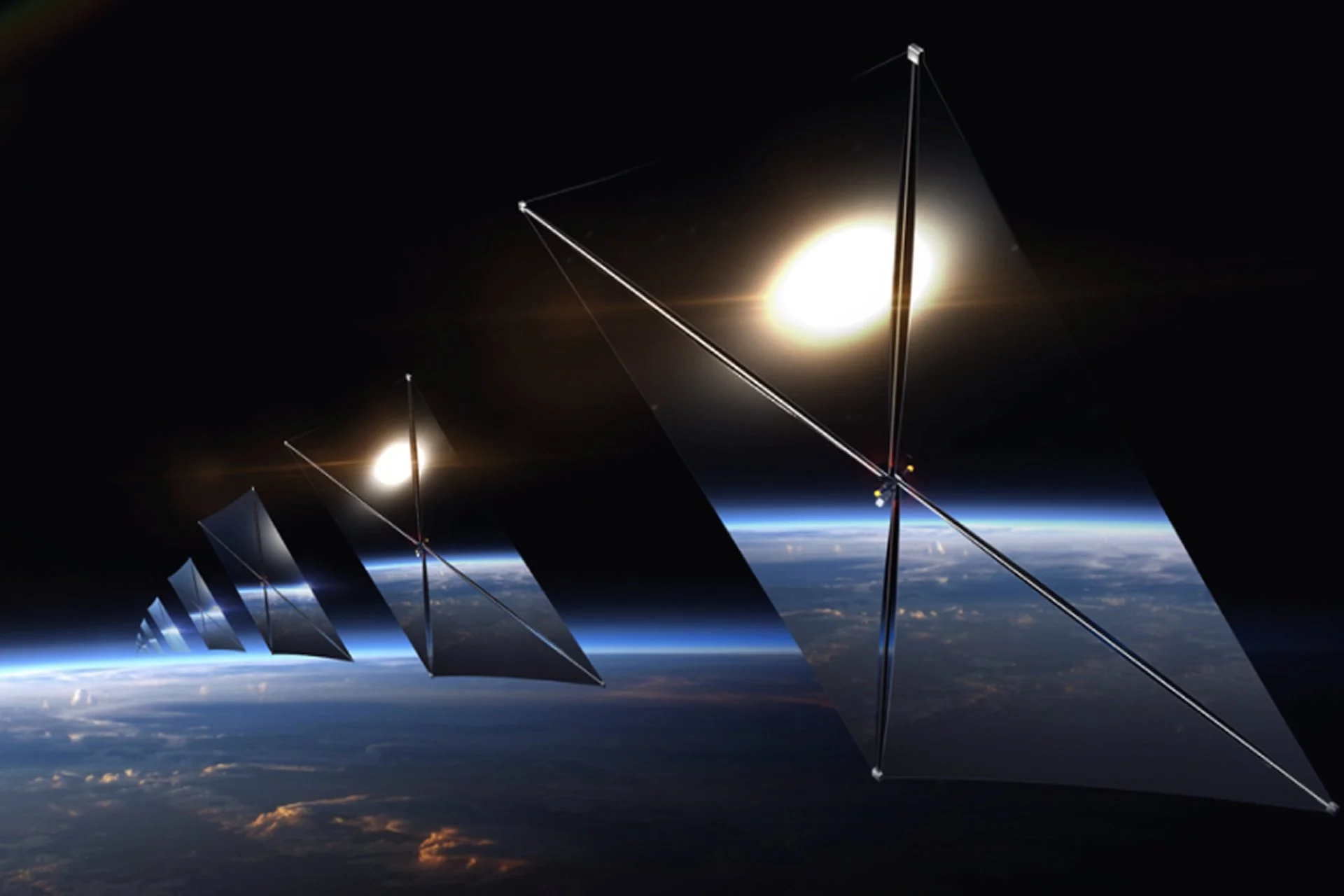
These proposals are not merely theoretical. Reflect Orbital, a California-based company, has already received FCC approval to launch its first demonstration satellite, named Erendil-1, by the end of the year. This 60 by 60-foot (18 by 18-meter) spacecraft is the vanguard of a plan to deploy 50,000 orbiting mirrors designed to reflect sunlight to terrestrial solar power plants after dusk.
A "Saturn’s Ring" of Light
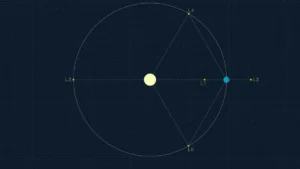
The critical factor driving the potential impact on the night sky is the orbital strategy employed by these constellations. To maximize their operational efficiency – whether for continuous data processing or solar energy collection – these satellites are intended to orbit Earth in a specific plane that closely follows the terminator, the boundary between day and night. This "dawn-dusk line" orbit means the satellites would circumnavigate the planet over the poles, creating a continuous band of artificial light visible across the globe.
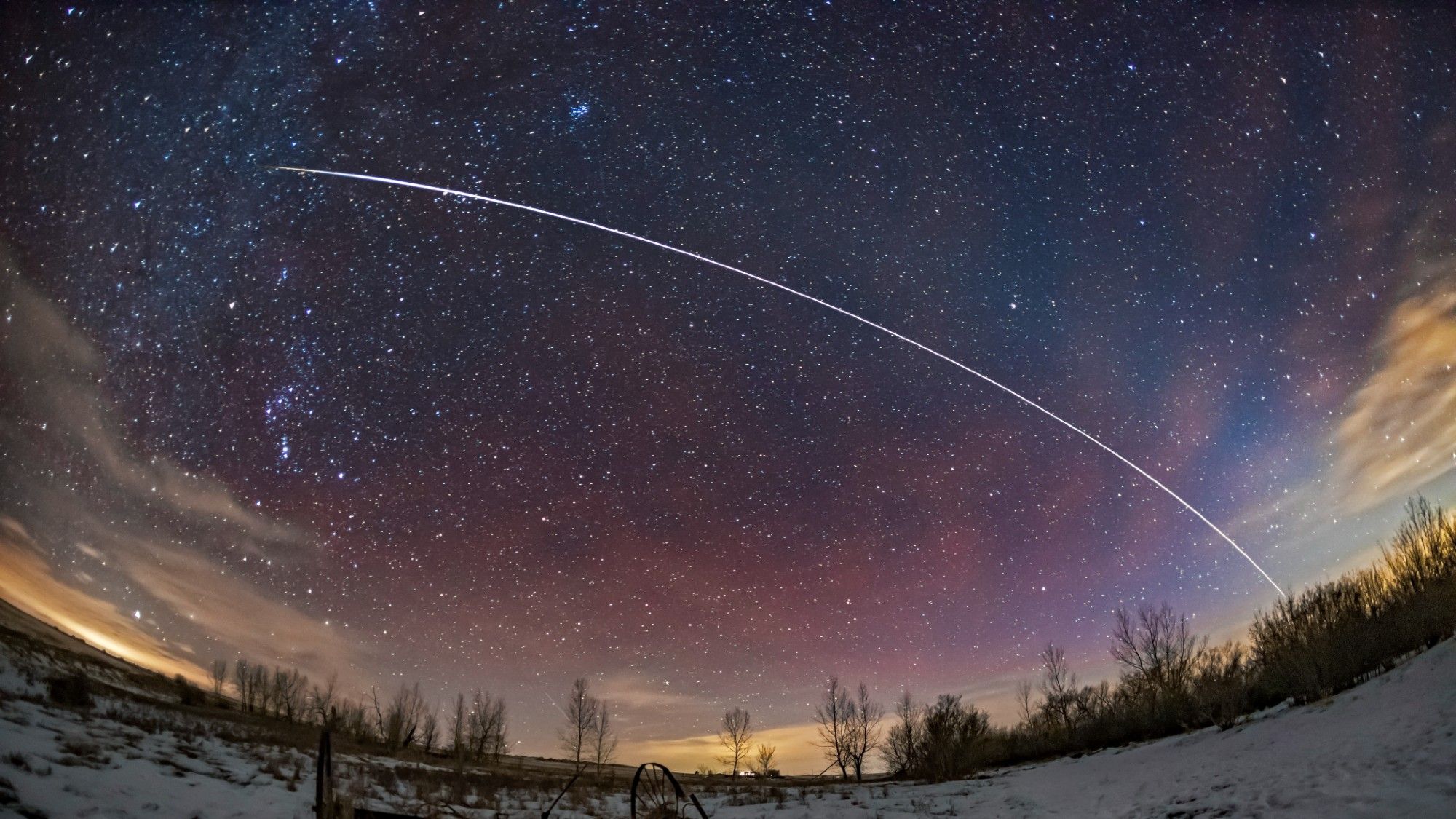
Professor Hugh Lewis, a leading figure in astronautics at the University of Birmingham in the U.K., explained the dire implications: "The only way to accommodate the high number of data center constellations that have been proposed is to stack them above another in orbit above the boundary between day and night, creating an artificial ‘Saturn’s Ring’ of satellites around the planet. That ring would show in the sky as a luminous band much brighter than any star or planet and even the full moon."
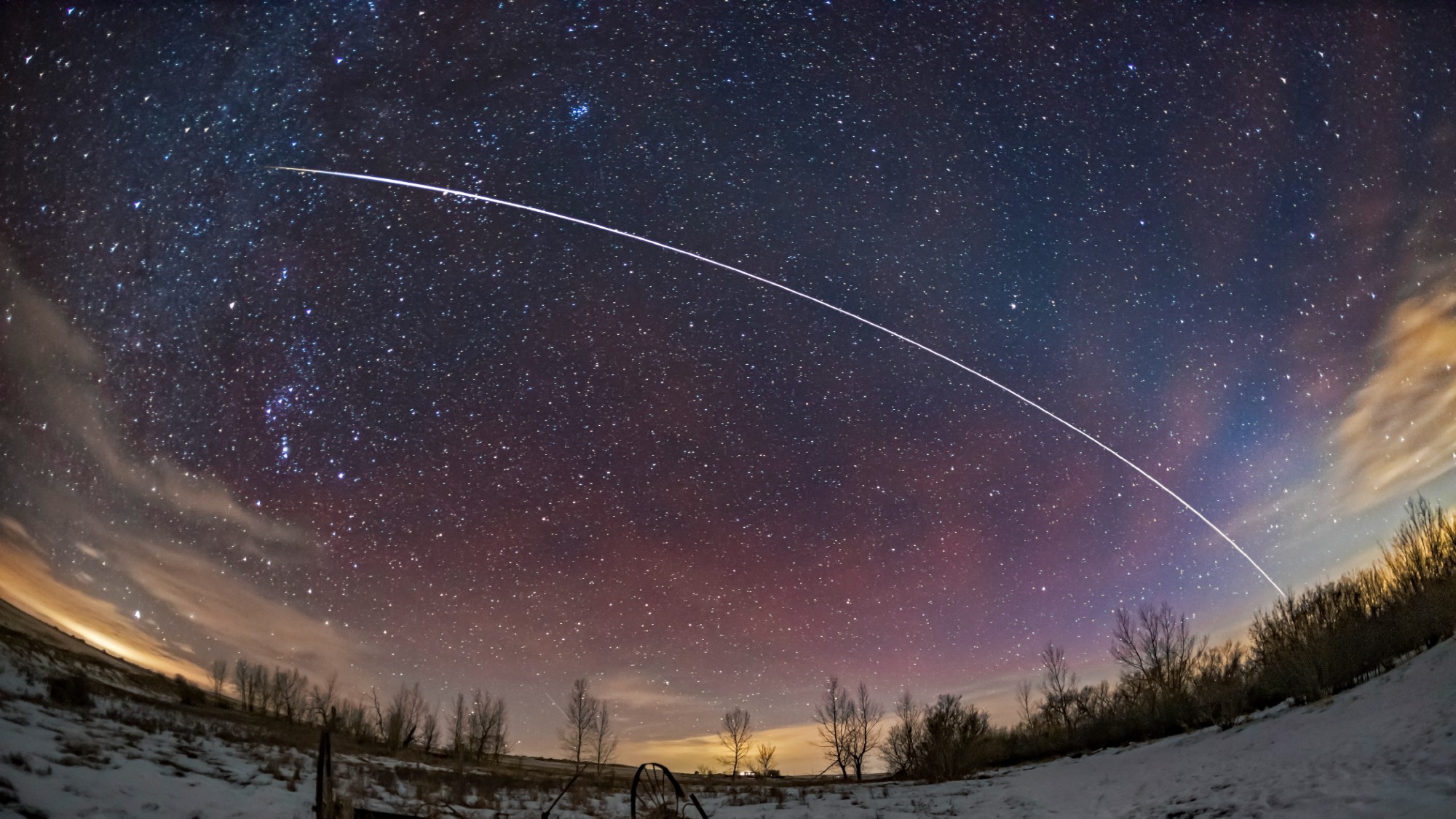
The visual effect would be profound. Instead of the familiar, twinkling stars and the ethereal glow of the Milky Way, observers could be met with a pervasive, luminous arc. "If you were to look up at night, they would be all in one plane, really close together, going in the same direction," Lewis stated. "The impact on the night sky would be absolutely catastrophic."
The Erosion of Our Cosmic Heritage
For millennia, the night sky has served as a canvas for human wonder, navigation, and scientific discovery. The constellations have inspired myths and guided explorers, while the vastness of the universe has fueled philosophical inquiry. However, this shared heritage is now under threat.
Samantha Lawler, an astronomer at the University of Regina in Saskatchewan, Canada, and her colleagues have utilized computer modeling to visualize the potential impact of these proposed constellations, including SpaceX’s Starmind, Blue Origin’s Project Sunrise, and Cowboy Space’s Stampede constellation. Their simulations paint a stark picture: satellites would not only outshine visible stars but also outnumber them.
The "Saturn’s ring" would traverse the sky twice daily – once in the early evening hours and again just before dawn. Lawler elaborated on the temporal implications: "The ring would pass overhead at the same time every night. That means its effect would be worse during winter time than the summer time." This regularity would mean that the visual pollution would be a predictable and unavoidable part of the nocturnal experience in many regions.
Scientific and Practical Implications
Beyond the aesthetic loss, the proliferation of artificial light in orbit poses significant threats to scientific research and even public safety.
Impact on Astronomical Research:
- Reduced Telescope Effectiveness: The increased sky brightness would dramatically reduce the effectiveness of ground-based telescopes, making faint objects harder to detect and potentially rendering many sensitive instruments useless. This could cripple ongoing astronomical research, including the search for near-Earth asteroids that pose a threat to our planet. "It would make our taxpayer-funded telescope time much less effective," Lawler warned. "We could do a lot less science for the same cost, and many science cases, including the search for dangerous near Earth asteroids, would be seriously compromised."
- Increased Costs: The diminished efficiency of telescopes would necessitate longer observation times or the development of even more advanced, and expensive, equipment to compensate for the artificial light.
Public Safety Concerns:
- Distraction and Glare: The American Astronomical Society (AAS) has highlighted potential risks to aviation and ground transportation. Their statement noted that the proposed satellites "carry the potential for significant harm… including potential flash-blinding of pilots and drivers."
- Eye Damage: The AAS also pointed out that, as per Reflect Orbital’s own filings, the satellites could cause "potential permanent eye damage to anyone looking through a mid-sized telescope."
The Regulatory Void
The regulatory landscape governing satellite launches and their environmental impact appears ill-equipped to handle the scale of the current proposals. The U.S. Federal Communications Commission (FCC), which oversees spectrum allocation and licensing for telecommunications, has largely confined its review to technical operational aspects.
In its authorization of Reflect Orbital’s mission license, the FCC stated that "impacts on optical astronomy fall outside [FCC’s] review and authorization." The commission further clarified that its rules "do not address the protection of optical astronomy."
This stance has drawn sharp criticism from astronomers and advocacy groups. "The FCC is the only agency that’s regulating American satellite launches," Lawler emphasized. "But if the FCC says that this is not their problem, then whose problem is it?"
The AAS has called on the FCC to broaden its review, urging the commission to "consider all of the impacts of the satellite’s use case." They argue that in the absence of another dedicated regulatory body in the U.S. or internationally that can assess these broader environmental and scientific impacts, the FCC must assume this responsibility.
Robert Massey, executive director of the U.K. Royal Astronomical Society, echoed this sentiment, stating, "This is setting a bad precedent and opening up to the full deployment of the constellation that could get to the 50,000 satellites in a few years. It’s really disappointing that the FCC authorized this."
Companies’ Perspectives and Future Outlook
Companies like Reflect Orbital maintain that their projects are designed with an awareness of potential impacts and a commitment to minimizing disruption. A spokesperson for Reflect Orbital stated, "Every stage of our development is guided by data – testing, measuring, listening and adapting. We are actively commissioning independent, third-party research on the impacts of our technology." They aim to provide benefits such as increased solar energy yields, sustainable lighting for construction, and illumination for disaster zones.
However, astronomers remain unconvinced. "If we have mirrors in orbit, astronomy is over," Lawler stated unequivocally. The concern is that even with efforts to mitigate reflectivity, such as dark paint and special visors employed by SpaceX for its Starlink satellites, the sheer number and increasing size of these spacecraft are negating these improvements. Lawler noted that while initial Starlink satellites were relatively small, newer generations are significantly larger and orbit lower, making them readily visible to the naked eye and pervasive across the sky.
A Crossroads for Humanity and the Cosmos
The current trajectory suggests a future where humanity’s view of the universe is fundamentally altered, perhaps irrevocably. The pursuit of technological advancement and connectivity is colliding with the preservation of natural darkness and the scientific endeavors it enables. The decisions made today regarding the regulation and deployment of orbital infrastructure will determine whether future generations can still experience the awe-inspiring spectacle of a truly dark night sky, or whether they will be confined to a world illuminated by an unending, artificial celestial ring. The debate over the balance between terrestrial needs and the sanctity of the cosmos is reaching a critical juncture, with profound implications for both scientific discovery and our intrinsic connection to the universe.