The Origin of the Material: Collect Pond House
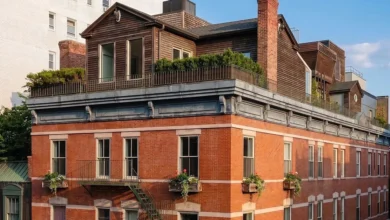
The project centers on 366 Broadway, a historic edifice known as the Collect Pond House. Originally constructed in the early 20th century, the building has served various commercial purposes, including housing the headquarters for the Royal Typewriter Company. Its facade is a dense catalog of early 20th-century craftsmanship, featuring copper cornices, marble columns, intricate spirals, Greek key motifs, and dozens of carved keystones depicting bearded figures.
Over the past year, the building has been shrouded in scaffolding as part of a significant renovation project. For Prieto, whose studio is located directly across the street, the construction site offered a daily, unintentional gallery of architectural debris. As contractors stripped away layers of the building, fragments—ranging from minor stonework to significant carved elements—were relegated to the scaffolding roof, destined for disposal.
Chronology of the Transformation
The trajectory from discarded rubble to fine furniture began in late 2025. Prieto, observing the accumulation of materials, spent months monitoring the site before initiating a dialogue with the construction team. The resulting acquisition of 16 distinct Edwardian fragments provided the raw material for his latest exhibition, titled "The Future of the Past."
Following the procurement of these pieces, the development phase involved a meticulous process of cataloging and abstraction. Prieto utilized high-resolution photography to map the geometry of the building’s original details. These data points were then translated into a series of machined, lacquered wooden components designed to interface with the stone originals. By "Frankenstein-ing" these elements—pairing the raw, weathered stone with sleek, contemporary industrial forms—Prieto created a series of console tables, stools, and sculptural objects that function as a "ghostly palimpsest" of the original architecture.
Conceptual Framework and Influences
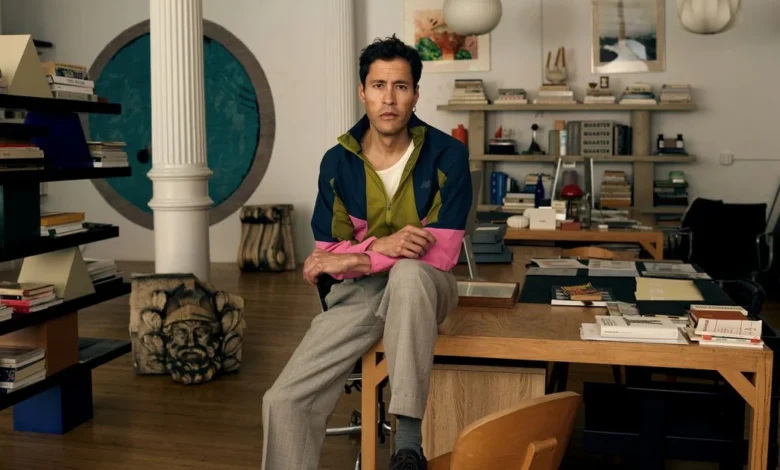
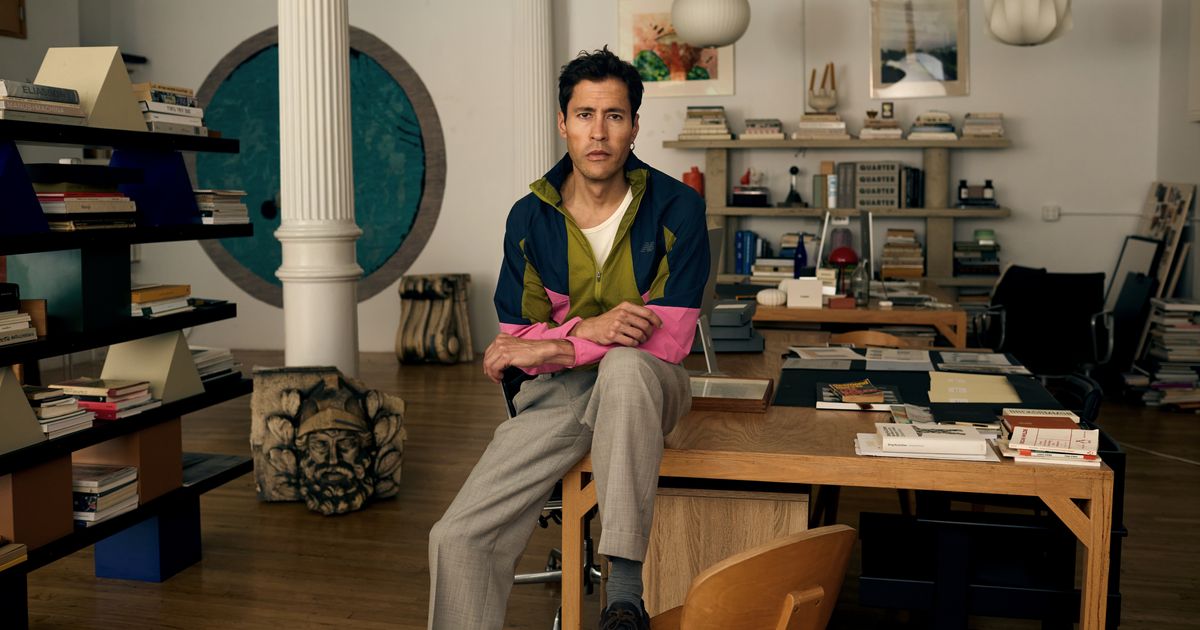
Prieto’s work is deeply informed by a history of conceptual design. His studio environment functions as a repository for both his own creations and a collection of seminal historical works, including pieces by Man Ray, Joseph Beuys, Gerrit Rietveld, and John Cage. The influence of these masters is evident in his process, which relies heavily on the role of "chance"—a philosophy famously employed by Cage in his I Ching-based compositions.
The designer’s background, spanning from his youth on a cattle ranch in Northern Mexico to his professional tenures in Mexico City, Berlin, San Francisco, and New York, informs his recurring themes of "tension between opposites." In the context of the upcoming exhibition, this tension manifests as a dialogue between the permanence of the stone and the ephemerality of the urban environment.
Economic and Environmental Implications
The practice of architectural salvage, or "adaptive reuse" in the realm of furniture design, carries significant implications for the contemporary art market. As global cities face pressure to densify and modernize, the loss of historic building stock is a common occurrence. By salvaging these fragments, Prieto is not merely creating functional objects; he is engaging in a form of material preservation that challenges the "dumpster-bound" trajectory of construction waste.
The collection, which features a palette of deep reds, purples, black, and burl, raises questions about the provenance of luxury goods. While some pieces incorporate literal fragments of 366 Broadway, others are purely inspired by the building’s architectural language, rendering the distinction between "original" and "homage" intentionally opaque. This strategy highlights the mutability of urban history, where the identity of a structure is constantly renegotiated by its inhabitants and its designers.
The Evolution of the "Stranger" Perspective
Prieto has frequently described himself as a "stranger in his own city," a sentiment that stems from his nomadic professional life. This perspective is central to his work, which often attempts to "metabolize" the environment of the city he currently inhabits.
"At the beginning, the show at Emma’s was about a desire for preservation," Prieto noted in recent discussions. However, the project has evolved into something more reflective of the city’s inherent volatility. The inclusion of phrases such as "Resist monumental grandeur" in his project materials suggests a critical stance toward the permanence of the built environment. Rather than seeking to freeze time, Prieto’s work acknowledges that New York is in a constant state of mutation, where the old is perpetually being recontextualized by the new.
Market Context and Future Prospects
The partnership with the Emma Scully Gallery marks a significant milestone for Prieto. Following his successful 2023 exhibition, which also featured experimental combinations of wood and cast glass, this new collection positions him at the intersection of fine art and high-end collectible design.
Industry analysts suggest that the demand for objects with a narrative of "provenance" is currently at an all-time high. By linking his work directly to a specific, historical New York address, Prieto provides collectors with an artifact that functions as a piece of the city itself. However, the designer remains pragmatic about the reality of his output. As he noted regarding the bearded keystone currently sitting in his studio, "I just assumed that not everyone wants a big piece of a building in their house. I’m aware that some of these pieces will be living in Connecticut."
Conclusion: A Legacy of Fragments
"The Future of the Past" is more than an exhibition of furniture; it is an examination of the lifecycle of urban materials. By rescuing the remnants of 366 Broadway, Prieto has demonstrated that even the most "mundane" chunks of rebar and stone carry the weight of history.
As the exhibition opens, it will serve as a bellwether for the trend of "architectural reclamation." Whether the pieces are viewed as functional furniture or as sculptural reminders of the fragility of the urban landscape, they succeed in forcing a confrontation between the viewer and the city’s rapid transformation. Prieto’s work suggests that while we may be unable to halt the cycle of demolition and renewal, we can at least ensure that the fragments left behind are given a second life. Through this process of transmutation, the designer has successfully bridged the gap between his own choppy, cross-cultural language and the silent, stony language of New York’s architectural past.