Mastering the Art of Relocation: Essential Strategies and Expert Packing Tips for a Seamless Transition


The psychological and logistical weight of relocating from one residence to another has long been documented by behavioral psychologists and moving industry specialists as one of life’s most significant stressors. Whether transitioning across town or relocating to an entirely new metropolitan area, the average household manages hundreds of individual items, complex financial adjustments, and tight deadlines. Industry data from logistical associations indicates that over 70% of individuals report experiencing acute anxiety during a standard residential move, largely driven by poor organization, unexpected timeline disruptions, and the sheer volume of physical labor involved. However, real estate professionals, professional organizers, and moving coordinators emphasize that the chaotic nature of relocation is not an inevitability. By implementing a structured, methodical framework well in advance of moving day, homeowners and renters can drastically mitigate friction, reduce financial waste, and transform a notoriously burdensome chore into a smooth, manageable transition.
To achieve this level of operational efficiency, a comprehensive approach must be adopted, beginning weeks before the first cardboard box is sealed. Experts break down this preparation into several critical phases: strategic pre-move purging, meticulous documentation management, utility and infrastructure scheduling, personal survival kit assembly, and systematic spatial coding.
The Pre-Move Phase: The Chronology of Relocation
A successful move does not begin on moving day; rather, it is the culmination of weeks—and sometimes months—of strategic planning. Understanding the chronological timeline of a relocation can prevent the common pitfall of last-minute panic.
Approximately eight weeks before the target moving date, individuals should initiate the foundational assessment of their belongings. This window provides ample time to research and secure reputable moving companies, establish a moving budget, and begin compiling essential administrative documents. Moving companies note that booking professional movers at least six to eight weeks in advance not only guarantees availability during peak moving seasons—such as late spring and summer—but often secures more favorable pricing rates.
Moving into the six-week window, the focus shifts entirely toward physical inventory reduction. This is the period when rigorous sorting must take place. Four weeks prior to the move, packing materials should be acquired in bulk, and official address change notifications should be drafted for financial institutions, subscription services, government agencies, and postal services. Two weeks out, utility transfers must be finalized to ensure uninterrupted service. Finally, the week of the move should be strictly reserved for packing essential personal bags, dismantling large furniture pieces, confirming logistical details with moving crews, and thoroughly cleaning the departing property.
Phase One: Ruthless Decluttering Before Packing
One of the most pervasive and costly mistakes individuals make during a residential transition is packing and transporting items that they no longer use, need, or value. Moving logistics are fundamentally tied to volume and weight; therefore, paying to transport unwanted items to a new home is an unnecessary financial drain. Industry estimates suggest that households can reduce their total moving volume by 20% to 30% simply by engaging in a systematic decluttering process prior to boxing up a single room.
Before initiating the packing process, homeowners must evaluate every possession with a critical eye. This requires asking targeted, objective questions: Have I used this item within the last twelve months? Is the cost of transporting this item greater than its replacement value? Does this piece structurally and aesthetically fit the layout of the new residence?
Items that fail these criteria should be immediately categorized into three distinct streams: donation, sale, or disposal. Engaging in this aggressive purging phase prior to packing ensures that energy and resources are concentrated exclusively on items that add value to the household’s next chapter. Furthermore, decluttering early prevents the frustration of unboxing items in a new home only to realize they have no designated space, saving precious time during the unpacking phase.
Phase Two: Centralizing Essential Documentation
In the whirlwind of packing furniture, wrapping fragile dishware, and coordinating logistics, critical paperwork is frequently misplaced. The loss of personal identification, real estate closing documents, financial statements, or medical records can instantly derail a move, leading to significant administrative delays and acute stress. To counteract this vulnerability, organizational experts strongly advise the creation of a centralized information hub—maintained in both physical binder format and secure digital cloud storage—specifically designated for relocation paperwork.

This vital repository should house all documents that may be required immediately before, during, or immediately after the move. Essential contents typically include property purchase or lease agreements, mortgage or rental correspondence, utility confirmation numbers, homeowner or renter insurance policies, recent medical and veterinary records, and updated identification documents. By keeping this folder in an easily accessible location—such as a personal carry-on bag rather than a sealed moving box—individuals ensure that critical information remains at their fingertips throughout the transition.
Phase Three: Infrastructure and Utility Management
Transitioning physical shelter requires the simultaneous coordination of complex municipal and private infrastructure networks. Arriving at a new home to find that electricity, water, or gas services are inactive is a scenario that can immediately stall the unpacking process and force households into expensive temporary accommodations.
Real estate experts and property management authorities consistently stress the importance of scheduling utility transfers and activations well in advance of the physical moving date. Greg Dallaire, a prominent real estate expert, underscores this operational necessity: "Be sure to set up any utilities in the new place to be turned on and ready when you arrive. Even if it means paying for utilities at two places for a brief overlap, it is often worth the convenience. In addition to basics like water and power, call ahead to make sure you will have internet, tv, and any other services you need."
Establishing an operational overlap—maintaining active services at both the origin and destination properties for a period of three to five days—is widely considered a best practice among moving coordinators. This buffer allows for thorough cleaning of the old property after all furniture has been removed while ensuring that the new home is fully illuminated, climate-controlled, and digitally connected the moment the moving truck pulls into the driveway. Beyond basic electricity and plumbing, this window is the optimal time to transition ancillary home services, such as high-speed internet providers, home security monitoring systems, pest control contracts, and scheduled house cleaning services.
Phase Four: The Weekend Survival Kit Strategy
A common misconception among individuals executing local or long-distance moves is that the entirety of their household will be fully unboxed and operational on the very first night in the new residence. In reality, physical exhaustion, time constraints, and the sheer volume of cardboard boxes make it virtually impossible to locate specific items immediately. Unpacking is a multi-day—and often multi-week—undertaking.
To bridge the gap between arrival and complete household setup, every member of the household should pack a dedicated multi-day survival bag or suitcase. This container should be treated similarly to luggage prepared for an extended weekend trip, containing all essential personal items required to maintain daily routines without needing to open a single moving box.
The contents of this survival kit should extend far beyond basic changes of clothing and toiletries. It should comprehensively account for 48 to 72 hours of independent living. Essential inclusions feature prescription medications, chargers for electronic devices, basic first-aid supplies, essential kitchen items such as a coffee maker, paper plates, and utensils, cleaning supplies for immediate surface wipedowns, and comfort items for children or pets. By keeping these necessities isolated from the general cargo, individuals can navigate their first nights in a new home with comfort, dignity, and minimal frustration.
Phase Five: Systematic Spatial Coding and Labeling
The efficiency of moving day is largely dictated by how clearly and intuitively boxes are labeled. When boxes are marked merely with vague terms like "Miscellaneous" or "Stuff," movers and helpers are forced to guess where items belong, resulting in a chaotic distribution of inventory across the new residence. This lack of organization inevitably leads to endless searching for basic household necessities during the critical first week.
To eliminate this operational bottleneck, professional moving companies advocate for a rigorous spatial coding system that incorporates both detailed text descriptions and visual identifiers. Every single box should be clearly marked on multiple sides with the specific room it is destined for, alongside a brief inventory of its primary contents.
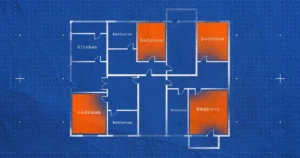
One of the most effective and visually intuitive methods for achieving this is color coordination. By assigning a distinct color to each room of the new home—such as blue for the kitchen, green for the primary bedroom, and yellow for the living room—households can streamline the unloading process exponentially. Movers or family members assisting with the transition can easily identify destination rooms by matching colored packing tape on the boxes to corresponding large, brightly colored signage posted on the entrance of each room in the new house. This simple, systematic approach ensures that every box lands in its proper spatial context immediately, laying the groundwork for a rapid, organized, and stress-free unpacking process.